
Hawaii
Oahu with a Toddler
The island is more forgiving than you'd expect - if you make the right two calls before you land.
AI travel agent · free to try
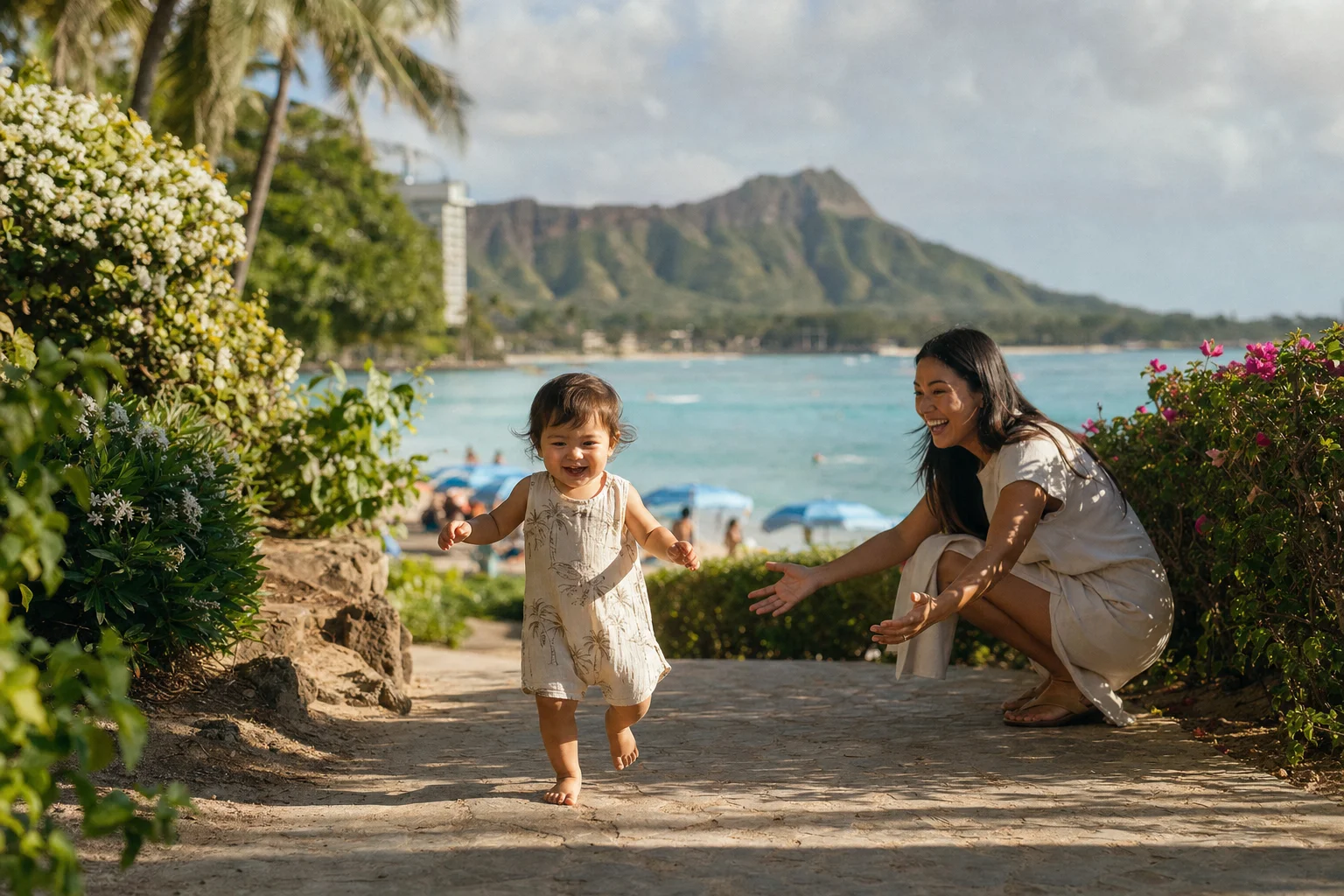
Most families choose Oahu because of the name recognition and then spend the first two days realizing they haven’t thought through where to base themselves or how they’re getting around. Those two decisions - Waikiki or Ko Olina, car or no car - cascade into almost every other variable: which beaches are accessible, how much grocery logistics costs, whether you’re dragging a stroller onto a trolley or loading a rental car after a Costco run. Get them right and the island is forgiving. Get them wrong and you’ll spend real vacation time managing friction you could have sidestepped.
Oahu’s practical advantage over the other Hawaiian islands, specifically for toddlers: it’s the only one with a real city underneath the resort infrastructure. Pharmacies, grocery stores, baby gear rental services that deliver airport to Ko Olina - the logistics net is finer than Maui or Kauai. And calm-water beach access exists on every side of the island, year-round, without daily surf forecast math.
Waikiki or Ko Olina
Waikiki means walkability. The Honolulu Zoo, Waikiki Aquarium, Kuhio Beach, and most restaurants are reachable without a car. Kuhio Beach’s concrete breakwater creates a lagoon-like enclosure fronting the Duke Kahanamoku statue - the most reliably calm in-Waikiki swim option when any swell is running, with lifeguards on duty. The less-obvious alternative is Ala Moana Beach Park’s Magic Island lagoon, about a mile west: seawall-protected, lifeguarded, and skewing local rather than tourist, which means fewer people on weekends.
Ko Olina means guaranteed flat water. The four man-made lagoons run lake-like year-round - no wave action, gradual depth. For toddlers who aren’t yet comfortable in surf, this removes the daily guessing game. The tradeoff is that Ko Olina sits 25–35 miles from Honolulu in a resort bubble. Kapolei, 10 minutes away, has a Costco, Target, Safeway, and Walmart clustered together; experienced Ko Olina families stock a kitchen on arrival day and cut meal costs for the week. That requires a car. Without one, the bubble gets expensive.
Many families split the trip between both areas. The honest cost of that: one parent on a forum called switching hotels mid-trip “a mistake” - packing and unpacking with a baby takes time and attention you don’t get back. If you split, give each location at least three full days.

The base decision shapes everything from beach access to grocery logistics. Mira can walk through the tradeoffs against your specific travel dates and help you land on the split that actually fits your family.
AI travel agent
Beaches that work
Ko Olina Lagoons are the benchmark. Lagoon 2 has permanent umbrellas for shade and frequent sea turtle sightings. Parking fills before 9 AM on busy days - arrive early or wait.
Kuhio Beach in Waikiki covers you when you don’t want the drive. The concrete breakwater creates a sheltered lagoon-like enclosure - shallow, calm, lifeguarded, and free, with most Waikiki hotels close enough to walk back when naps hit.
Kailua Beach on the windward side has multiple parking lots, lifeguards, and calm bay water. One local caveat: check bacterial levels around the river outlet at the north end before visiting; the south end is unaffected.
North Shore is summer-only for toddler swimming - Kuilima Cove near the Ritz-Carlton Turtle Bay is the protected option. November through February, the surf is worth watching from the grass at Waimea Bay; bring the swim elsewhere.
Check safebeachday.com before any beach day. Box jellyfish arrive predictably 9–12 days after each full moon on south- and leeward-facing beaches including Waikiki and Ala Moana. Portuguese man-of-war hit east-facing beaches during strong tradewinds. Both post warning signs, and the pattern is regular enough to plan around.
Hotels worth picking
Aulani, A Disney Resort & Spa
The most complete toddler infrastructure of any Oahu resort. Keiki Cove splash zone, Menehune Bridge water play structure, zero-entry pools, free boogie board and sand toy lending, and the Aunty’s Beach House kids club - free for all resort guests, requiring toilet training for full participation; under-2s get one-hour morning free play. The resort-as-destination logic holds: experienced Aulani families report their best days are the ones they never left the property.
The honest picture: food costs are high. The daily pool wristband system (new colored bands each day) draws consistent complaints. The main family pool, Waikolohe - an 8,200 sq ft zero-entry pool - underwent refurbishment April 13 through May 8, 2026, and should be open now, but confirm before booking if pool access anchors your trip. Ka Wa’a Luau works for toddlers 2 and up who tolerate loud drumming - book a seat near an exit.
Sheraton Waikiki
Best toddler-specific pool setup in Waikiki. The Helumoa Playground family pool has zero-entry wading, two waterslide options, and chair availability that holds even mid-morning. Poppins Keiki Waikiki childcare center is in the hotel and open to non-guests. Cultural activities - lei-making, hula, koi feeding - come with the resort fee. Kuhio Beach is across the street.
Negatives that matter: rooms run small, the pool is unheated, and there are no umbrellas at the family pool. One parent documented a child’s face burning. Bring a UPF hat or a small beach tent to pool sessions there.
Marriott’s Ko Olina Beach Club
One-, two-, and three-bedroom villas with full kitchens sleeping up to eight. Three pools, a children’s pool with a waterslide, and direct lagoon access. The kitchen is the decisive feature - breakfast without restaurants, early dinners from groceries, storage for all the toddler food infrastructure. Run the Kapolei Costco trip on arrival day.
Activities that hold up
Byodo-In Temple
Parents who’ve done Oahu with toddlers multiple times call this the best activity on the island. Giant koi surge to the surface the moment a child leans over the pond. Peacocks wander freely. There’s a 3-ton bell to ring and a bamboo grove. Go when it opens at 8:30 AM - by mid-morning, tour buses arrive and the quiet that makes it work is gone.
Waimea Valley
Paved 0.75-mile path each way, mostly shaded, stroller-friendly. The waterfall swim at the end runs cold - one November toddler “shivered the whole time” - and the current near the base is strong enough that children can’t approach it unsupervised. Free life jackets in all sizes are required. The posted 20-minute walk takes over an hour with a freely exploring toddler.
Honolulu Zoo and Waikiki Aquarium
The Zoo is a strong half-morning - budget two to three hours. Stroller rentals with a small refundable deposit available on-site. Opens at 10 AM, cash or card at the gate only. The Aquarium is the best hot-afternoon recovery on the island: compact, air-conditioned, jellyfish tanks at toddler eye level, takes about an hour.
Two clear skips: Hanauma Bay requires a mandatory orientation video and steep terrain in both directions, and one parent can’t snorkel while the other manages a toddler. Dole Plantation has documented train queues of one to two and a half hours - use it as a Dole Whip and bathroom break on a North Shore day, nothing more.
Mira can sequence a day-by-day plan that layers Byodo-In, Waimea Valley, and the Zoo against your beach days, drive times, and nap windows - so you’re not figuring it out at 9 PM the night before.
AI travel agent
The time zone reality
East Coast families should plan for five to six days before a toddler’s schedule feels normal. West Coast families get two to three. The strategy that works: a brief cat nap, maximum one hour, at 4–5 PM local time on arrival day, a push to 9 PM bedtime, and immediate morning sun exposure. Blackout curtains or a travel blackout tent help - Hawaiian sunrises are early. Do not schedule a 9 AM activity for Day 1.
The useful reframe: a toddler waking at 5:30 AM in Hawaii wants to be at the beach before the sun is brutal, which is exactly when the beaches are best. Early wake-ups aren’t a trip failure; they’re a scheduling advantage most families stumble into.
One scheduling principle that experienced Hawaii-with-toddler parents cite uniformly: one activity in the morning, nothing in the afternoon. Tropical sun and swimming exhaust toddlers efficiently. Afternoons are for naps or a slow scenic drive. Fighting that rhythm - pushing a second activity, skipping the nap window - is where most Oahu toddler trips go sideways.
Frequently Asked Questions
What's the calmest beach for a toddler who isn't comfortable in waves?
Do I need to rent a car in Oahu with a toddler?
How do I handle the time change with a toddler?
Is Aulani worth it with a toddler under 3?
Is the North Shore safe for a toddler?
More articles about Oahu
Destination Guide
-

Oahu with Kids (2026): The Family Travel Planning Guide
Most families book Oahu thinking the hardest part is finding the right hotel - the hardest part is picking the right side of the island.
-

First Time in Oahu: What to Know Before You Land
The island punishes over-planning and under-booking in equal measure - here's how to thread it.
Who's Traveling
-
Oahu with a Large Family: What to Book and Where
The law changed in 2022. Most travel blogs didn't get the memo.
-

Oahu for Multi-Generational Families: A Real Guide
The island works across four generations - but only if you make one foundational choice before anything else.
-
Oahu with a Baby: What to Book and Where to Stay
The island is more manageable with an infant than you think - if you make one decision right before anything else.
-
Oahu with Grandparents: The Hotel Choice That Matters Most
The island itself is the easy part. The hotel is where most families get it wrong.
-

Oahu with School-Age Kids (Ages 6–14)
The families who love it most are the ones who slowed down.
-

Oahu with Teens: Leave Waikiki to Win
The resort pool is fine. The trip your teenagers will actually remember is an hour north.
Sensory & Accessibility
-
Oahu Without the Sensory Wall of Waikiki
The island rewards early mornings, calm lagoons, and knowing which resort sits on the quiet side of the enclave.
-
Oahu Low-Stimulation Travel
The island has genuinely quiet places. The work is sequencing them so you reach them before the crowds do.
-
Quiet Hotels on Oahu: Where to Actually Sleep
The island isn't uniformly noisy - but you have to know which kind of quiet you're looking for.
-

Sensory-Friendly Oahu: Ko Olina vs. Waikiki
Ko Olina's lagoons were engineered for calm. Waikiki was not.
-

Wheelchair-Accessible Oahu: What's Actually Possible
The infrastructure is genuinely impressive. The gaps are specific - and you can plan around them.
Food
-

Eating Safely on Oahu: A Family Allergy Guide
The island is workable - if you know where the traps are before you land.
-

Oahu with Food Allergies
The island's food is extraordinary - and it overlaps with nearly every major allergen in ways most guides miss entirely.
-

Oahu with Picky Eaters: A Practical Guide
The food culture is proudly local. Your kid doesn't have to be.
Room Setup
-
Connecting Rooms in Oahu: Who Actually Guarantees It
The difference between a guaranteed connection and a front-desk argument at 11pm is knowing which hotels have actually solved this.
-
Family Suites in Waikiki and Ko Olina: What's Real
The word "suite" means something different in every Waikiki brochure. Here's what's actually behind the door.
-
Oahu Condos with Kitchens: What to Actually Book
The most consequential decision you'll make for this trip isn't the beach - it's the cooking setup.
On-Site Activities
-

Oahu Kids Clubs: Which Resort Actually Delivers
The best supervised drop-off programs on the island are free - but not where most families are staying.
-
Oahu Hotels with a Lazy River: One Resort, One River
There's exactly one hotel on the island that has one - and a few things you need to know before you book it.
-

Oahu Water Parks: Aulani, Wet 'n' Wild & More
One real park, one Disney complex that rivals it, and a Waikiki hotel that most families drive past without realizing it has a waterslide.
Powered by Mira
Tell Mira about your family
Two minutes of conversation. A shortlist of hotels that actually fit — connecting rooms, accessible layouts, calm floors, whatever your family needs.
AI travel agent · free to try
Talk to Mira Let Mira find the right hotels for your family. Find hotels with Mira
AI travel agent · free to try