
Hawaii
Sensory-Friendly Oahu - The Quiet Side of the Island
Ko Olina's lagoons were engineered for calm. Waikiki was not.
AI travel agent · free to try
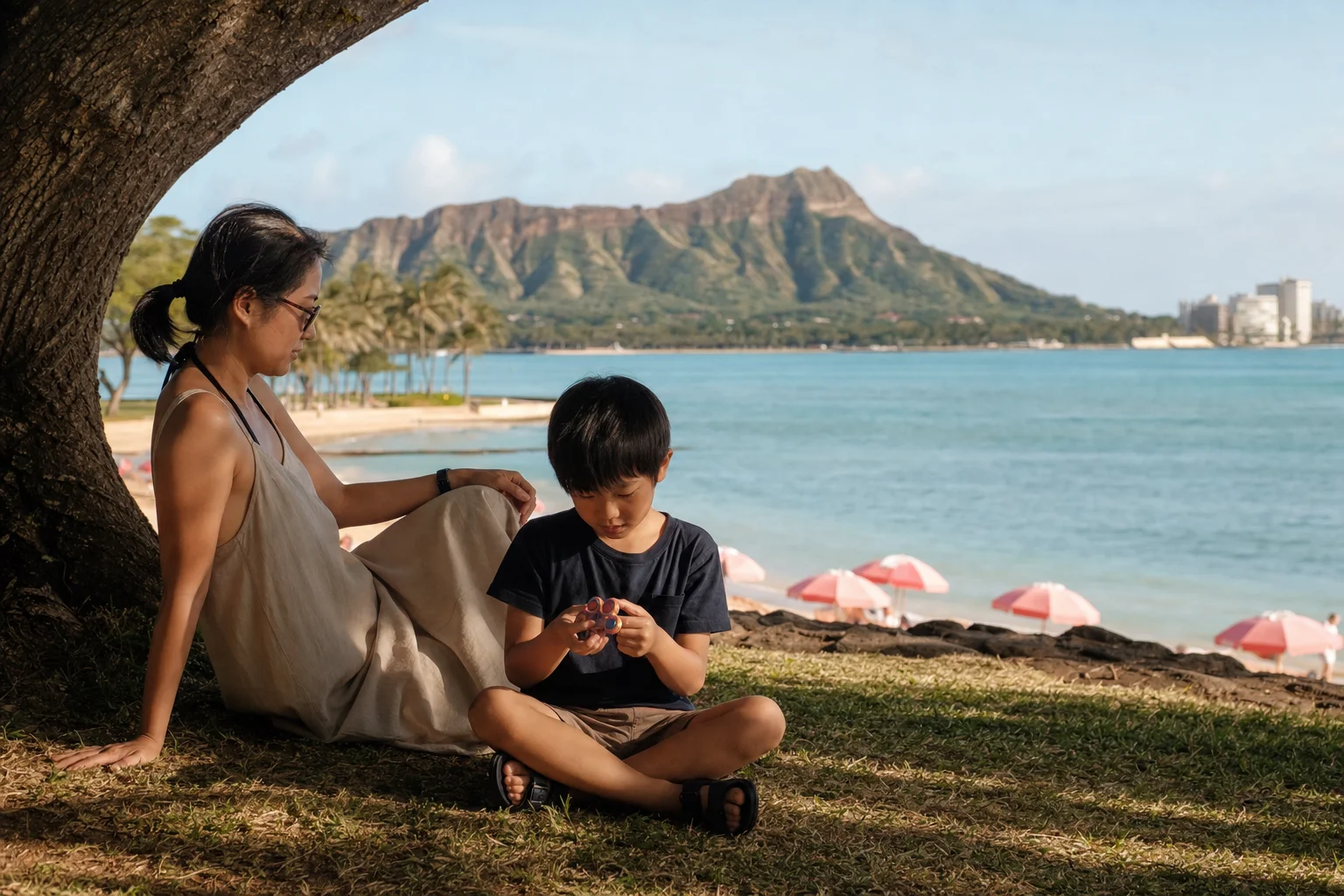
Ko Olina Lagoon 4 doesn’t show up on many Oahu hotel comparison charts because there’s nothing to compare - no resort attached, no wristband, just 100 parking spots, four-foot-deep water you can see through to the sand below, and reviewers from Missouri writing “very relaxing place, not crowded unlike Waikiki.” It’s free public beach access on an island where the most-recommended beaches regularly feel like theme park queues by 10am.
That gap - between what Ko Olina’s engineered lagoons actually deliver and what Waikiki beach involves at full capacity - is the real planning decision for this trip. Waikiki draws roughly 72,000 visitors daily. One travel guide describes it as “loud and chaotic on the streets” and “a bit like a theme park.” Ko Olina is a planned enclave 27 miles west where guests describe feeling “like the only ones on the island.” That contrast isn’t a marketing claim. It’s a structural one, and understanding it shapes every choice about where to stay, when to go, and how to pace the week.
The Ko Olina lagoons, ranked by how often you’ll have space
The four man-made coves at Ko Olina use rock breakwaters to eliminate wave action entirely. The water entry is sandy, the floor stays visible even where it’s three feet deep, and there’s no surf to navigate. What varies between the lagoons is how crowded they get.
Ko Olina Lagoon 4
Lagoon 4 is the farthest from Aulani and the only lagoon with no resort directly attached to it. It has its own 100-space parking lot and consistently draws the fewest visitors - a September 2024 TripAdvisor reviewer called it “pretty quiet” with a beach that “was wonderful and not busy.” That review isn’t an outlier. Multiple reviewers across different travel windows flag it as the one Ko Olina lagoon where you can reliably find space without a 7am arrival. Free, full public access, no booking.
Beach Villas at Ko Olina
The Beach Villas sit on Lagoon 2, which reviewers consistently rate as the quietest resort-facing cove. The property runs condo-style - full kitchens, more space than a hotel room - and has no on-site restaurant, which means no non-guest foot traffic wandering through. An April 2026 TripAdvisor review: “Property is nice and quiet.” Another from September 2024: “Not nearly as busy or crowded as the neighboring Marriott and Disney resorts.”
One caveat worth knowing: Barbers Point Naval Air Station sits adjacent to Ko Olina. Some Beach Villas reviewers mention F-16 flyovers on training days. The frequency isn’t predictable - it’s not a constant - but it’s a known variable in an otherwise quiet environment.
Four Seasons Resort Oahu at Ko Olina
The Four Seasons is the clearest pick for families who want structured quiet and don’t need Disney programming. Pool #3, the adult pool, is the specific destination - a 2025 review from asherfergusson.com describes the atmosphere there as “super chill, quiet, and mega relaxing,” and one reviewer spent a four-night stay swimming there exclusively. The main Pool #1 gets busy mid-day. Free cabanas across the property fill by 10:30am, so an arrival before 9am is how you secure shade and space.
Ko Olina quiet hours are enforced from 10pm and resort staff respond to complaints when asked. The lagoon beach itself stays calmer than the pool deck throughout the day.
Aulani, A Disney Resort & Spa
Aulani is the most-reviewed Ko Olina property, and the reviews are specific enough to plan around rather than avoid. The main pool is a genuine crowd problem: chairs are claimed by 7am, and by 8am they’re gone. One reviewer writes “if you aren’t out there by 7am to camp out and claim a chair, you won’t get one.” The crescent resort lagoon that runs parallel to the pool area is “often quieter than the bustling pool deck” - build your mornings around the lagoon, and let the pool happen only if chairs are available. Ka Maka Grotto, the smaller family pool, is consistently described as more manageable than the Ohana Pool. The adult spa pool is off-limits to children by policy.
Room placement matters here. One family arrived to a room above the kids’ club - the front desk relocated them after noise complaints, and they described the new room as one they loved. Ask specifically for a lagoon-view room away from the kids’ club when booking.

Ko Olina has four distinct properties with meaningfully different noise profiles - and the room placement within each one matters as much as which resort you pick. Tell Mira your group size and pace and she can narrow it down before you dig into availability.
AI travel agent
Waikiki if you’re staying there
A long-time Oahu forum contributor puts it plainly: “I promise you that you won’t find a hotel anywhere in Waikiki that has absolutely no noise from somewhere.” That’s not pessimism - that’s the structural reality of a city beach running at 72,000 visitors a day. Street performers and traffic on Kalakaua Avenue run until 10–11pm nightly. If Waikiki is on the itinerary because of a specific reason - proximity to Diamond Head, the aquarium, a particular hotel - there are ways to minimize noise exposure. If it’s on the itinerary by default, Ko Olina deserves a second look first.
Halekulani Hotel
Halekulani is the quietest luxury option in Waikiki, according to multiple forum reviewers who have specifically compared it. Rooms face ocean or courtyard; the five oceanfront acres keep density low relative to Waikiki’s mega-resort tower blocks. One reviewer on hotel-scoop.com describes “no room-to-room noise, peaceful grounds.” The beach here is small, which the hotel uses as a feature - guests stay at the pool rather than fighting for beach space.
Kaimana Beach Hotel
The Kaimana Beach Hotel (New Otani) sits at the Diamond Head end of Waikiki, on a stretch of beach outside the main resort strip and above what’s described as a quieter, local-favored beach. Guests report sleeping with the balcony slider open, waves audible. It’s an easy walk to the main Waikiki strip for anything you need, but the hotel itself isn’t in the loudest corridor. No large resort-scale crowds.
Room selection when staying elsewhere in Waikiki
If you’re locked into a different Waikiki property, the room is the lever: floor 10 or higher, facing Kuhio Avenue (one block inland from Kalakaua), on the Diamond Head (east) end of the strip. That combination removes the street performer noise and the worst of Kalakaua traffic from the equation. It doesn’t make Waikiki quiet, but it makes sleeping there more reliable.
Where the island gets quiet on its own
The best thing about Oahu’s geography is that the island hands you quiet for free if you know when and where to be. Dawn is when it happens - before the organized tours begin and before the sun is high enough to bring everyone out.
Ala Moana Beach Park, one block from the mall, has water protected by an outer reef that stays “completely still, almost like a wading pool” in the Magic Island lagoon section. Weekday mornings bring glassy water and local families rather than tour groups. It’s a ten-minute drive from Waikiki, and for most of the morning it doesn’t feel like the same island.
Kailua Beach on the windward coast works on the same logic, amplified. Two-mile crescent, gentle waves, sandy entry. Go to the Castles Beach section at the north end - it’s less accessible, which keeps it less crowded. Arrive before 10am on a weekday. One logistics note: parking near Lanikai is being progressively restricted, with a permanent daytime ban in final planning stages as of mid-2025. Park in Kailua town and bike or walk in, or use the Kailua Beach Park lot and stay on that end.
Ho’omaluhia Botanical Garden in Kaneohe is free, 400 acres, open Tuesday through Sunday from 9am–4pm, and has a mountain backdrop that makes it feel like a different island entirely. The section of the entrance road that went viral on Instagram is now no-photography-allowed, which has kept that corridor less trafficked. The rest of the garden is described as considerably less crowded than the gardens that get the tour bus treatment. Most of the terrain is unpaved - a carrier or off-road stroller handles it better than a standard one.
If you’re trying to build a day-by-day itinerary around low foot traffic and early timing windows, Mira can map that out against your specific travel dates - including which windward-side day trips make sense given where you’re staying.
AI travel agent
Day trips worth the drive
Byodo-In Temple
The temple opens at 8:30am. Arrive around 9am, leave by 9:15am. Bus groups begin arriving at 9:30am - one reviewer documents “the parking lot full with dozens of people entering from buses” at that exact window. Early arrival gives you peacocks on the grounds, koi ponds, a bell you ring (low resonant tone, a single controlled sound), and essentially no other visitors. The temple grounds enforce quiet by custom - no running, no shouting. It’s a 30-minute drive from Waikiki, $5 entry per adult. One reviewer described it simply as “a pleasant distraction from the hustle-bustle of Honolulu.”
Waimea Valley
The paved path to the waterfall pool is under a mile, stroller-compatible, and runs through botanical gardens with valley walls that create a natural sound buffer. The waterfall pool is lifeguarded. Side trails off the main path are “completely empty and super peaceful” while the main trail stays light. Peacocks and birdsong are the background. Weekday mornings are the window before day-trippers arrive from the North Shore surf towns.
One dining flag
Monkeypod Kitchen at Ko Olina gets recommended frequently because it’s the dining anchor of the Ko Olina strip. It is not a quiet meal. Live music on the lanai most afternoons, bar-focused, loud by design - one reviewer writes “this is not a quiet restaurant.” Going early, before the live music starts, brings it down meaningfully, but that’s the baseline to plan around rather than a problem you can solve with the right table.
For a calmer option with a beachfront setting, Hau Tree at the Kaimana Beach Hotel on the Diamond Head end of Waikiki works on weekday mornings and early evenings. Weekend brunch and sunset hours book out weeks ahead and get busy. The atmosphere at off-peak windows is “calm island” rather than the noise of the Waikiki main drag.
Frequently Asked Questions
Is Ko Olina actually quieter than Waikiki, or is it just less developed?
Which Ko Olina option is the quietest?
When is Waikiki Beach actually manageable?
What's the best low-stimulation indoor option on Oahu?
How early do we need to arrive at Byodo-In Temple?
Is Pearl Harbor manageable for kids who struggle with loud, crowded environments?
More articles about Oahu
Destination Guide
-

Oahu with Kids (2026): The Family Travel Planning Guide
Most families book Oahu thinking the hardest part is finding the right hotel - the hardest part is picking the right side of the island.
-

First Time in Oahu: What to Know Before You Land
The island punishes over-planning and under-booking in equal measure - here's how to thread it.
Who's Traveling
-

Oahu with a Large Family: What to Book and Where
The law changed in 2022. Most travel blogs didn't get the memo.
-

Oahu for Multi-Generational Families: A Real Guide
The island works across four generations - but only if you make one foundational choice before anything else.
-

Oahu with a Baby: What to Book and Where to Stay
The island is more manageable with an infant than you think - if you make one decision right before anything else.
-

Oahu with Grandparents: The Hotel Choice That Matters Most
The island itself is the easy part. The hotel is where most families get it wrong.
-

Oahu with School-Age Kids (Ages 6–14)
The families who love it most are the ones who slowed down.
-

Oahu with Teens: Leave Waikiki to Win
The resort pool is fine. The trip your teenagers will actually remember is an hour north.
-

Oahu with a Toddler: Two Decisions That Shape Everything
The island is more forgiving than you'd expect - if you make the right two calls before you land.
Sensory & Accessibility
-

Oahu Without the Sensory Wall of Waikiki
The island rewards early mornings, calm lagoons, and knowing which resort sits on the quiet side of the enclave.
-
Oahu Low-Stimulation Travel
The island has genuinely quiet places. The work is sequencing them so you reach them before the crowds do.
-
Quiet Hotels on Oahu: Where to Actually Sleep
The island isn't uniformly noisy - but you have to know which kind of quiet you're looking for.
-

Wheelchair-Accessible Oahu: What's Actually Possible
The infrastructure is genuinely impressive. The gaps are specific - and you can plan around them.
Food
-

Eating Safely on Oahu: A Family Allergy Guide
The island is workable - if you know where the traps are before you land.
-

Oahu with Food Allergies
The island's food is extraordinary - and it overlaps with nearly every major allergen in ways most guides miss entirely.
-

Oahu with Picky Eaters: A Practical Guide
The food culture is proudly local. Your kid doesn't have to be.
Room Setup
-

Connecting Rooms in Oahu: Who Actually Guarantees It
The difference between a guaranteed connection and a front-desk argument at 11pm is knowing which hotels have actually solved this.
-
Family Suites in Waikiki and Ko Olina: What's Real
The word "suite" means something different in every Waikiki brochure. Here's what's actually behind the door.
-
Oahu Condos with Kitchens: What to Actually Book
The most consequential decision you'll make for this trip isn't the beach - it's the cooking setup.
On-Site Activities
-

Oahu Kids Clubs: Which Resort Actually Delivers
The best supervised drop-off programs on the island are free - but not where most families are staying.
-

Oahu Hotels with a Lazy River: One Resort, One River
There's exactly one hotel on the island that has one - and a few things you need to know before you book it.
-

Oahu Water Parks: Aulani, Wet 'n' Wild & More
One real park, one Disney complex that rivals it, and a Waikiki hotel that most families drive past without realizing it has a waterslide.
Powered by Mira
Tell Mira about your family
Two minutes of conversation. A shortlist of hotels that actually fit — connecting rooms, accessible layouts, calm floors, whatever your family needs.
AI travel agent · free to try
Talk to Mira Let Mira find the right hotels for your family. Find hotels with Mira
AI travel agent · free to try