
Hawaii
Oahu with a Baby
The island is more manageable with an infant than you think - if you make one decision right before anything else.
AI travel agent · free to try
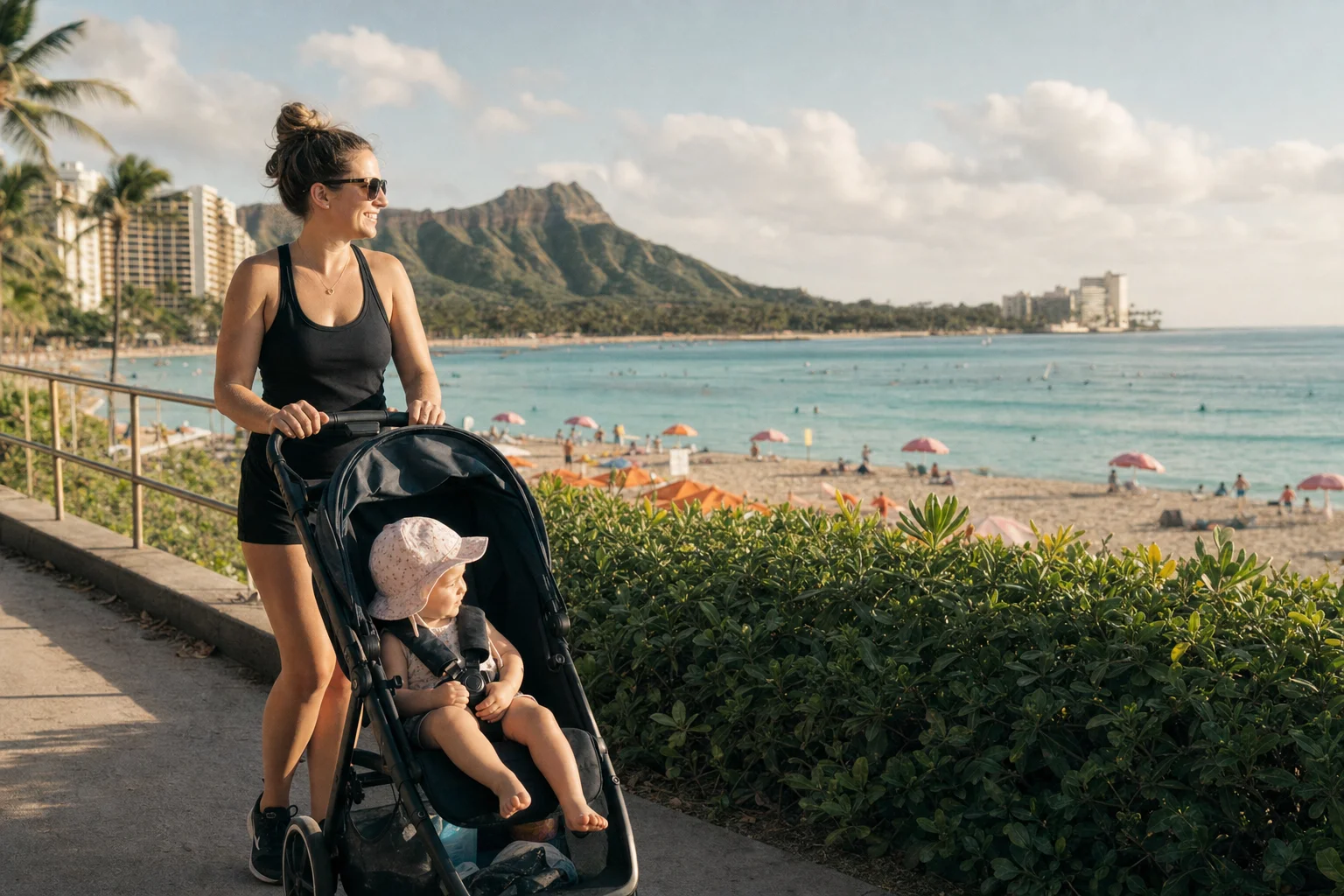
Your baby wakes at 4:30 AM on day two. In most cities, that’s a disaster. On Oahu, that’s the beach before anyone else gets there - golden light, empty sand, water so calm it barely moves. East Coast families on a 5-hour shift arrive with their babies naturally timed to the best hours on the island. That accidental advantage is the part no one tells you before you book.
The harder part: one decision shapes almost everything else about this trip. Ko Olina or Waikiki. Get that right first, and the rest follows.
Ko Olina or Waikiki: the call you make before anything else
Ko Olina wins on water. Four man-made lagoons with no waves, soft sandy entries, and a 1.4-mile paved walkway connecting all four - there is no calmer, more forgiving water environment for a baby on this island. If your primary goal is getting a small child into the ocean for the first time, Ko Olina is the answer.
Waikiki wins on everything that happens around the water. Grocery stores are walkable. The Honolulu Zoo is 15 minutes on foot. Kūhiō Beach has its own enclosed concrete-walled ponds - the Kūhiō Ponds - that create calm swimming in the middle of the Waikiki strip. Restaurants are steps from the hotel. When you’re managing a baby’s feeding schedule, nap windows, and the logistics of getting everyone ready and out the door by 8 AM, proximity to infrastructure matters enormously.
The honest tradeoff: Ko Olina is quieter and the lagoons are genuinely better, but you’re 25 miles from Honolulu with a car dependency for anything beyond the resort. Waikiki means open-ocean beaches with occasional surf even at calmer spots, but the daily rhythms of a baby’s schedule are significantly easier to manage. Neither answer is wrong. The families who struggle are the ones who picked a location without thinking through which constraint actually matters to them.
One logistics note for Ko Olina day-trippers: free parking at the lagoon fills by 9:30 AM on weekends. If you’re not staying at a resort with lagoon access, arrive before that or plan to pay.

AI travel agent
Hotels that work for babies on Oahu
Aulani, A Disney Resort & Spa
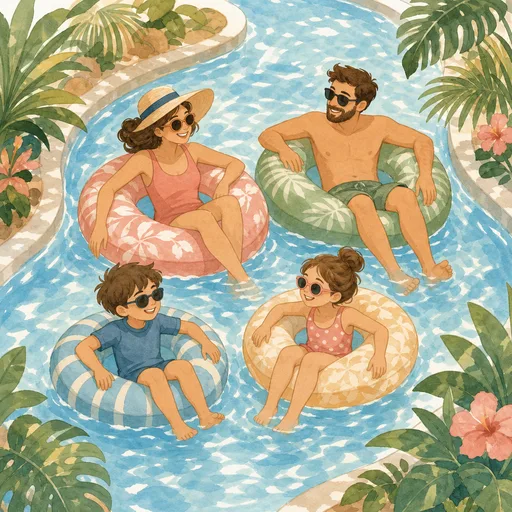
The infant-appropriate water infrastructure here is the real argument for Aulani: Keiki Cove splash zone for under-5s, a zero-entry pool, a lazy river with life jackets and tubes provided, and a private lagoon shared with the Four Seasons that has no waves and a gentle sandy entry. One- and two-bedroom villas have full kitchens and in-unit washers and dryers, which matters more than it sounds when you’re managing formula, swim diapers, and a feeding schedule in the same place you’re sleeping.
The caveat that travel content consistently buries: Aunty’s Beach House, the drop-off kids’ club Aulani leads with in its marketing, requires children to be at least 3 years old and potty trained. There is no group childcare for babies at Aulani. The resort concierge can arrange in-room sitting through Kama’aina Kids, but that’s a separate booking and separate cost. Families who chose Aulani imagining they’d hand off their 18-month-old for a morning and go snorkel will arrive to a different reality.
Also worth checking before you book: Aulani runs a regular refurbishment schedule. The Waikolohe pool area is scheduled offline April 13–May 8, 2026. Confirm current pool availability on the Aulani site before finalizing dates.
Four Seasons Resort Oahu at Ko Olina
Same lagoon as Aulani, different calibration. Multiple guests specifically mention the personalization for young families: names spelled out in bath sponges, baby toiletries set up in the room, high chairs pre-positioned. Junior Suites run roughly 1,000 sq ft with a closing alcove between the sleeping and bathroom areas - useful for putting a baby down at 7 PM while adults decompress in the same room.
The gap: Kids for All Seasons programming starts at age 5. For babies and toddlers, there’s no structured programming beyond the pool and beach, same as anywhere else. Valet-only parking adds a logistical layer when you’re loading and unloading car seats on a timetable. The pricing is firmly premium.
Marriott’s Ko Olina Beach Club
Villa-style one- and two-bedroom units with full kitchens, in-unit washers and dryers, and access to the same Ko Olina lagoon. The atmosphere is notably less structured than Aulani - open lawn areas between pools, activities that don’t require advance sign-up, a pace that accommodates a baby’s unpredictable schedule better than a resort built around a Disney activities calendar. Reviewers consistently describe it as calmer and less crowded than Aulani’s pool deck.
The trade-off: no lazy river, no themed water slides, no kids’ club at any age. Marriott Ko Olina is a base for families who want a calm, self-sufficient setup - a full kitchen, a lagoon outside the door, and nowhere to be at any particular time.
Embassy Suites by Hilton Waikiki Beach Walk
Every room is a suite with a separate living area, wet bar, compact refrigerator, and microwave - no full kitchen, but enough to handle formula storage, baby food prep, and snacks without going out every time. Two-bedroom suites are available. The complimentary cooked breakfast daily is a meaningful practical advantage when sitting in a restaurant with a baby adds 45 minutes and significant cost to every morning.
Location is the other argument: Waikiki Beach Walk puts you within walking distance of Kūhiō Beach, multiple grocery options, and the Honolulu Zoo. A parent who stayed here with a 16-month-old specifically noted the child-friendly staff as genuinely exceptional. No lagoon, but the Kūhiō Ponds are a 10-minute walk.
Hilton Hawaiian Village (read first)
Hilton Hawaiian Village has the only man-made saltwater lagoon on the Waikiki strip - genuinely calm and appropriate for babies. That’s the real draw. The complications: the pool deck is crowded enough that one parent described even a narrow stroller as unable to fit between rows of chairs, and early arrival is mandatory for chair access. The resort’s scale - roughly 3,500 rooms across a sprawling campus - means navigating significant distances with a stroller and gear.
More pressing for 2026 bookings: demolition for a new 36-story tower begins on the Ala Moana Boulevard side in late 2025, with foundation work running through 2026. Guests in affected sections should expect construction noise. If you’re considering HHV for a 2026 trip, confirm with the resort which towers are impacted before committing.
AI travel agent
Which beaches actually work with a baby
Ko Olina’s lagoons are the standard answer for babies, and the standard answer is correct. Shallow, waveless, stroller-accessible paths between all four, soft sandy entry - if you’re in Ko Olina, you’re going to the lagoon.
In Waikiki, the useful alternative most guides skip is Kūhiō Beach’s enclosed ponds. The Kūhiō Ponds are a concrete-walled swimming enclosure right on the beach that creates calm, protected water - appropriate for babies who are cautious about the ocean, without traveling anywhere.
Kailua Beach Park on the windward side is the well-maintained family beach outside of the resort corridors: lifeguards, a large parking lot, restrooms, showers, and a paved walking path. The practical catch is timing - winds pick up significantly in the afternoon, and if gusts are above roughly 15 mph, sand becomes genuinely uncomfortable for infants. Morning is the window.
One beach to skip for stroller families: Lanikai. As of 2025, parking on the Lanikai loop is restricted during peak hours with additional street bans in place. The nearest real parking is at Kailua Beach Park, which is a 10–15 minute walk with a loaded stroller. Kailua is the practical choice.
Before any beach day: check the jellyfish calendar. Box jellyfish hit Oahu’s south and leeward shores - including Waikiki and Ko Olina - predictably 8–12 days after a full moon, and typically linger 2–5 days. The Waikiki Aquarium publishes a free annual calendar online. A stinging day on the only beach day a baby can manage is an avoidable outcome.
Daily logistics
Gear rental. BabyQuip, Baby’s Away, Paradise Baby Co., and Aloha Keiki Rentals deliver pack-n-plays, strollers, car seats, beach tents, and sound machines to Oahu hotels. Renting removes checked bag fees and is typically cheaper than checking a car seat and stroller. If you’re renting a pack-n-play rather than bringing one: hotel cribs vary significantly in quality - netting may be stained, mattress fit inconsistent, sheets that don’t stay flat. A rented pack-n-play from one of these services is more reliable.
Car seats. Don’t rent from the rental car company. Multiple experienced family travelers flag this consistently - rental company car seats are frequently damaged, dirty, or improperly installed. Bring your own in a protective bag, or rent from BabyQuip or Paradise Baby Co. with delivery to your hotel.
Grocery stocking. Oahu has four Targets and six Walmarts, plus Safeway and Costco, with Instacart same-day delivery available throughout Honolulu and Kailua. Formula, diapers, and pouched baby food are all widely stocked. Convenience stores in Waikiki carry the same items at a significant markup. Stock up at a grocery store or via Instacart within the first 24 hours.
Sunscreen. Hawaii law bans the sale of oxybenzone and octinoxate sunscreens statewide - you can only buy mineral formulas on the island. Bring whatever brand you prefer from home. For babies under 6 months: no sunscreen at all per pediatric guidance - beach time is 15–20 minute windows with a full-body sunsuit, wide-brimmed hat, and pop-up beach tent, then back to shade.
The lanai call. If your baby goes down at 7:30 PM, and they will, you need somewhere to be that isn’t the bathroom. A room with a lanai is not optional - it’s where you spend your evenings. Book for the outdoor space as much as the bed configuration.
The jet lag flip
East Coast families land with babies running 5 hours ahead. That means a child wired for 4:30 AM is wired for 4:30 AM Hawaii time, which is sunrise on an empty beach. Multiple parents who’ve done this trip from the East Coast describe the inbound adjustment as genuinely pleasant once they stopped fighting the early mornings - uncrowded beaches, golden light, coffee from a hotel lobby before anyone else is awake.
The return is harder. You go home with a baby who is still on island time, and there’s no upside framing for a 2 AM domestic wake-up. Budget for a slow first week back.
Full adjustment for babies runs roughly one day per hour of time difference - 4 to 7 days for normalization. Blackout curtains in the room help; a sound machine (available from any of the gear rental services) helps more.
If something goes wrong
Kapiolani Medical Center for Women & Children in Honolulu is Hawaii’s only designated pediatric center, with a 24-hour pediatric emergency room. For non-emergency situations, Keiki Urgent Care in the Kahala area - beside Kahala Mall - is Hawaii’s only pediatric-exclusive urgent care clinic, staffed by pediatricians. For infants under 2 months with a fever, standard guidance is to go directly to the ER.
Breastfeeding in public is legally protected under Hawaii state law. No permit, no cover required, no accommodation that can legally turn you away.
Frequently Asked Questions
Is Oahu worth visiting with a baby under one?
Ko Olina or Waikiki with a baby - which is better?
Can I use sunscreen on a baby in Hawaii?
Is Aulani worth booking with a baby under 2?
Can I rent baby gear in Oahu?
How bad is jet lag for babies flying from the East Coast to Hawaii?
More articles about Oahu
Destination Guide
-

Oahu with Kids (2026): The Family Travel Planning Guide
Most families book Oahu thinking the hardest part is finding the right hotel - the hardest part is picking the right side of the island.
-

First Time in Oahu: What to Know Before You Land
The island punishes over-planning and under-booking in equal measure - here's how to thread it.
Who's Traveling
-
Oahu with a Large Family: What to Book and Where
The law changed in 2022. Most travel blogs didn't get the memo.
-

Oahu for Multi-Generational Families: A Real Guide
The island works across four generations - but only if you make one foundational choice before anything else.
-

Oahu with Grandparents: The Hotel Choice That Matters Most
The island itself is the easy part. The hotel is where most families get it wrong.
-

Oahu with School-Age Kids (Ages 6–14)
The families who love it most are the ones who slowed down.
-

Oahu with Teens: Leave Waikiki to Win
The resort pool is fine. The trip your teenagers will actually remember is an hour north.
-

Oahu with a Toddler: Two Decisions That Shape Everything
The island is more forgiving than you'd expect - if you make the right two calls before you land.
Sensory & Accessibility
-

Oahu Without the Sensory Wall of Waikiki
The island rewards early mornings, calm lagoons, and knowing which resort sits on the quiet side of the enclave.
-
Oahu Low-Stimulation Travel
The island has genuinely quiet places. The work is sequencing them so you reach them before the crowds do.
-
Quiet Hotels on Oahu: Where to Actually Sleep
The island isn't uniformly noisy - but you have to know which kind of quiet you're looking for.
-

Sensory-Friendly Oahu: Ko Olina vs. Waikiki
Ko Olina's lagoons were engineered for calm. Waikiki was not.
-

Wheelchair-Accessible Oahu: What's Actually Possible
The infrastructure is genuinely impressive. The gaps are specific - and you can plan around them.
Food
-

Eating Safely on Oahu: A Family Allergy Guide
The island is workable - if you know where the traps are before you land.
-
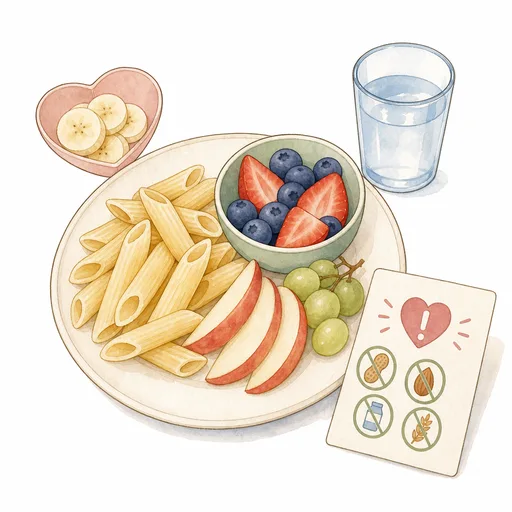
Oahu with Food Allergies
The island's food is extraordinary - and it overlaps with nearly every major allergen in ways most guides miss entirely.
-

Oahu with Picky Eaters: A Practical Guide
The food culture is proudly local. Your kid doesn't have to be.
Room Setup
-
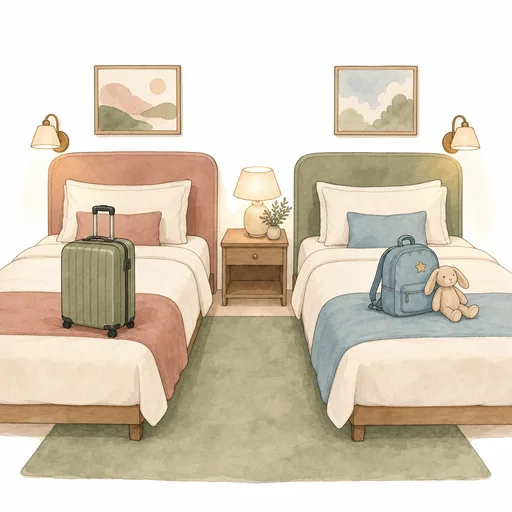
Connecting Rooms in Oahu: Who Actually Guarantees It
The difference between a guaranteed connection and a front-desk argument at 11pm is knowing which hotels have actually solved this.
-
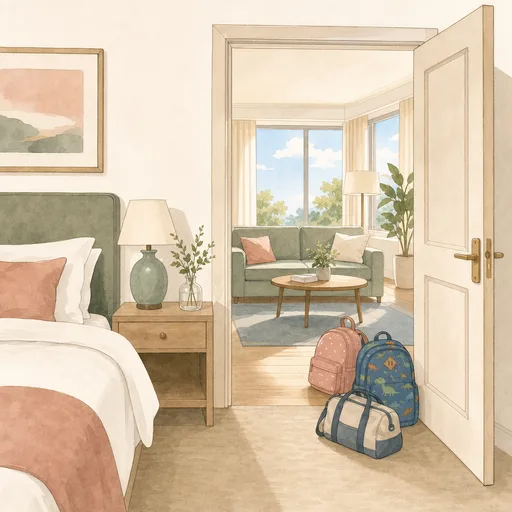
Family Suites in Waikiki and Ko Olina: What's Real
The word "suite" means something different in every Waikiki brochure. Here's what's actually behind the door.
-
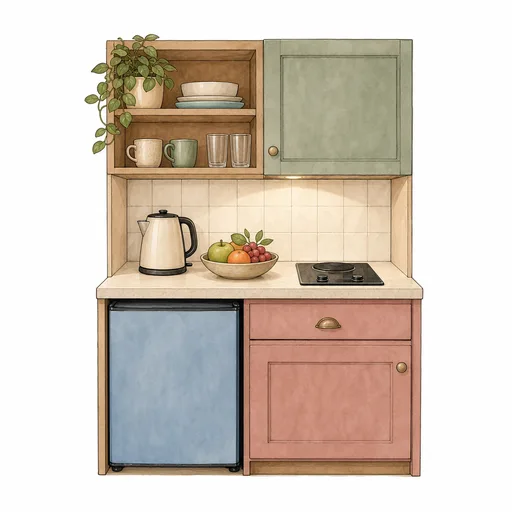
Oahu Condos with Kitchens: What to Actually Book
The most consequential decision you'll make for this trip isn't the beach - it's the cooking setup.
On-Site Activities
-

Oahu Kids Clubs: Which Resort Actually Delivers
The best supervised drop-off programs on the island are free - but not where most families are staying.
-
Oahu Hotels with a Lazy River: One Resort, One River
There's exactly one hotel on the island that has one - and a few things you need to know before you book it.
-

Oahu Water Parks: Aulani, Wet 'n' Wild & More
One real park, one Disney complex that rivals it, and a Waikiki hotel that most families drive past without realizing it has a waterslide.
Powered by Mira
Tell Mira about your family
Two minutes of conversation. A shortlist of hotels that actually fit — connecting rooms, accessible layouts, calm floors, whatever your family needs.
AI travel agent · free to try
Talk to Mira Let Mira find the right hotels for your family. Find hotels with Mira
AI travel agent · free to try