
Hawaii
Oahu Without the Sensory Wall of Waikiki
The island rewards early mornings, calm lagoons, and knowing which resort sits on the quiet side of the enclave.
AI travel agent · free to try
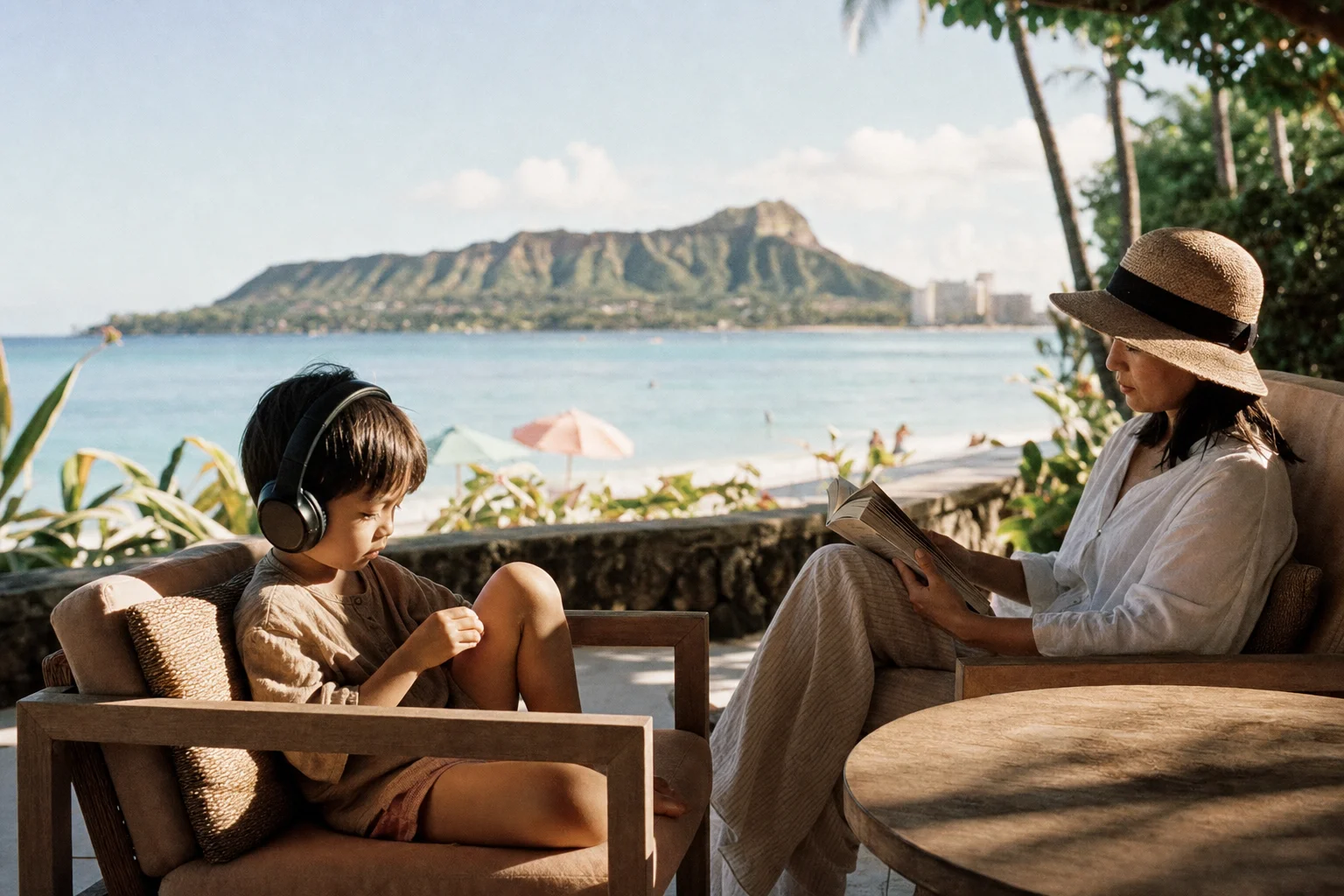
Most Oahu travel writing defaults to Waikiki and calls it settled. The beach is famous, the hotel infrastructure is enormous, and the city is walkable in a way Ko Olina never is. What it doesn’t say: Waikiki draws roughly 72,000 visitors a day, the street noise doesn’t stop at 9pm, and the quietest room in most Waikiki towers is still inside a major tourist strip.
The better base for a family that runs on predictable routines and calm water is 27 miles west.
The base-camp decision
Ko Olina is not a discovery - resorts have been there for years - but the structure of it is underreported. Four man-made lagoons with engineered rock breakwaters that eliminate wave action entirely. Sandy-bottom entry, visible to three feet. Shallow gradients that stay predictable. A self-contained resort enclave where the perimeter of the property is, roughly, the perimeter of the noise.
Waikiki’s quiet is tactical - specific hours, specific spots, never the baseline. Ko Olina’s quiet is structural. That’s a real distinction, not a marketing one.
The lagoons are not identical. Lagoon 1 sits in front of Aulani and the Four Seasons - two large hotels, most foot traffic. Lagoon 4 fills with local families on weekends. Lagoons 2 and 3 are consistently calmer. Lagoon 3 is the exclusive frontage of the Marriott Ko Olina Beach Club: no other hotel’s guests share it. An April 2026 Tripadvisor reviewer called it “not nearly as busy/crowded as the neighboring resorts. Very relaxed.”
The Marriott Ko Olina Beach Club on Lagoon 3
Travel writers pitch Aulani versus the Four Seasons and leave the Marriott out entirely. For families whose priority is calm over Disney IP, that’s a mistake.
The exclusive Lagoon 3 access is one argument. The room layout is another. Villa configurations include separate sleeping and living spaces with full kitchens - the specific structure that lets a child sleep in an actual bedroom while adults decompress in a different room, and that lets you cook a familiar meal from a known kitchen rather than navigating a restaurant’s noise and unpredictable menu. For families who run on routine mealtimes from familiar food, that’s not a nice-to-have.
Three pools include a dedicated quiet reflection pool, separate from the main family pool. Scheduled programming is minimal - lei making and hula lessons. That restraint removes the scheduling pressure that larger resorts generate. One Tripadvisor reviewer described Aulani: “There was so much to do that we felt a lot of pressure… failing to make a reservation early enough or pulling our son from the pool.” The Marriott doesn’t impose that.

If you’re deciding between the Marriott Ko Olina and Aulani - calm-by-structure versus structured-by-Disney - tell Mira your travel dates and she can check which room categories actually face Lagoon 3 and what’s available.
AI travel agent
Aulani: what the structure gives you, and what it costs
Aulani is not quiet. But it is unusually legible - and for a child who runs on known schedules rather than calm environments, that’s a different kind of useful.
The Daily ‘Iwa is Aulani’s published activity schedule, available on the resort website and a digital board near the front desk each morning. A dedicated Character Hotline, reached from in-room phones, tells you exactly which characters appear that day and at what time. Most resorts hand you a pamphlet. Aulani tells you where to stand and when.
The Menehune Adventure Trail is a tablet-guided scavenger hunt - lobby trail runs 10am–7pm, no line required, no crowd moment, entirely child-paced and pause-tolerant. The character breakfast at Makahiki has assigned seating; characters visit the table rather than guests queuing. Advance booking is required, often weeks out - a family arriving without a reservation will be turned away.
What Aulani costs: the main Waikolohe Pool complex is loud from 9am on. Chair competition begins before 7am. The Wailana pool - formerly the quietest family option at 100-person capacity - was converted to adults-only in late 2024. The Ka Maka Grotto is the quietest remaining pool; the Waikolohe Stream lazy river (900 feet) rarely feels crowded because of its length.
One documented limitation: Aulani cannot guarantee specific room types or floors beyond ADA categories. A parent who requested a guaranteed ground floor for a child who climbs toward balconies was refused - Tripadvisor, on record. Mobility and hearing accommodations exist; room-location requests are requests, not commitments.
Certified quiet: Honolulu Zoo and Waikiki Aquarium
Two attractions worth the 40-minute drive from Ko Olina. Both are small enough to complete without the abandoned-midvisit feeling that larger venues produce.
Honolulu Zoo
The zoo is KultureCity Sensory Inclusive certified - one of only two venues in Hawaii with this designation. At the entrance or gift shop, you can borrow a sensory bag: noise-canceling headphones, fidget tools. Designated quiet areas are distributed through the facility. Staff have training from psychologists and people with lived sensory experience. The outdoor layout means no dim corridors and no amplified sound built into the exhibits.
Hours: 10am–3pm. The primate section is loudest at opening. Arriving at 10:30am lets the gibbon and chimpanzee noise settle before you reach it.
Waikiki Aquarium
Among the smallest accredited aquariums in the US - one hour end to end, linear layout, no sudden loud sound effects in the main tank rooms, outdoor sections for mid-visit decompression. For a family that has walked out of a larger aquarium halfway through, completing this one is a different experience.
The Hawaiian Reef Animals touch program is slow-paced and structured: sea star, sea cucumber, sea urchin, small group, no chaos. Mornings are least crowded; it closes at 4:30pm.
Pair them: zoo at 10:30am, aquarium from 1pm, Kapiolani Park after for open air. One end of Honolulu, one car trip, done by 3pm.
If you want to build a day around the zoo and aquarium from Ko Olina - including realistic drive times and whether the character breakfast fits on the same day - tell Mira and she’ll sketch the logistics.
AI travel agent
Beaches by time of day
The same beach is two different places depending on when you arrive.
Ko Olina lagoon chairs are empty before 7:30am. The water is glass. Getting there before the resort fills out is a different experience than arriving at 10am - and even 10am Ko Olina is calmer than midday Waikiki.
Kailua Beach and Castles Beach on the Windward side: arrive before 8am on a weekday. Castles Beach is the northern tip of Kailua, reached by a 10-minute walk from parking on North Kalaheo Avenue. No dedicated parking lot, no lifeguards, no bathrooms - which is exactly why it stays quiet. An offshore reef intercepts wave energy before it reaches shore. Self-sufficiency required: bring everything, check tides and surf the night before. Outside summer (May–September), conditions vary significantly.
Hanauma Bay’s volcanic crater shape blocks most ocean swell. The reservation system - book two days in advance, releases at 7am Hawaii time - controls crowd density and removes the “will we get in?” uncertainty. First entry is 6:45am. The mandatory environmental education video before entry creates an unusually structured first few minutes: you know the sequence before you’re in the water.
The time zone reality
From the East Coast, Hawaii runs 5–6 hours behind. Children typically wake at 4–5am local time for the first two days. That doesn’t schedule away. The better move is to plan around it: build a 6am beach session into the first two mornings. Early waking stops being a crisis the moment it becomes the itinerary. Afternoon light exposure - a beach session around 3–5pm on arrival day - helps reset circadian rhythm faster.
The harder adjustment is coming home. The body stays on Hawaii time for several days after you land.
Frequently Asked Questions
Which Ko Olina lagoon is least crowded?
Does Aulani have a DAS pass like Disney theme parks?
Is the Honolulu Zoo worth the trip for a child who gets overwhelmed by noise?
How bad is the time zone gap from the East Coast, and what actually helps?
Is Waikiki workable, or does the noise make it a bad base?
More articles about Oahu
Destination Guide
-

Oahu with Kids (2026): The Family Travel Planning Guide
Most families book Oahu thinking the hardest part is finding the right hotel - the hardest part is picking the right side of the island.
-

First Time in Oahu: What to Know Before You Land
The island punishes over-planning and under-booking in equal measure - here's how to thread it.
Who's Traveling
-

Oahu with a Large Family: What to Book and Where
The law changed in 2022. Most travel blogs didn't get the memo.
-

Oahu for Multi-Generational Families: A Real Guide
The island works across four generations - but only if you make one foundational choice before anything else.
-

Oahu with a Baby: What to Book and Where to Stay
The island is more manageable with an infant than you think - if you make one decision right before anything else.
-

Oahu with Grandparents: The Hotel Choice That Matters Most
The island itself is the easy part. The hotel is where most families get it wrong.
-

Oahu with School-Age Kids (Ages 6–14)
The families who love it most are the ones who slowed down.
-

Oahu with Teens: Leave Waikiki to Win
The resort pool is fine. The trip your teenagers will actually remember is an hour north.
-

Oahu with a Toddler: Two Decisions That Shape Everything
The island is more forgiving than you'd expect - if you make the right two calls before you land.
Sensory & Accessibility
-
Oahu Low-Stimulation Travel
The island has genuinely quiet places. The work is sequencing them so you reach them before the crowds do.
-
Quiet Hotels on Oahu: Where to Actually Sleep
The island isn't uniformly noisy - but you have to know which kind of quiet you're looking for.
-

Sensory-Friendly Oahu: Ko Olina vs. Waikiki
Ko Olina's lagoons were engineered for calm. Waikiki was not.
-

Wheelchair-Accessible Oahu: What's Actually Possible
The infrastructure is genuinely impressive. The gaps are specific - and you can plan around them.
Food
-

Eating Safely on Oahu: A Family Allergy Guide
The island is workable - if you know where the traps are before you land.
-

Oahu with Food Allergies
The island's food is extraordinary - and it overlaps with nearly every major allergen in ways most guides miss entirely.
-

Oahu with Picky Eaters: A Practical Guide
The food culture is proudly local. Your kid doesn't have to be.
Room Setup
-
Connecting Rooms in Oahu: Who Actually Guarantees It
The difference between a guaranteed connection and a front-desk argument at 11pm is knowing which hotels have actually solved this.
-
Family Suites in Waikiki and Ko Olina: What's Real
The word "suite" means something different in every Waikiki brochure. Here's what's actually behind the door.
-
Oahu Condos with Kitchens: What to Actually Book
The most consequential decision you'll make for this trip isn't the beach - it's the cooking setup.
On-Site Activities
-

Oahu Kids Clubs: Which Resort Actually Delivers
The best supervised drop-off programs on the island are free - but not where most families are staying.
-

Oahu Hotels with a Lazy River: One Resort, One River
There's exactly one hotel on the island that has one - and a few things you need to know before you book it.
-

Oahu Water Parks: Aulani, Wet 'n' Wild & More
One real park, one Disney complex that rivals it, and a Waikiki hotel that most families drive past without realizing it has a waterslide.
Powered by Mira
Tell Mira about your family
Two minutes of conversation. A shortlist of hotels that actually fit — connecting rooms, accessible layouts, calm floors, whatever your family needs.
AI travel agent · free to try
Talk to Mira Let Mira find the right hotels for your family. Find hotels with Mira
AI travel agent · free to try