
Hawaii
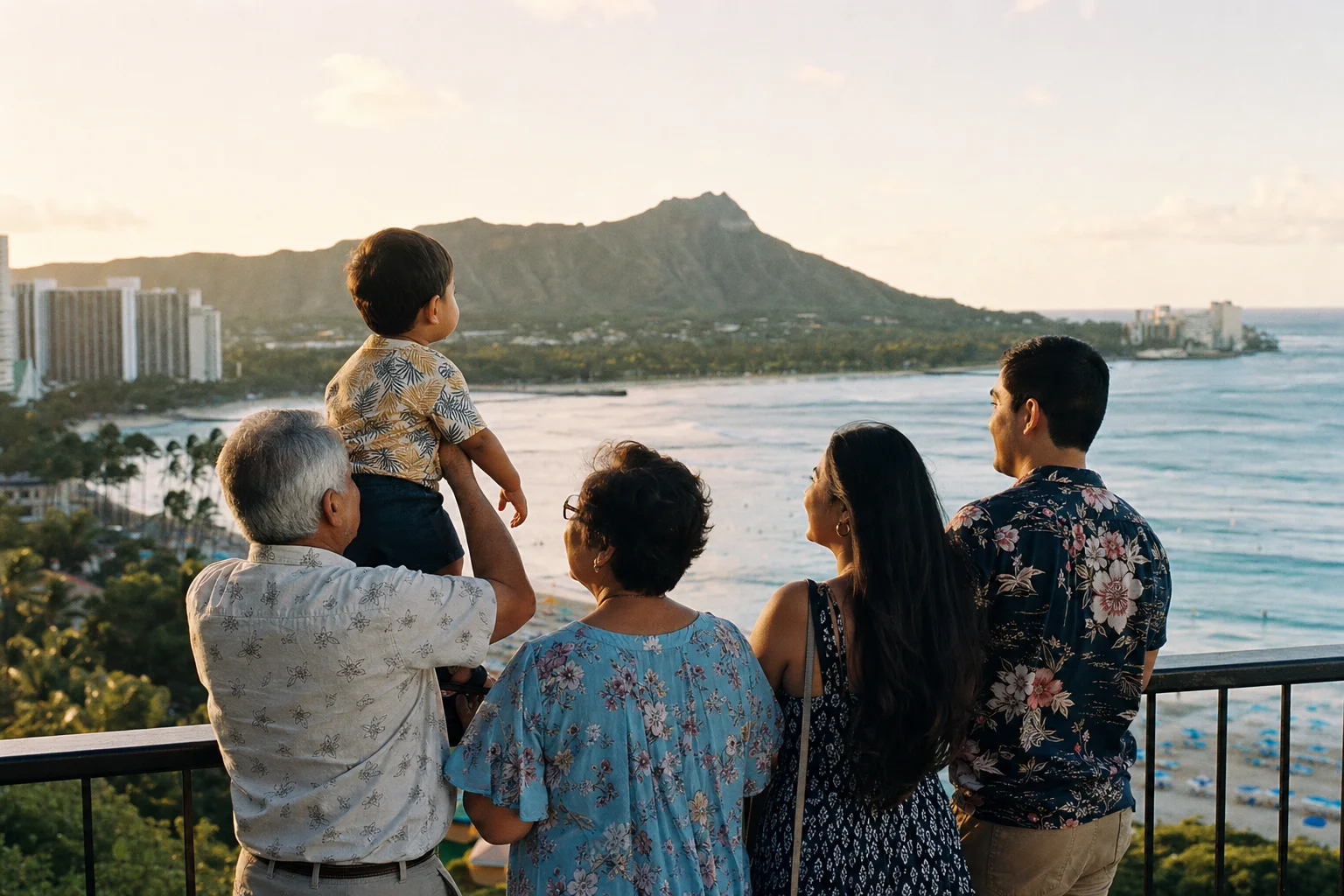
Oahu with Grandparents
The island itself is the easy part. The hotel is where most families get it wrong.
AI travel agent · free to try
A 22-acre resort with six towers checks every accessibility box on paper - zero-entry pool ramps, pool lifts, flat paved paths between buildings, ADA-compliant rooms. What the amenity page doesn’t mention is that guests in early 2026 reported elevator journeys of 15 minutes minimum, with the system stopping at every floor regardless of capacity. For a grandparent whose stamina is finite, a 20-minute round-trip just to get back to the room changes the math on everything else.
Oahu is the right island for multigenerational travel that includes older adults - the flattest terrain, the only ADA bus network in Hawaii, walkable hotel districts, urgent care inside a Waikiki hotel building. The infrastructure advantage over Maui, Kauai, and the Big Island is genuine and significant. But the island’s hospitality infrastructure is also aging in ways that don’t surface in review averages, and the difference between a trip that works well and one that doesn’t often comes down to a single question you didn’t think to ask before booking: how many elevators does your tower actually have?
Why Oahu has an edge over every other Hawaiian island
Maui, Kauai, and the Big Island all require a car to access essentially anything beyond your hotel - you’re renting, loading equipment, finding parking, repeating that cycle daily. Waikiki is different in kind. The strip from Waikiki to Ala Moana is flat, fully sidewalked, and navigable without any vehicle at all. TheBus, which runs ADA-compliant vehicles with wheelchair ramps on every route, covers most of the island’s major sights for under $3 a ride. For days when bus routing is inconvenient, Uber and Lyft handle door-to-door gaps, and full-day coach tours through Roberts Hawaii or Donna’s Detours eliminate driving and parking entirely.
The medical logistics that nobody wants to plan for but everyone should: Straub Benioff Medical Center Doctors On Call operates inside the Sheraton Waikiki building, daily, and has since 1981. The Urgent Care Clinic of Waikiki offers free taxi pickup from Waikiki hotels. Queens Medical Center - Oahu’s Level I trauma center - is 10–15 minutes by car. That density of options doesn’t exist at a Ko Olina resort or anywhere on Maui.
The elevator problem Waikiki hotels don’t advertise
Waikiki’s hotel stock is old. Towers built in the 1970s and 1980s are running the same elevator infrastructure, sometimes retrofitted, sometimes not, serving occupancy levels those systems weren’t designed for. The consequences show up in guest reviews rather than hotel fact sheets.
Hilton Hawaiian Village Waikiki Beach Resort
The Hilton Hawaiian Village is the most commonly recommended Waikiki property for multigenerational travel, and the reasoning is sound: six towers all with elevator access, zero-entry pool ramp, pool lifts at five pools, flat paved paths throughout, accessible beach showers. On paper, it’s thorough. The honest caveat is scale - 22 acres means navigating the property itself is a mobility challenge, and documented reviews from February 2025 and February 2026 describe 15–20 minute elevator waits during busy periods, with systems that stop at every floor. For grandparents with limited stamina, an on-property mobility scooter changes the equation significantly; U-Go Mobility and Hawaiian Style Rentals both deliver to the hotel entrance. If you book here, request a room in the tower closest to the specific pool and beach access your group will use most, and plan for the scooter from day one.
Outrigger Reef Waikiki Beach Resort
The Outrigger has documented elevator problems that are different in character - multiple reviews note as few as two or three operational elevators at times, with one frequently reserved for freight use, and a QR-code wristband access system that fails repeatedly and requires housekeeping intervention. Checkout morning waits have been reported at 20 minutes. This is a named, specific operational problem rather than a scale problem, and it’s worth asking the property directly about current elevator status before confirming a booking.
Halekulani Hotel
The boutique-scale argument for Halekulani is that 453 rooms over a relatively compact footprint produces almost none of the navigation overhead that plagues larger properties. Forum threads specifically focused on traveling with elderly parents cite it repeatedly, and AARP Travel has flagged it as a top Waikiki pick. House Without a Key - the beachfront bar with nightly live Hawaiian music and hula - is steps from the rooms, beach-level with no steps to navigate, which means evening entertainment that doesn’t require planning a route across a 22-acre resort. The tradeoff is premium pricing and a smaller pool than the mega-resorts, both of which will matter or won’t depending on your group’s priorities.

Elevator count, tower proximity to the beach, and scooter delivery logistics are exactly the kind of pre-booking verification that takes three phone calls and still doesn’t feel certain. Tell Mira which properties you’re considering and she can work through the specifics before you commit.
AI travel agent
Ko Olina: the right move for the right trip
Ko Olina’s four man-made lagoons are current-free, calm, and flat-access - a short level walk from parking, with beach chairs, shade, and nearby bathrooms. A paved boardwalk connects all four lagoons and is lit and walkable at night. One multigenerational family traveling with two grandparents described the boardwalk and the calm water as the clear highlight of their stay.
Aulani, the Disney resort within Ko Olina, adds more structure: all-elevator navigation throughout the property, pool lifts at every pool, zero-entry pool options, ramps to the lagoon, and an adults-only Wailana Pool with food service and nearby bathrooms that functions, by multiple accounts, as a genuinely comfortable retreat for grandparents who want to opt out of the main family chaos for a few hours. Sand wheelchairs are available. Beach chairs fill early - arriving before 9am matters.
The clear limitation is isolation. Ko Olina is 40 minutes from Waikiki, Pearl Harbor, and most cultural sights on the island - families who base here and want to sightsee will spend significant time in the car every day. The forum pattern is consistent: Ko Olina works best as two or three days at the end of a Waikiki-based trip, when the group wants water and calm over logistics. Treating it as a sole base is the booking decision most Ko Olina families would redo.
Activities that actually work
Waimea Valley
The path from the parking area to the waterfall is 0.75 miles, fully paved, with benches and rest spots at intervals. A motorized shuttle covers the full distance for guests who can’t walk it. Swimming at the falls is allowed and life jackets are provided at the pond. Closed Mondays - confirm before building it into your schedule. Manoa Falls, the other commonly mentioned Oahu waterfall, is muddy, uneven terrain with documented ankle injuries among senior visitors; go to Waimea.
Byodo-In Temple
Flat concrete paths from parking, reflection pond with benches nearby, quiet and shaded. About $5 admission with a senior discount for guests 65 and older. A short trip - maybe 45 minutes - but low-effort and genuinely peaceful in a way that plays well when the group needs a change of pace without committing to a full day.
North Shore scenic drive
Laniakea Beach for turtle watching is flat roadside parking with no hiking required. Haleiwa town has flat streets, ample seating, and the shave ice that everyone needs once. Turtle Bay Resort works as a lunch stop with a restaurant on-site and nothing requiring a hike. Waimea Valley fits naturally as the third stop. That’s a manageable half-day that doesn’t require anyone to walk far or fast.
Polynesian Cultural Center
The grounds are fully paved and the villages connect by wide walkable paths, but this is a genuinely long day and multiple forum contributors flag it as too much for grandparents who fatigue by early afternoon. The evening HĀ: Breath of Life show is seated and accessible - wheelchair seating is positioned between the upper and lower sections. If the show is the main draw, arrive mid-afternoon rather than committing to the full daytime program.
Pearl Harbor
The Visitor Center, Pearl Harbor Aviation Museum, and USS Arizona Memorial are fully accessible - the Navy shuttle boats have boarding ramps. The USS Missouri is accessible to the main deck by ramp, but the interior passages are the original tight wartime design and aren’t navigable for anyone using a mobility aid. The USS Bowfin submarine has no accessible entry. The underemphasized logistical fact: there are no wheelchairs available for rent on-site. If anyone in your group needs one, arrange delivery to your hotel before you leave - U-Go Mobility and Hawaiian Style Rentals both do hotel deliveries.
Pearl Harbor logistics - which sites to prioritize, scooter delivery timing, whether the day works better as a half-day - are the kind of itinerary questions Mira handles well if you give her the specifics of who’s traveling.
AI travel agent
Before you land
Request airline wheelchair assistance for the HNL arrival. It’s free, requires no eligibility documentation, and bypasses the general crowd flow through baggage claim - multiple forum threads aimed at families with older adults call it the single highest-value thing you can arrange before the flight. The place to arrange it is at booking, while you have the reservation open, because gate requests often fall through.
Free beach wheelchair loans are available at Ala Moana Beach Park through the City and County of Honolulu’s Department of Parks and Recreation. Fort DeRussy Beach within Waikiki has ADA-accessible facilities as well.
The Waikiki Trolley Pink Line requires standing - it’s not a useful option for grandparents who need to sit. Uber, Lyft, or a private coach tour are the correct alternatives for grandparents moving around Waikiki.
Schedule at least one full rest day mid-trip. The research on senior travel to Honolulu includes a straightforward observation from a forum contributor: falls pose meaningful risks for older visitors in Honolulu, and fatigue is the leading contributor. Build the rest day into the plan from the start - a multigenerational Oahu trip needs air in the schedule.
Frequently Asked Questions
Do we need a rental car if we're staying in Waikiki with elderly family members?
Waikiki or Ko Olina for grandparents - which should we book?
What's the most accessible waterfall to visit on Oahu?
Which Pearl Harbor sites are fully accessible and which aren't?
Are there medical facilities near Waikiki hotels?
Can grandparents do the Atlantis Submarine tour?
More articles about Oahu
Destination Guide
-

Oahu with Kids (2026): The Family Travel Planning Guide
Most families book Oahu thinking the hardest part is finding the right hotel - the hardest part is picking the right side of the island.
-

First Time in Oahu: What to Know Before You Land
The island punishes over-planning and under-booking in equal measure - here's how to thread it.
Who's Traveling
-
Oahu with a Large Family: What to Book and Where
The law changed in 2022. Most travel blogs didn't get the memo.
-

Oahu for Multi-Generational Families: A Real Guide
The island works across four generations - but only if you make one foundational choice before anything else.
-

Oahu with a Baby: What to Book and Where to Stay
The island is more manageable with an infant than you think - if you make one decision right before anything else.
-

Oahu with School-Age Kids (Ages 6–14)
The families who love it most are the ones who slowed down.
-
Oahu with Teens: Leave Waikiki to Win
The resort pool is fine. The trip your teenagers will actually remember is an hour north.
-

Oahu with a Toddler: Two Decisions That Shape Everything
The island is more forgiving than you'd expect - if you make the right two calls before you land.
Sensory & Accessibility
-

Oahu Without the Sensory Wall of Waikiki
The island rewards early mornings, calm lagoons, and knowing which resort sits on the quiet side of the enclave.
-
Oahu Low-Stimulation Travel
The island has genuinely quiet places. The work is sequencing them so you reach them before the crowds do.
-
Quiet Hotels on Oahu: Where to Actually Sleep
The island isn't uniformly noisy - but you have to know which kind of quiet you're looking for.
-

Sensory-Friendly Oahu: Ko Olina vs. Waikiki
Ko Olina's lagoons were engineered for calm. Waikiki was not.
-
Wheelchair-Accessible Oahu: What's Actually Possible
The infrastructure is genuinely impressive. The gaps are specific - and you can plan around them.
Food
-

Eating Safely on Oahu: A Family Allergy Guide
The island is workable - if you know where the traps are before you land.
-

Oahu with Food Allergies
The island's food is extraordinary - and it overlaps with nearly every major allergen in ways most guides miss entirely.
-

Oahu with Picky Eaters: A Practical Guide
The food culture is proudly local. Your kid doesn't have to be.
Room Setup
-
Connecting Rooms in Oahu: Who Actually Guarantees It
The difference between a guaranteed connection and a front-desk argument at 11pm is knowing which hotels have actually solved this.
-
Family Suites in Waikiki and Ko Olina: What's Real
The word "suite" means something different in every Waikiki brochure. Here's what's actually behind the door.
-
Oahu Condos with Kitchens: What to Actually Book
The most consequential decision you'll make for this trip isn't the beach - it's the cooking setup.
On-Site Activities
-

Oahu Kids Clubs: Which Resort Actually Delivers
The best supervised drop-off programs on the island are free - but not where most families are staying.
-

Oahu Hotels with a Lazy River: One Resort, One River
There's exactly one hotel on the island that has one - and a few things you need to know before you book it.
-

Oahu Water Parks: Aulani, Wet 'n' Wild & More
One real park, one Disney complex that rivals it, and a Waikiki hotel that most families drive past without realizing it has a waterslide.
Powered by Mira
Tell Mira about your family
Two minutes of conversation. A shortlist of hotels that actually fit — connecting rooms, accessible layouts, calm floors, whatever your family needs.
AI travel agent · free to try
Talk to Mira Let Mira find the right hotels for your family. Find hotels with Mira
AI travel agent · free to try