
New York
Wheelchair-Accessible NYC
The hotel is the easy part. The transit mix is the trip.
AI travel agent · free to try
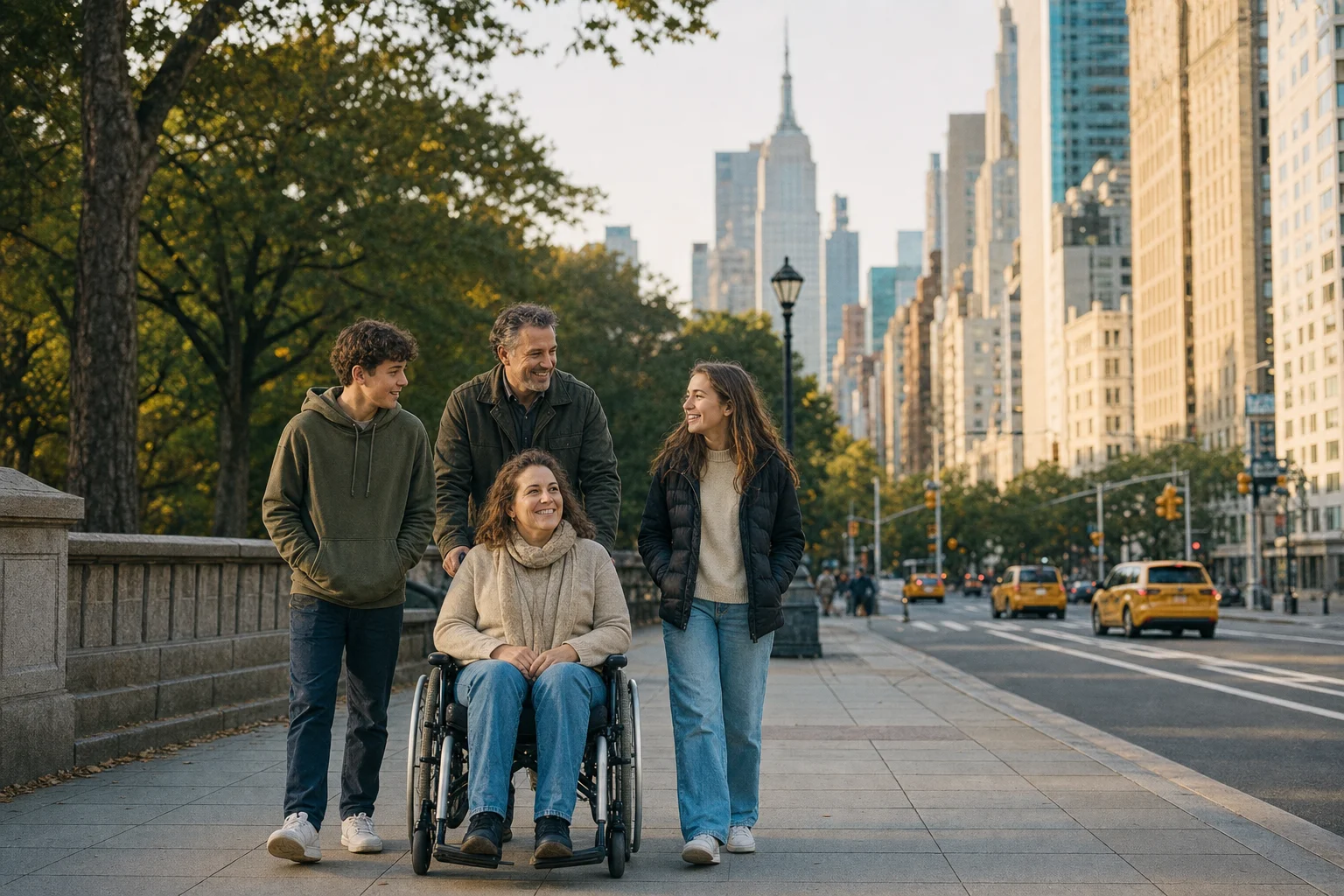
A wheelchair user can do New York. The hotel rooms work, the museums work, the major observation decks work, most of Central Park’s main paths are paved and graded. What trips people up is the assumption that picking the right hotel is the hard decision. It isn’t. The hard decision is the transit mix, and the difference between a trip that flows and one that strands you for an hour on a subway platform comes down to whether you understood that before you booked.
The mental model: hotel is a checkbox, bus is your default, subway is partial, sidewalks are the wild card. A Manhattan Borough President audit of 1,209 curb cuts found only 9.5% were fully ADA-compliant, and post-2020 restaurant sheds have narrowed clear sidewalk paths to under 36 inches in stretches. Cross at major intersections where the cut is more likely to be fresh.
Where to stay
The right hotel question is less “which property” and more “which accessible subway station.” A hotel within a block of 34 St-Penn, 42 St-Bryant Park, 59 St-Columbus Circle, or 14 St L beats a more luxurious property four crosstown blocks from any elevator.
The Lotte New York Palace (Midtown East)
The Lotte sits on 50th and Madison and has the most thoroughly documented accessibility setup of any luxury hotel in the city - roll-in showers with grab bars, lowered sinks, beveled floor saddles, lever handles, strobe smoke detectors, TTY phones, and on-request loaner wheelchairs. The room footprint is generous, which matters when a power chair and equipment are coming with you. Five minutes from St. Patrick’s, Rockefeller Center, and the 51 St 6 train.
The Standard, High Line (Meatpacking)
The Standard’s Deluxe King with roll-in shower sits directly under the southern entrance to the High Line - the most-trafficked walking destination on the West Side is door-to-elevator. The Meatpacking location is quieter than Midtown after dark and pairs naturally with the Whitney, Little Island, and Chelsea Market for a self-contained day.
Conrad New York Downtown
The Conrad is all-suite near the 9/11 Memorial, and the suite footprint is the point - accessible suites with roll-in showers give a family enough room to leave a power chair charging in the living area without it dominating the bedroom. If your trip leans Lower Manhattan, this is the base.
Two booking pitfalls reliably wreck otherwise-good stays. Some newer hotels mount the elevator-floor kiosk above seated reach, which turns every trip to your room into a help-needed moment - ask about kiosk height before booking. And accessible rooms get reassigned to non-disabled guests who arrive earlier with surprising frequency; call the day of arrival and ask the on-site duty manager to hold your specific room (the central reservation line cannot lock assignments).

The gap between “accessible” on a booking page and what’s actually in the room - roll-in versus tub, reachable elevator kiosk, room actually held for you on arrival - is where most NYC trips go sideways. Tell Mira your specific chair setup and she’ll cross-check which of these hotels has the room subtype you need.
AI travel agent
Getting around: the bus is the story
Most accessibility guides to NYC lead with the subway and bury the bus. Backwards.
Every MTA bus is accessible - every route, every borough, every hour the system runs, with ramps or lifts at the curb and two designated wheelchair spaces tied down by the driver. The bus is slower than the subway, but it’s reliable in a way the subway cannot be when only 155 of 493 stations (about 31%) have elevator or ramp access. Anchor your trip to the major routes - the M15 down Second Avenue, the M5 down Fifth, the M104 across 42nd and up Broadway, the crosstown M86 across Central Park - and you’ve solved a large fraction of the problem before you’ve thought about anything else.
The subway is worth using at confirmed stations. Manhattan’s accessible list runs to about 61 stops, including most major transfer hubs - 34 St-Penn, Times Sq-42 St, Grand Central, 59 St-Columbus Circle, 14 St-Union Sq, Atlantic Av-Barclays Ctr on the Brooklyn side. Check mta.info/elevator-escalator-status every morning and have a backup station in mind. Emily Ladau, the wheelchair advocate, has written about being trapped at Union Square when the only platform elevator died mid-trip - call button no answer, six firefighters arriving an hour later to evacuation-chair her up two flights. That happens.
Accessible yellow and green cabs run through the city’s accessible-taxi dispatch program - roughly 1,800 yellow and 800 green ramp-equipped vehicles at metered rate, no surcharge. The dispatch operator is changing in early 2026, so book through the current method linked from nyc.gov/site/tlc. Uber WAV and Lyft Access exist, but cancellation rates are materially higher than standard rideshare once the chair becomes visible to the driver; build a buffer for hard arrival times like a Broadway curtain or a flight.
NYC Ferry is the city’s most underused accessibility win. Every vessel has wheelchair tie-downs and an accessible bathroom, every landing has an updated transfer ramp, and persons with disabilities qualify for discount fares. A scenic, low-friction way to move between Lower Manhattan, DUMBO, Long Island City, and the East River neighborhoods.
Attractions worth your day
The big four museums are all genuinely accessible. The Met has accessible entrances, large-print and Braille maps, audio-described tours, and free entry for caregivers. MoMA has power-assist doors on 53rd and 54th plus free wheelchair and rollator loans at every entrance. The Whitney runs every floor by elevator with free wheelchair rental and a free care-partner ticket. The Guggenheim’s quarter-mile ramp is the museum - elevators between levels let you skip sections, and only the High Gallery is off-limits.
For observation decks, plan around the Empire State Building’s 86th floor and Edge at Hudson Yards. The 86th has ramps onto the deck, lowered viewing walls, lowered binoculars, accessible restrooms; default to that floor since sources contradict each other on whether the 102nd’s final elevator transfer has a small step. Edge is fully accessible, with angled glass walls designed for low-vantage-point viewing - seated and standing visitors get a near-identical experience.
The 9/11 Memorial is the piece of inclusive design worth pointing out. The parapets around the two voids have chamfered corners, so a seated visitor sees into the void at the same angle as a standing visitor - designed in from the start rather than retrofitted, which is unusual for an American memorial of that scale.
For the Statue of Liberty, book the Pedestal ticket. The ramp-equipped ferry runs from Battery Park, Liberty Island is paved, and an elevator inside the monument takes you to the top of the pedestal interior. The Crown’s 162 narrow stairs are the only thing you’d miss, and the pedestal view is the one most visitors remember.
The High Line has elevators at Gansevoort, 14th, 23rd, and 30th along the elevated park’s southern half. Check the live elevator status page the morning of - a single one down can mean rolling a long block on the street to the next access point. Manual wheelchairs are available through the park’s Guardian service if you request a business day ahead.
Building a New York day that flows in a wheelchair - bus to museum, ferry to next stop, accessible cab for the evening - takes more than picking the right list. Tell Mira where you’re staying and what you want to see, and she’ll sequence a day that doesn’t double back or strand you at a broken elevator.
AI travel agent
The booking script
Before you arrive, call the property’s on-site front desk and confirm three things. First: is the room a roll-in shower or a transfer shower? They are not the same and booking systems use the words interchangeably. Second: where is the elevator selection panel - inside the car at standard height, or on a kiosk in the lobby, and at what mounting height? Third: ask them to lock your room assignment for the date of arrival so the accessible room stays accessible by the time you walk in. Ten minutes on the phone prevents most of the failure modes that show up in the negative accessibility reviews.
One airport-hotel flag: TWA Hotel at JFK has multiple guest reports of being told on arrival that the property doesn’t allow wheelchairs. The location inside the terminal looks convenient on a map; the on-site experience does not.
Frequently Asked Questions
Is the NYC subway wheelchair accessible?
What's the most reliable way to get around NYC in a wheelchair?
Where do you get an accessible taxi in NYC?
Can a wheelchair user go to the top of the Statue of Liberty?
Are Broadway theaters wheelchair accessible?
More articles about Nyc
Destination Guide
-

NYC Family Vacation Guide (2026)
Most families pick the hotel last and the neighborhood never - and those two skipped decisions shape everything from transit to sleep quality to what the day actually costs.
-

NYC for First-Time Visitors
The order you do things matters more than the list of things you do.
Who's Traveling
-

NYC for Large Families: The 4-Person Rule
Five or six people, one Manhattan trip - the booking choices are different here, and most listicles won't tell you why.
-

Multi-Generational NYC: What Actually Works
Three generations, three different paces - here's how to keep the slowest member of the group in the trip.
-

NYC with a Baby
The trip lives or dies on whether the crib actually fits beside the bed.
-

NYC With Grandparents: A Pacing-First Guide
Your hotel is the second living room - the place you sleep between attractions is a different category of building.
-

NYC with School-Age Kids: A Useful Guide
Pick a base, pick 2-3 things a day, and let the subway do the rest.
-

NYC With Teens: A Trip That Doesn't Feel Like a Checklist
The trip works when teens help build it, and when you skip the famous things that consistently flop with their age group.
-

NYC with a Toddler
Book the room with a kitchenette and learn the elevator map - the rest of the trip is execution.
Sensory & Accessibility
-

NYC Sensory-Friendly Programs: Book the Event First
The calendar is the plan. Everything else builds around what you book first.
-

Low-Stimulation NYC: Plan the Architecture First
The programming exists. The trip depends on booking it before you pack.
-

Quiet Hotels in NYC for Families
Getting a good night's sleep in New York starts with picking the right block - the room type comes second.
-

Sensory-Friendly NYC: Where the City Actually Quiets Down
The buildings have done the work. The city between them is the variable you plan around.
Food
-

Eating in NYC with Dietary Restrictions
The city is genuinely good at this - but "gluten-free options" and "dedicated kitchen" are two very different things.
-

Food Allergy-Friendly NYC: What Actually Works
The city has the infrastructure. Unlocking it takes about 20 minutes of prep before you land.
-

NYC with Picky Eaters: What Actually Works
The city has more safe options than you think. A few specific traps will burn you if you don't know to avoid them.
Room Setup
-

NYC Connecting Rooms: How to Get a Real Guarantee
Most NYC hotels will take your connecting-room request and sort it out when you arrive. A small number will actually hold it.
-

NYC Family Suites: What to Actually Book
The word "suite" covers a lot of ground in Manhattan - here's how to tell the difference before you arrive.
-

NYC Hotels with Kitchenettes for Families
The label means nothing. The appliance list is everything.


Powered by Mira
Tell Mira about your family
Two minutes of conversation. A shortlist of hotels that actually fit — connecting rooms, accessible layouts, calm floors, whatever your family needs.
AI travel agent · free to try
Talk to Mira Let Mira find the right hotels for your family. Find hotels with Mira
AI travel agent · free to try