
New York
Eating in NYC with Dietary Restrictions
The city is genuinely good at this - but "gluten-free options" and "dedicated kitchen" are two very different things.
AI travel agent · free to try
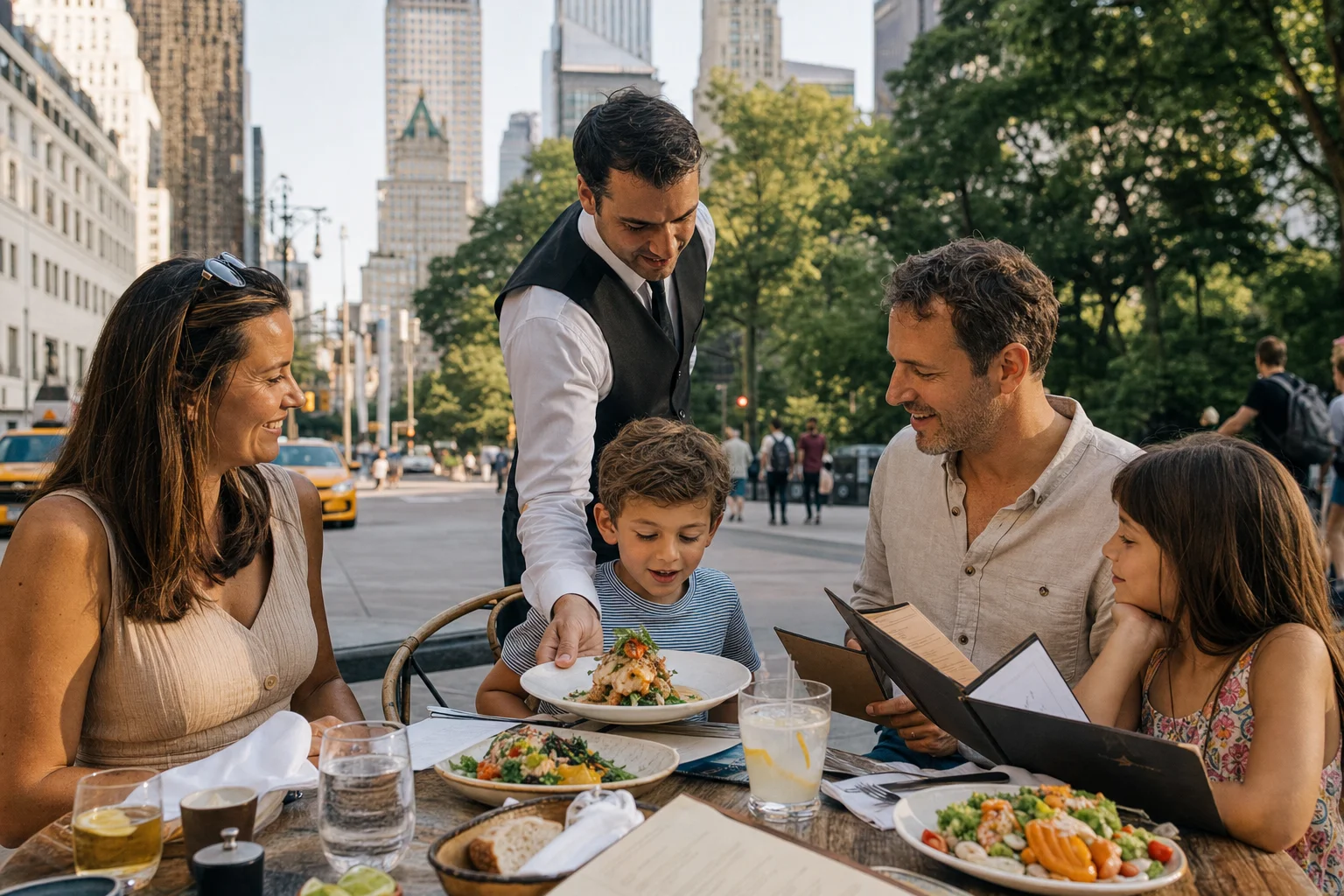
There’s a phrase that appears on almost every NYC restaurant website: “gluten-free options available.” For some families it’s fine. For a child with celiac disease, it means almost nothing - because the question is whether those options are made in a dedicated kitchen or on the same prep surfaces where someone just rolled pasta dough. NYC is one of the few US cities where you can find actual dedicated kitchens in enough variety that it stops feeling like a logistics problem. But you have to know the difference before you book anything.
The question to ask every time
The baseline question - “is this a 100% dedicated gluten-free kitchen?” - sounds obvious until you’re standing in front of a server at a busy restaurant on a Friday night and realize you skipped it. Asking matters because the answer divides NYC restaurants into two completely different categories.
A dedicated kitchen runs nothing with gluten. Every fryer, cutting board, and oven is GF-only. Senza Gluten at 206 Sullivan Street in Greenwich Village is the canonical example - twelve years of celiac-safe operation, a separate café/bakery at 171 Sullivan, and a second location in Hell’s Kitchen. The one practical note: both locations take cash and American Express only. Bring cash. Modern Bread and Bagel, with locations on the Upper West Side, Upper East Side, and Chelsea, runs a fully dedicated GF bakery - the chocolate babka and breakfast sandwiches are genuinely good, which matters when you’re traveling with a kid who’s been eating around everyone else’s food all week.
Then there are restaurants with “GF options” in a shared kitchen. Friedman’s - seven NYC locations including Chelsea Market, Midtown, and Times Square - marks gluten-free items with toothpicks, uses separate fryers, and has an extensive GF menu. That system works for most people with gluten sensitivity, and Friedman’s is by far the easiest daily option for a celiac family that needs to eat across multiple neighborhoods. The one item that can’t be modified: the matzah ball soup contains gluten. Everything else is navigable.

Mira can map which dedicated GF kitchens are walkable from your specific hotel and tell you which days they’re closed - so you’re not landing on a Monday wondering why the bakery is dark.
AI travel agent
Restaurants worth booking in advance
A few that require reservations and are worth the effort:
Nami Nori
Nami Nori in the West Village (and a second location in Williamsburg) runs a 100% gluten-free Japanese hand roll kitchen. For families managing celiac plus a soy or shellfish restriction, the menu is buildable - ask about specific rolls. Book ahead; it fills up.
Claro
Claro in Brooklyn is a Michelin-starred Oaxacan restaurant operating a 100% GF kitchen with everything made in-house. Brunch is the more affordable entry point. Reservations are required and useful to make more than a week out if you’re coming on a weekend.
Bistango
Bistango at the Kimberly Hotel (145 East 50th Street) is the strongest Midtown option for a sit-down meal. The kitchen uses a dedicated toaster for GF bread, keeps separate prep surfaces, and has a system for communicating allergies directly to the chef. For families staying in Midtown and not wanting to travel to the Village for every serious meal, it solves the problem.
For nut allergies specifically
Big Daddy’s runs a nut-free kitchen - the owner has personal food allergies and allergic children, which tends to produce a different level of operational care than a restaurant that’s simply trying to comply. GF bread, waffles, and malt-free milkshakes are on the menu. Eleni’s New York at Chelsea Market produces everything in a peanut and tree-nut free facility. A La Mode Shoppe runs a nut-free facility with GF and dairy-free ice cream options.
Blue Smoke, the barbecue spot near 27th Street in the Union Square area, is the strongest all-around allergy-managed restaurant on the AllergyEats rankings for Manhattan - ranked second for allergy-friendliness across the borough. They print a separate allergy menu that mirrors the regular menu with allergen icons, and a manager gets involved for allergy tables. For a family dinner where you have one kid with celiac and another with a nut allergy, it’s the best overlap.
The Smith - with locations at 1150 Broadway and other spots around the city - puts allergy alert flags on plates when orders go out. The kitchen tracks fryer oil by allergen type. The server system for allergy communication is formalized enough that multiple families with severe restrictions have eaten there without incident.
If you’re managing nut and gluten restrictions at the same table, Mira can cross-reference your specific combination against what the kitchen at Blue Smoke or The Smith actually handles before you go.
AI travel agent
Halal and kosher
For halal South Asian food, skip Midtown and go to Jackson Heights in Queens. The stretch along 74th Street, 37th Avenue, and Roosevelt Avenue has Indian, Pakistani, Bangladeshi, and Nepali restaurants at a density and variety that nothing in Manhattan matches. It’s a subway ride from Midtown - worth it. For Palestinian and Middle Eastern family dining, Ayat NYC in Bay Ridge (Brooklyn) comes up consistently; Bay Ridge also has parking and a more relaxed atmosphere than Manhattan’s restaurant crush.
For kosher dining near Times Square before a Broadway show, Le Marais on West 46th Street handles family dinners reliably. Eden Wok and Holy Schnitzel (an entirely dairy-free kosher chain) are the other frequently cited Manhattan options. One useful note for non-Jewish families navigating dairy restrictions: kosher meat restaurants are inherently dairy-free under kosher law. If you’re managing a severe dairy allergy, a certified kosher meat restaurant provides a layer of ingredient scrutiny beyond what a standard allergy-aware kitchen does.
New York State’s updated food intolerance law - in effect since May 2025 - now requires every restaurant to post procedures for handling intolerance disclosures and cross-contact prevention, with a $125 penalty per violation. It raises the floor on staff awareness statewide, which matters for restaurants that don’t specialize in GF or allergen-free but still serve your family on a Tuesday night.
What to skip
Murray’s Bagels is one of the most recommended spots in NYC bagel roundups, and management has explicitly stated they do not have a gluten-free environment and would not advise anyone with gluten concerns to eat there. That’s actually a clear and honest answer - it just often gets omitted in the roundups.
Sottocasa pizzeria in Brooklyn uses the same oven for gluten-free and regular pizza. It shows up on “GF pizza NYC” lists regularly. For celiac disease, it’s not safe.
Sweetgreen looks like a safe healthy option but runs a buffet-style serving setup where cross-contact is elevated and staff knowledge varies by location. For mild sensitivity it may be fine. For anaphylaxis-level allergies, the format is the problem.
Staying somewhere with a kitchen
For families managing multiple restrictions simultaneously, an apartment-style room with a full kitchen is the option that every celiac and allergy blog independently arrives at. AKA Central Park has rooms with a stove, oven, microwave, and dishwasher. Whole Foods and Trader Joe’s are reachable from most Manhattan neighborhoods. A single grocery run at the start of the trip means breakfast and snacks are handled, which drops the daily anxiety level considerably regardless of how good the restaurant list is.
Hotel Giraffe by Library Hotel Collection is the other strong option if you’re not going the kitchen route - rooms have a large refrigerator, and staff at breakfast have offered to retrieve items from back storage to avoid cross-contamination at the shared buffet. The Ritz-Carlton New York NoMad clears the minibar of tree nuts on request with advance notice.
The most useful apps for building your restaurant list before you arrive: AllergyEats covers Manhattan in four zones with crowd-sourced allergy-specific ratings, and Spokin filters by allergen type across restaurants and hotels, including a Hidden Allergen feature that surfaces undisclosed allergens in specific dishes. NYC’s restaurant churn is real - managers change, protocols change with them, and a glowing 2022 review of a restaurant’s allergy practices may not reflect what happens in 2026. Check grades on the NYC Health Department sanitary inspection tool before any unfamiliar spot, and call ahead when it matters.
Frequently Asked Questions
Is NYC a good city for celiac travelers?
What's the difference between a gluten-free option and a dedicated gluten-free kitchen?
Which NYC neighborhoods have the most allergy-friendly restaurants?
Are there good halal restaurants outside Manhattan?
What apps help find allergy-friendly restaurants in NYC?
Should I stay in a hotel with a kitchen if I have severe allergies?
More articles about Nyc
Destination Guide
-

NYC Family Vacation Guide (2026)
Most families pick the hotel last and the neighborhood never - and those two skipped decisions shape everything from transit to sleep quality to what the day actually costs.
-

NYC for First-Time Visitors
The order you do things matters more than the list of things you do.
Who's Traveling
-

NYC for Large Families: The 4-Person Rule
Five or six people, one Manhattan trip - the booking choices are different here, and most listicles won't tell you why.
-

Multi-Generational NYC: What Actually Works
Three generations, three different paces - here's how to keep the slowest member of the group in the trip.
-

NYC with a Baby
The trip lives or dies on whether the crib actually fits beside the bed.
-

NYC With Grandparents: A Pacing-First Guide
Your hotel is the second living room - the place you sleep between attractions is a different category of building.
-

NYC with School-Age Kids: A Useful Guide
Pick a base, pick 2-3 things a day, and let the subway do the rest.
-

NYC With Teens: A Trip That Doesn't Feel Like a Checklist
The trip works when teens help build it, and when you skip the famous things that consistently flop with their age group.
-

NYC with a Toddler
Book the room with a kitchenette and learn the elevator map - the rest of the trip is execution.
Sensory & Accessibility
-

NYC Sensory-Friendly Programs: Book the Event First
The calendar is the plan. Everything else builds around what you book first.
-

Low-Stimulation NYC: Plan the Architecture First
The programming exists. The trip depends on booking it before you pack.
-

Quiet Hotels in NYC for Families
Getting a good night's sleep in New York starts with picking the right block - the room type comes second.
-

Sensory-Friendly NYC: Where the City Actually Quiets Down
The buildings have done the work. The city between them is the variable you plan around.
-

Wheelchair-Accessible NYC: What Actually Works
The hotel is the easy part. The transit mix is the trip.
Food


Room Setup
-

NYC Connecting Rooms: How to Get a Real Guarantee
Most NYC hotels will take your connecting-room request and sort it out when you arrive. A small number will actually hold it.
-

NYC Family Suites: What to Actually Book
The word "suite" covers a lot of ground in Manhattan - here's how to tell the difference before you arrive.
-

NYC Hotels with Kitchenettes for Families
The label means nothing. The appliance list is everything.


Powered by Mira
Tell Mira about your family
Two minutes of conversation. A shortlist of hotels that actually fit — connecting rooms, accessible layouts, calm floors, whatever your family needs.
AI travel agent · free to try
Talk to Mira Let Mira find the right hotels for your family. Find hotels with Mira
AI travel agent · free to try