
New York
Quiet Hotel Stays in NYC
Getting a good night's sleep in New York starts with picking the right block - the room type comes second.
AI travel agent · free to try
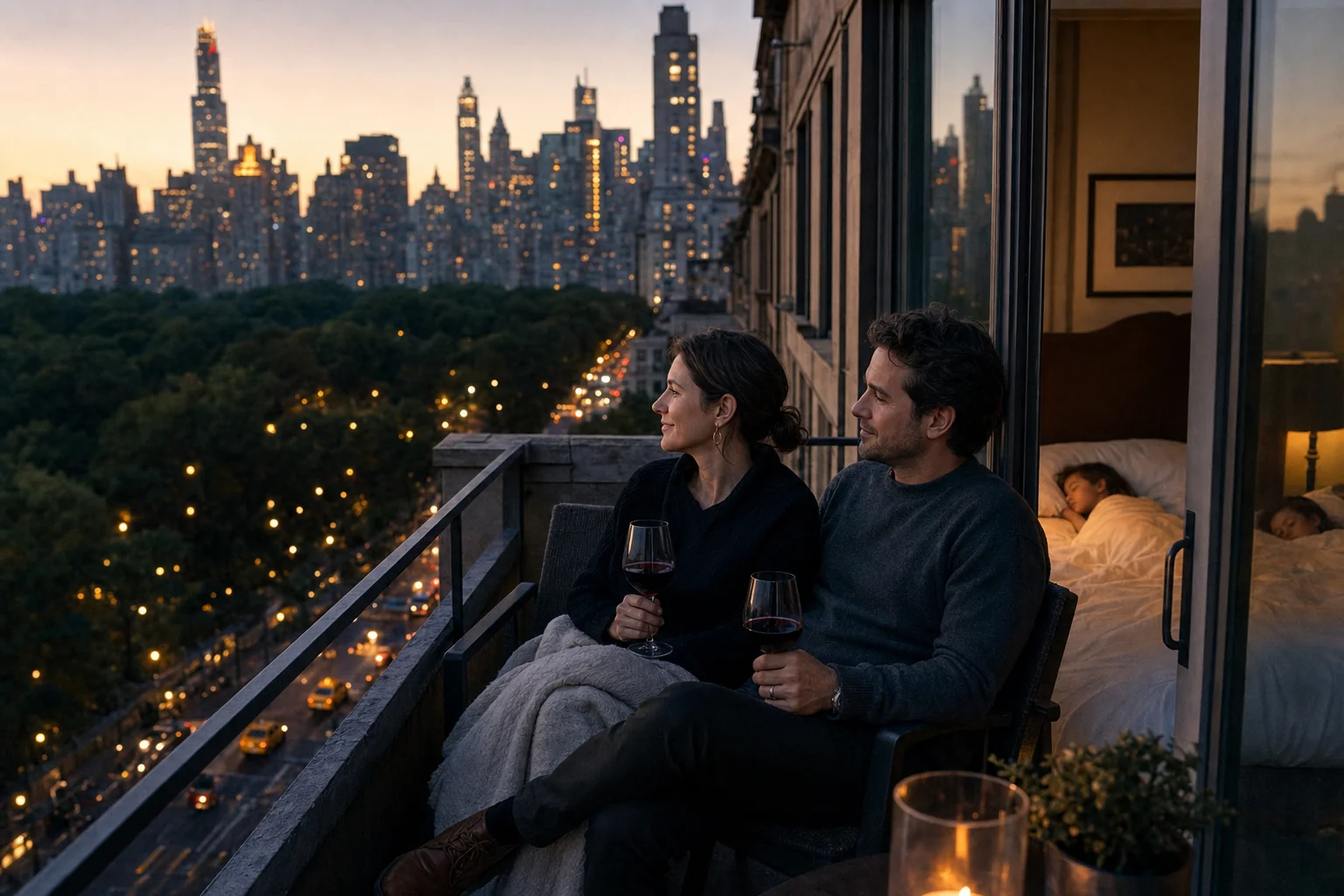
You added the quiet room note in the booking comments. You followed up by email the week before. The hotel sent a friendly reply. You checked in at 3pm on a Sunday and there were no quiet rooms available.
This is the dominant NYC hotel story for light-sleeping families, and it plays out across every price tier. The fundamental problem is not that hotels are lying - it’s that online booking notes typically route to OTA databases rather than to the person making room assignments, and by the time a busy Sunday afternoon rolls around, the inventory is gone. Getting a genuinely quiet night in New York requires making different decisions earlier in the planning process, starting with the neighborhood.
The single most useful thing on this page: quiet in NYC is primarily a geographic question. The hotel’s sleep program and the floor you’re on matter, but they operate on a smaller margin than which street you’re staying on. Pick the right block first, then optimize the room.
The noise sources you can actually do something about
New York’s noise code permits refuse vehicles to operate at up to 80dB between 11pm and 7am. Hotels on commercial avenues have garbage pickup scheduled during sleeping hours, and there’s nothing the front desk can do about it. Construction is capped at weekday hours, but variance permits are common in summer when activity peaks. Sirens are uncontrollable.
What you can control: the street type, the floor, and whether your room faces outward or inward. On a residential side street in the Upper West Side or Murray Hill, floors 9 and above in reviews consistently report no audible street traffic. Interior rooms facing an air shaft - no view, cheaper, often pitch dark at night - are the quietest physical option in most NYC buildings, and forum veterans on Tripadvisor and Fodor’s specifically request them. For families with infants who need total darkness for naps, the absence of a view is a feature.
Times Square adjacency is a decisive disqualifier for light-sleeping families. Pedestrian and vehicle traffic runs until past 2am; performance venues and tourist buses don’t follow commercial rhythms. No room type on a Times Square block resolves this.
Which neighborhoods are structurally quieter
Upper West Side
The Upper West Side sits on a residential grid buffered by Central Park to the east and Riverside Park to the west. Broadway has traffic, but the side streets between the parks run quieter than anything in Midtown. Hotel Beacon, on Broadway at 75th Street, benefits from this: reviewers on floors 9 and 16 both report no audible street noise, and every room has a kitchenette - which matters for families who need to feed kids on a schedule without hunting for a restaurant at 7am.
Murray Hill and Tudor City
Murray Hill and Tudor City produce quiet through a different mechanism: low nightlife foot traffic and no bar strip. Murray Hill’s residential apartment blocks dominate the side streets, and Tudor City - a 1920s private residential complex on a cul-de-sac off 42nd Street - sits physically elevated above street level, with its own enclosure that blocks the street grid. The Westgate New York Grand Central is built into Tudor City; guests on upper floors describe the location as unexpectedly calm for Midtown East.
Financial District after 6pm
The Financial District is the underutilized option. The neighborhood empties of commuter traffic in a way that Midtown never does, and the commercial emptying effect on side streets like Gold Street is real. The restaurant scene thins out compared to Midtown - if your family wants dinner options within a two-minute walk, you’ll need to plan ahead.
Greenwich Village side streets
Greenwich Village’s lower-rise buildings, fewer commercial vehicles overnight, and less through-traffic make it a viable quiet-stay option. Washington Square Hotel on Waverly Place draws reviews that consistently call out the quiet - though room placement within the building matters, since hallway noise varies.

If you’re trying to decide between neighborhoods based on your specific itinerary - subway access, proximity to museums, airport transfer routing - tell Mira where you’re going each day and she can map which of these neighborhoods actually saves you commute time.
AI travel agent
The hotels that actually deliver on quiet
Hotel Beacon: kitchen access and a residential block
Hotel Beacon is the strongest all-around option for families who need quiet and space in the same booking. Every room has a kitchenette - refrigerator, microwave, and two-burner stove - which means kids can be fed without a restaurant at 6am, and groceries from the Fairway two blocks away handle the rest. The quiet is geographic: the residential UWS location does the work, and floors 9 and above take it further. Extended-stay guests return repeatedly because this combination of kitchen access and genuine sleep quality is genuinely hard to find at this price tier in Manhattan.
The Benjamin Royal Sonesta: the only hotel with a kids sleep program
The Benjamin is the only NYC hotel with a formal children’s sleep program. It includes a goose-down kids pillow, a child-sized sleep mask, a mindfulness owl night light, and printed sleep tips for kids - confirmed operational as of research date. The adult program adds a 10-pillow menu, Loftie clocks with white noise function, weighted sleep masks and blankets, and blackout curtains. The sleep concierge is an actual service you can call before arrival to arrange pillow type and white noise machine placement.
The caveat is real: multiple 2024 reviews on Tripadvisor and Booking.com cite HVAC units in specific rooms that cycle loudly and can’t be turned off - a poorly-assigned room at The Benjamin can replace street noise with mechanical noise from inside the wall. Book direct, and when you call the sleep concierge, ask specifically about HVAC history for your assigned room before committing to it.
The Prince Kitano New York: windows that actually work
The Prince Kitano (rebranded from Kitano New York after the 2024 Prince Hotel acquisition, same staff retained) earns its reputation through structural soundproofing: reviewers consistently confirm the windows actually work. The hotel’s 149 rooms sit on a residential stretch of Park Avenue at 38th Street, lower density than anything north of here. The lobby is hushed, with classical music and staff who match the register. A 9.2/10 score across more than 3,000 Booking.com reviews reflects what reviewers actually describe.
Westgate New York Grand Central: elevated above street level
Tudor City’s cul-de-sac position and elevated grade separate the hotel from street-level traffic in a way that most Midtown hotels can’t replicate with room assignment alone. Westgate has triple-pane windows confirmed in reviews; guests on the 16th floor specifically describe the quiet as the standout. If you’re arriving via Grand Central by Amtrak or Metro-North, the location makes logistical sense on top of the noise advantage.
Gild Hall: FiDi quiet and a boutique that skews adult
Gold Street in the Financial District carries minimal through-traffic, and Gild Hall’s boutique aesthetic skews adult - families with teens will appreciate the vibe more than those with toddlers. The FiDi ghost-town effect after 6pm is real; exterior quiet here comes from commercial emptying rather than residential character. One weakness worth knowing: hallway interior noise surfaces in reviews, so room position within the building still matters. Hyatt World of Hyatt points eligible.
Equinox Hotel New York: engineered sleep at ultra-premium cost
Equinox’s sleep infrastructure is the most engineered of any hotel in this list: proprietary blackout blinds with side-sealing zippers that close the gap standard curtains leave, enhanced sound insulation beyond building code, Coco-Mat breathable mattresses, and circadian soundscapes on in-room TVs. The Sleep Lab suite adds temperature-cooled mattress technology developed with Dr. Matthew Walker of UC Berkeley. Pricing is ultra-premium and the hotel has no confirmed family-specific program or family suite configurations - this is the pick for parents who want the sleep environment engineered past the point of reasonable doubt and are prepared for the cost.
Between The Benjamin’s kids sleep program and Equinox’s physical infrastructure, the right call depends on what your family’s actual sleep problem is. Tell Mira whether it’s getting kids down or keeping adults asleep, and she can point you at the property that addresses it.
AI travel agent
Getting the room you actually wanted
The booking note approach has a documented failure rate that’s worth taking seriously. One Tripadvisor forum user described booking nine months ahead, requesting a quiet room on the hotel website, emailing a week before arrival, receiving friendly replies both times, and arriving at 3pm on a Monday to find no rooms available for the request. This isn’t a one-off - online booking notes typically route to OTA databases rather than to the hotel’s room assigner, so the request never reached the person with actual authority to act on it.
Book direct. Hotels have stronger incentive to honor preferences for guests who booked on the hotel’s own website or by phone - the room assigner sees the loyalty program tier and the direct booking flag; the OTA confirmation note often doesn’t survive the handoff to the hotel.
Call on the morning you arrive, when the room assigner is working through the day’s check-ins and assignments are still fluid. State your preference specifically: a high floor, interior-facing room, away from the elevator. Arriving before 3pm keeps more options available than showing up at 6pm when most inventory is already assigned.
Interior and courtyard rooms are quieter and typically cheaper. Request the air-shaft-facing room, confirm there are no courtyard events scheduled during your stay (some hotels book evening receptions there), and accept trading a view for reliable dark and quiet.
Treat white noise as a first-line tool. The Benjamin’s Loftie clocks include it for a reason; forum consensus across Tripadvisor, Fodor’s, and FlyerTalk is that a box fan setting is more reliable than counting on room assignment to go perfectly.
Frequently Asked Questions
Is it even possible to get a quiet hotel room in NYC?
Does requesting a quiet room when booking actually work?
What floor should I ask for in a NYC hotel to avoid street noise?
Are air-shaft-facing rooms in NYC hotels actually quieter?
Is the Financial District quiet enough for families at night?
More articles about Nyc
Destination Guide
-

NYC Family Vacation Guide (2026)
Most families pick the hotel last and the neighborhood never - and those two skipped decisions shape everything from transit to sleep quality to what the day actually costs.
-

NYC for First-Time Visitors
The order you do things matters more than the list of things you do.
Who's Traveling
-

NYC for Large Families: The 4-Person Rule
Five or six people, one Manhattan trip - the booking choices are different here, and most listicles won't tell you why.
-

Multi-Generational NYC: What Actually Works
Three generations, three different paces - here's how to keep the slowest member of the group in the trip.
-
NYC with a Baby
The trip lives or dies on whether the crib actually fits beside the bed.
-

NYC With Grandparents: A Pacing-First Guide
Your hotel is the second living room - the place you sleep between attractions is a different category of building.
-

NYC with School-Age Kids: A Useful Guide
Pick a base, pick 2-3 things a day, and let the subway do the rest.
-

NYC With Teens: A Trip That Doesn't Feel Like a Checklist
The trip works when teens help build it, and when you skip the famous things that consistently flop with their age group.
-

NYC with a Toddler
Book the room with a kitchenette and learn the elevator map - the rest of the trip is execution.
Sensory & Accessibility
-

NYC Sensory-Friendly Programs: Book the Event First
The calendar is the plan. Everything else builds around what you book first.
-

Low-Stimulation NYC: Plan the Architecture First
The programming exists. The trip depends on booking it before you pack.
-

Sensory-Friendly NYC: Where the City Actually Quiets Down
The buildings have done the work. The city between them is the variable you plan around.
-

Wheelchair-Accessible NYC: What Actually Works
The hotel is the easy part. The transit mix is the trip.
Food
-

Eating in NYC with Dietary Restrictions
The city is genuinely good at this - but "gluten-free options" and "dedicated kitchen" are two very different things.
-

Food Allergy-Friendly NYC: What Actually Works
The city has the infrastructure. Unlocking it takes about 20 minutes of prep before you land.
-

NYC with Picky Eaters: What Actually Works
The city has more safe options than you think. A few specific traps will burn you if you don't know to avoid them.
Room Setup
-

NYC Connecting Rooms: How to Get a Real Guarantee
Most NYC hotels will take your connecting-room request and sort it out when you arrive. A small number will actually hold it.
-

NYC Family Suites: What to Actually Book
The word "suite" covers a lot of ground in Manhattan - here's how to tell the difference before you arrive.
-

NYC Hotels with Kitchenettes for Families
The label means nothing. The appliance list is everything.


Powered by Mira
Tell Mira about your family
Two minutes of conversation. A shortlist of hotels that actually fit — connecting rooms, accessible layouts, calm floors, whatever your family needs.
AI travel agent · free to try
Talk to Mira Let Mira find the right hotels for your family. Find hotels with Mira
AI travel agent · free to try