
Mexico Caribbean
Sensory-Friendly Riviera Maya
Three resorts have certification programs. The properties that actually work for low-stimulation families have no label at all.
AI travel agent · free to try
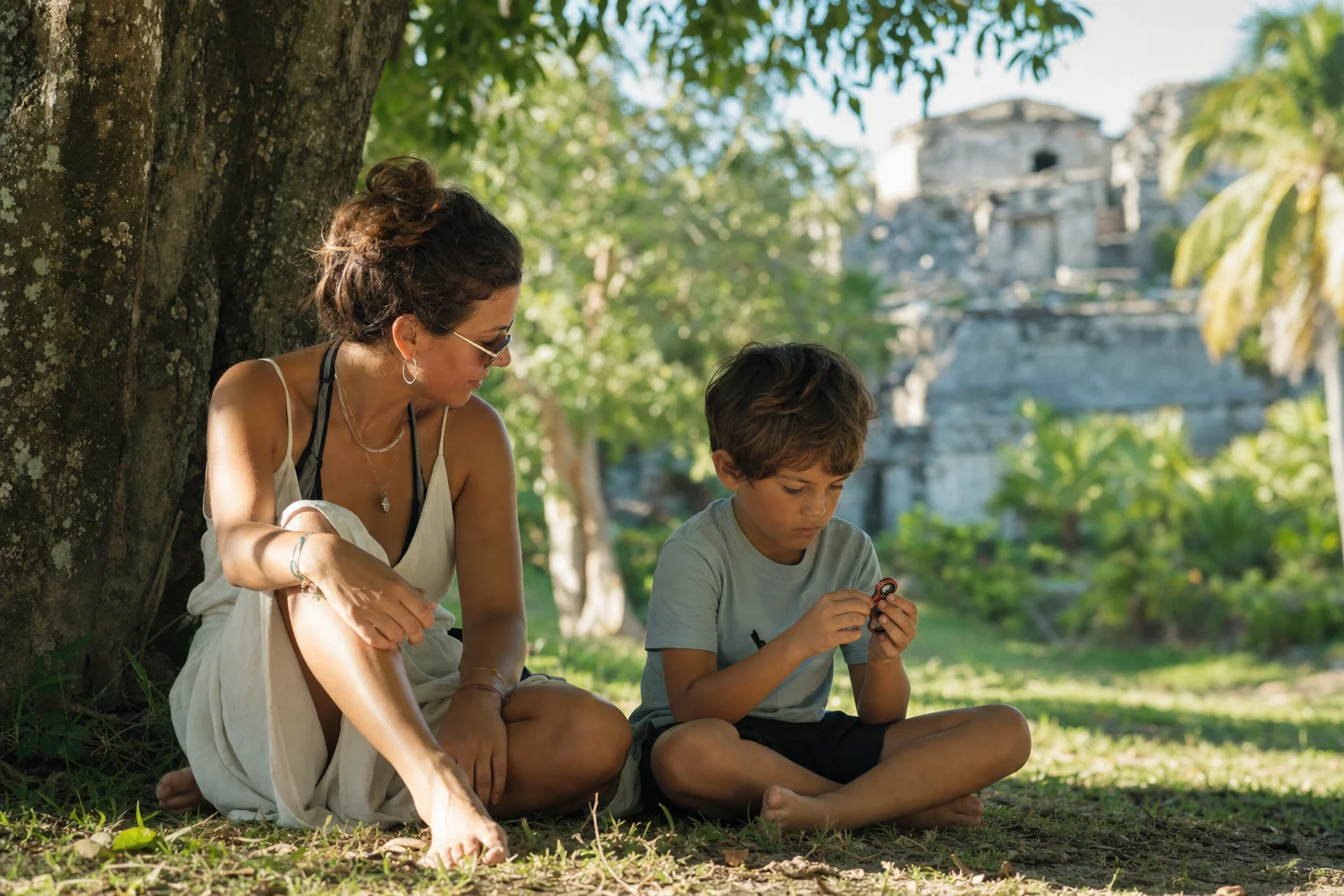
Riviera Maya has more documented sensory-support infrastructure than almost any other beach destination outside a Disney property. Three resorts hold Autism Double-Checked certification, with structured visitor guides, noise-level maps, and a digital Autism Passport system. Multiple families have arrived, asked for the autism concierge, and found that no one on staff had heard of them.
That gap - between what’s written down and what’s staffed - is the central fact about sensory-aware travel in this region. Understanding it early changes which properties you book and what you do before departure.
The certification system and what it actually means
Autism Double-Checked (ADC) is a three-phase training program: general staff training, department-specific training, and a property-specific visitor guide with sensory advisory markers at each area of the resort. Three Riviera Maya properties hold the certification: Nickelodeon Hotels & Resorts Riviera Maya, Margaritaville Island Reserve Riviera Cancun, and Generations Riviera Maya.
The ADC visitor guide at Nickelodeon Hotels is genuinely detailed. It maps sensory conditions at each area of the property: the motor lobby, front desk, Kids’ Lounge, and landscaped gardens are all rated low - quiet enough for whispered conversation. The Main Stage is rated moderate. Rooms in the 600-648 block are the quietest on the property; you have to request them specifically because standard booking doesn’t route families there. Blackout shades come standard. Non-breakable glassware, a minibar cleared on arrival, and temporary hanging door alarms are available on request. The team at ADC has also built an Autism Passport system - a digital document guests fill out covering communication style, sensory sensitivities, emotional triggers, and calming strategies, which is supposed to reach staff before check-in.
The program works well when families use it aggressively before arrival: submit the Autism Passport several weeks out, follow up by phone, request rooms 600-648 in writing, and ask specifically about kid-food options. The program does not work as a reactive system on arrival. A January 2024 review from a family of five at Nickelodeon Hotels put it plainly: “We sent MANY emails before our trip and they all came back unanswered. Once we got to the resort and asked about [the autism concierge], everyone we asked looked confused, said they didn’t think they had the service.”
A second gap the certification doesn’t address: kids’ menus. The ADC training covers communication, lighting, crowds, and sensory triggers. For a meaningful share of sensory-sensitive children, the most disruptive part of the trip is food - a new environment with unfamiliar or limited options. Nickelodeon Hotels’ kids’ sections offer standard resort fare; the same family review noted the plain-food options were fewer than at comparable resorts. Bring snacks you know work, and ask in writing about specific food accommodations before you arrive.

The Autism Passport system requires proactive follow-up that most families underestimate. Tell Mira your child’s specific needs and she’ll walk you through the pre-arrival steps and which questions to ask the resort by phone before you finalize anything.
AI travel agent
Properties worth booking
Rosewood Mayakoba
Rosewood Mayakoba has no sensory certification. What it has is a physical design that produces calm by default. Every suite has a private plunge pool, which means water access without navigating shared resort spaces on days when the beach pool is busy or the kids aren’t in the mood for people. Getting anywhere on the property involves a covered wooden boat on the resort’s lagoon network - no shuttle wait, no lobby transit through crowds, just a two-minute boat ride in a forest-and-water setting. The ambient noise is birds and water.
For families who want a shared pool, the resort separates them: a quiet inland pool near the lobby (consistently described as uncrowded and genuinely calm) and a more active family pool at the beach. The Rose Buds Kids Club for ages 4 and up runs optional activities - ceramic painting, cooking classes, eco-tours, movie nights - with no mandatory participation and staff who greet children by name. Safety gates around all villa water features are installed automatically; you don’t have to request them.
The honest tradeoff is price. Rosewood Mayakoba is a premium-tier property, and the villa-format means you’re paying for that privacy. For families where the private pool and low-density environment genuinely change the quality of the trip, it’s usually worth the math.
Banyan Tree Mayakoba
Banyan Tree Mayakoba solves the shared-pool problem entirely: every accommodation has a private pool. The property is in the same Mayakoba complex as Rosewood, so the forest-lagoon setting applies - ambient noise runs to birds and water sounds, with no programmed music anywhere on the grounds. Guests describe never feeling crowded, because families staying in their own villa with their own pool often don’t need to leave unless they want to.
The Rangers Club kids’ activity program runs Mayan-culture crafts, culinary classes, and ecological activities. The property is currently undergoing a renovation that includes redesigned multi-bedroom family residences; confirm availability for specific villa types before booking if you need a multi-bedroom layout.
Margaritaville Island Reserve Riviera Cancun
Margaritaville Island Reserve sits between Cancun and Playa del Carmen at 146 suites, no building over two stories. It holds ADC certification, which at this scale works more reliably than at a large all-inclusive: fewer crowd pinch-points, easier sight lines, no vast grounds requiring shuttle transit. The low-rise layout eliminates elevator dependency entirely. For families who want the documented certification infrastructure at a manageable physical size, this is the more coherent choice than Nickelodeon Hotels.
Nickelodeon Hotels & Resorts Riviera Maya
Nickelodeon Hotels works best for families who go in with clear expectations. The sensory support is procedural - the certification exists to layer accommodations on top of a property that is, by design, a high-stimulation resort: a 6-acre water park, nightly slime shows, and theme-park-level entertainment. If that environment is manageable on good days and the documented accommodations (quiet room block, blackout shades, cleared minibar, advance food requests) matter to your planning, book it. If your child needs the physical environment to be calm, the Mayakoba properties are the better fit.
Rosewood and Banyan Tree solve the problem through design; Nickelodeon and Margaritaville solve it through documentation. The right answer depends on what your child actually finds hard. Tell Mira and she’ll help you match the property format to what your family needs on the ground.
AI travel agent
Activities that keep stimulation low
The destination’s most reliably low-stimulation activity may be its least expected one. Kantun-Chi Ecopark, 22 kilometers south of Playa del Carmen, has four underground cavern cenotes - some nearly completely enclosed, some open-air jungle-set. Mandatory life jackets, small daily visitor numbers, cool temperature, and the enclosed rock muffling outside noise make it about as calm as outdoor water activities get. You can’t wear sunscreen or mosquito spray inside the caverns, so a pre-entry shower is required. The payoff is water play with none of the wave risk, crowd noise, or visual complexity of a beach day.
Punta Esmeralda in Playa del Carmen is a free-access freshwater cenote feeding directly into a calm beach lagoon. Wave-free, shallow throughout, no booking needed. For a quieter beach day without resort grounds to navigate, it functions as a reset.
Puerto Morelos is the quietest town along the Riviera Maya strip - restaurants and bars close by 11pm, smaller scale than Playa del Carmen, no party-destination energy. The Fives Oceanfront, Dreams Puerto Morelos, and Palmar Beach Resort are all described as calm and low-key for families. If you’re base-camping rather than staying at a big all-inclusive, Puerto Morelos is the right anchor.
Akumal is smaller still - a beach town that shuts down by 10pm, known for sea-turtle snorkeling in a protected, calm bay. Consistently contrasted with Playa del Carmen and Cancun as the lower-stimulation alternative when the primary plan involves water rather than resort life.
The parks worth skipping in this context: Xcaret and its affiliated Xcaret group parks are high-stimulation by design. One reviewer described the town section of Xenses as “a sensory overload” and left before recovering. The Festival de Vida y Muerte (late October through early November) fills the property to the point of being hard to navigate. Hotel Xcaret also gets nighttime outdoor event noise on wedding nights until 11pm, which matters if your child’s sleep is sensitive. Moon Palace and Hard Rock Riviera Maya are flagged repeatedly by family travel writers as overwhelming due to scale - ice rinks, massive water parks, grounds that require golf cart transit.
Frequently Asked Questions
Is Nickelodeon Hotels Riviera Maya actually good for sensory-sensitive kids, or is it just marketing?
What is the Autism Passport and how do I use it before my trip?
Which Riviera Maya resorts are quietest for families - adult-only excluded?
Are cenotes calm enough for kids who get overwhelmed at busy attractions?
What months are least crowded at Nickelodeon Hotels Riviera Maya?
More articles about Riviera Maya
Destination Guide
-
Riviera Maya Family Vacation Guide (2026)
Most families pick the resort and learn the base town matters more - and they pick a beach week without checking which months the beach actually exists.
-
Riviera Maya for First-Time Visitors
Nearly 100 miles of coast - the base you pick changes everything about what your trip becomes.
Who's Traveling
-
Riviera Maya for Large Families: Rooms That Actually Connect
The difference between a connecting room guarantee and a connecting room request - and which resorts have actually built the first one.
-

Multi-Generational Riviera Maya: What Actually Works
The all-inclusive format removes the per-meal friction - but the wrong resort turns a reunion into a scheduling problem before day two.
-

Riviera Maya with Grandparents: Resorts That Work
The all-inclusive format removes the logistics burden - but the wrong resort turns into an endurance test before lunch.
-
Riviera Maya with a Baby
The trip works when you book one of the five resorts that actually built for it.
-

Riviera Maya with School-Age Kids (Ages 6-12)
The cenotes, ruins, and eco-parks were all built for exactly this age window.
-
Riviera Maya with Teens
The resort question that matters most, the excursion layer that makes the trip, and the things nobody tells you until it's too late.
-

Riviera Maya with a Toddler
The resort you pick determines whether you get a trip or a survival exercise.
Sensory & Accessibility
-

Sensory-Friendly Riviera Maya: What's Actually There
Two certified resorts, one visitor guide worth downloading, and the pre-arrival steps that determine whether any of it actually works.
-
Low-Stimulation Riviera Maya: Quiet Zones and Calm Days
The destination defaults to DJ pools and nightly fire shows. The quiet version is real - you just have to know which section to book.
-
Quiet Stays in Riviera Maya: What Actually Works
Most resorts say serene. A few actually are. Here's how to tell the difference before you book.
-
Wheelchair-Accessible Riviera Maya: What to Book
The terrain works in your favor. The booking language does not.
Food
-

Dietary Accommodations at Riviera Maya Resorts
"We accommodate all dietary needs" means something very different depending on which resort said it.
-

Food Allergy Travel in Riviera Maya: What Works
Several resorts have documented allergy programs. The ones that hold at the plate are a shorter list.
-

Riviera Maya for Picky Eaters
The all-inclusive model lets your kid order, reject, and reorder without you doing math at the table.
Room Setup
-

Riviera Maya Connecting Rooms: Who Guarantees the Door
The difference between a resort that notes your request and one that actually holds the room.
-
Family Suites in Riviera Maya
The connecting-room guarantee is the thing to verify - everything else follows from there.
-
Riviera Maya Hotels with Kitchenettes for Families
The label "kitchenette" covers everything from a stocked fridge with free juice to a four-burner gourmet setup with a dishwasher. Ask first.
On-Site Activities
-

Riviera Maya Kids Clubs
The phrase "kids club included" covers everything from mangrove boat rides to a TV in a locked room. Here's how to tell the difference before you book.
-
Riviera Maya Resorts With a Lazy River
Not every "lazy river" in the brochure moves on its own - the gap between marketing and a real float is wider here than anywhere else in Mexico.
-
Riviera Maya with a Water Park
Some families want the water park at the hotel. Others want a day excursion to Xel-Ha. Confusing the two is how trips go sideways.
Powered by Mira
Tell Mira about your family
Two minutes of conversation. A shortlist of hotels that actually fit — connecting rooms, accessible layouts, calm floors, whatever your family needs.
AI travel agent · free to try
Talk to Mira Let Mira find the right hotels for your family. Find hotels with Mira
AI travel agent · free to try