
Mexico Caribbean
Sensory-Friendly Riviera Maya
Two certified resorts, one visitor guide worth downloading, and the pre-arrival steps that determine whether any of it actually works.
AI travel agent · free to try
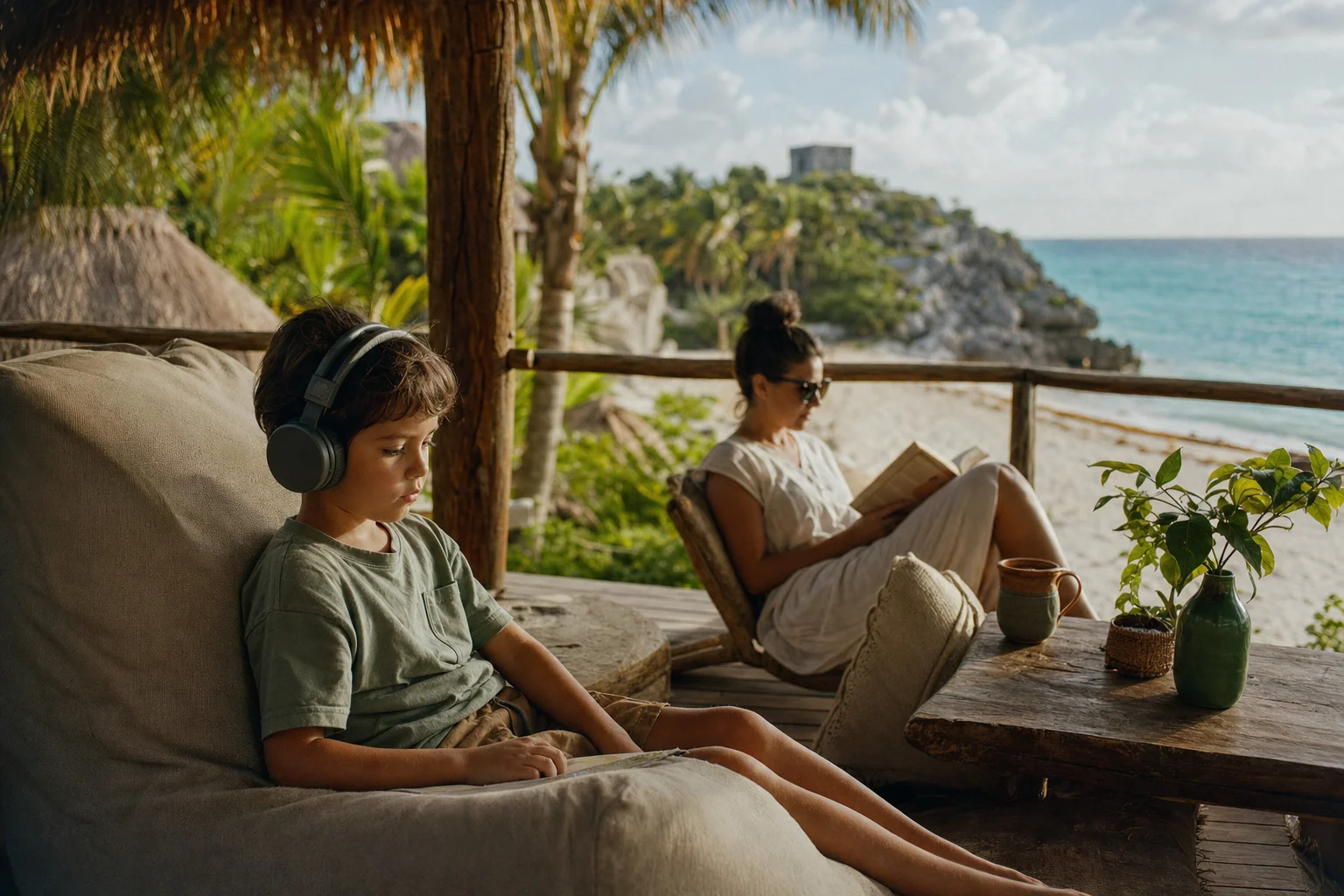
The certification marketing says “sensory-friendly resort.” The parent reviews say “staff had no idea what I was talking about.” Both are true - and the distance between them is almost entirely determined by what you do before you leave home.
The Riviera Maya has more formal sensory-support infrastructure than most beach destinations: two Karisma properties hold Autism Double-Checked (ADC) certification, complete with property-specific visitor guides that map noise levels and crowd patterns by venue, room-specific quiet blocks, and a pre-arrival Autism Passport system. That infrastructure is real and specific. The on-the-ground execution of it, however, is inconsistently delivered, and families who rely on the marketing promise without pre-arrival follow-up are likely to be disappointed. The families who have good trips are the ones who treat arrival as the confirmation of a setup they already did - not the start of it.
What the ADC certification actually gives you
Autism Double-Checked (ADC) is an independent training and certification program for hotels - there is no government body behind it. Karisma Hotels holds it across two Riviera Maya properties, and it operates in three tiers: general awareness training for all staff, department-specific instruction for guest-facing roles, and - the part that actually matters - a property-specific sensory visitor guide published at certify.autismchecked.com.
The visitor guide is the operational core of the certification and the thing Karisma’s own marketing pages never link to directly. At Nickelodeon Hotels & Resorts Riviera Maya, the guide maps every venue on the property using eight color-coded triangle flags: Safety, Crowds, Body Awareness, Time/Duration, Noise, Lighting, Taste/Smell, and Heat/Cold. The lobby and garden areas rate as low-intensity. The pools and entertainment areas rate much higher. Rooms 600-648 are specifically named as the quietest block. Download the guide before you book - it changes what you ask for at reservation.
The other piece of the certification infrastructure is the Autism Passport - a pre-stay document you fill out online and share with the hotel before arrival. It captures communication style, sensory triggers, dietary restrictions, and de-escalation strategies. Karisma was the first hotel group globally to implement this system. Fill it out at least two weeks ahead of your trip and follow up by phone to confirm someone actually read it - the email contact (autism_concierge@karismahotels.com) has a documented pattern of non-response in 2024 reviews, with some guests arriving to find staff who had never heard of the Autism Concierge program at all.
The two certified resorts
Nickelodeon Hotels & Resorts Riviera Maya
Nickelodeon Riviera Maya is the only Riviera Maya property with a published, property-specific ADC visitor guide. It is also, honestly, an inherently high-stimulation resort - character appearances, Slime Nights, a large pool deck, and entertainment programming that runs most of the day. The certification sits on top of that reality, which means the tools exist but you have to use them actively.
Request rooms 600-648 when you book. Ask at check-in for a temporary door alarm (available on request, though staff may need to locate it), non-breakable cups, and an emptied mini-bar. All rooms have blackout shades, multi-switch lighting, fixed and handheld showerheads, and a separate toilet room from the shower and tub - the bathroom layout is genuinely useful for morning routine flexibility.
The signature Slime Night event involves thick, scented slime applied in a crowded group setting with high ambient noise. One family review specifically noted the texture triggered strong sensory reactions in two of their three children. Private family sliming is available as an alternative - quieter, controlled, the same activity without the crowd. You have to request it specifically; it will not be offered automatically. The kids club (ages 4-12) also requires a mandatory 30-minute supervised trial before a child can attend unattended. If the trial does not go smoothly, a parent stays for the full session.
The lowest-crowd months are January, February, August, and September. Within any week, Tuesday through Thursday are the quietest days per the ADC visitor guide.

The Nickelodeon visitor guide has room-level noise ratings and timing maps that are worth cross-referencing against your family’s specific itinerary. Tell Mira what your child finds hardest and she can help you map the week before you book.
AI travel agent
Margaritaville Island Reserve Riviera Cancun
Margaritaville Island Reserve Riviera Cancun (a Karisma property about 25 minutes north of Playa del Carmen) is ADC-certified and meaningfully different in character from Nickelodeon. The property is low-rise - no building over two stories - with 146 suites, four restaurants, and six bars. The smaller footprint means less overwhelming arrival, less visual complexity navigating from room to dining room to pool. Quiet room requests are honored and door alarms are available on request.
No detailed published visitor guide comparable to Nickelodeon’s was found in research, which is worth noting if the guide itself is part of your planning process. Confirm directly with the property what written sensory documentation they can provide before you book.
A note on naming: Margaritaville Island Reserve Riviera Maya (a separate property farther south) was reportedly undergoing ADC certification as of late 2024. Its current certification status is unconfirmed - confirm at certify.autismchecked.com before booking the Riviera Maya property expecting full ADC infrastructure. The Riviera Cancun property’s certification is confirmed.
A quieter alternative: the Akumal corridor
The stretch from Akumal to Tulum, about 95 minutes south of Cancun airport, offers something neither certified resort does: a lower stimulation baseline by default. Smaller properties (typically 8-20 suites), outdoor sand-floor dining, no convention-center events. The environment is slower by design rather than by accommodation.
Akumal Bay Beach & Wellness Resort is a calm, mid-price option with a quiet bay where sea turtles swim directly off the beach, daily yoga and meditation sessions, and no large-group entertainment programming. No ADC certification, no formal sensory programming of any kind - but the resort’s scale and character mean you are unlikely to need it in the same way.
Tulum boutique hotels carry the same logic further. Some have no televisions and build their appeal around nature, quiet, and outdoor living rather than poolside entertainment. For families who want manageable sensory environments rather than certified-but-loud mega-resorts, this end of the coast is worth serious consideration alongside the certified properties.
The Akumal corridor is significantly less expensive than the certified resorts and genuinely quieter - but it trades amenities and structure for calm. Tell Mira your priorities and she can help you figure out which tradeoff makes more sense for your family.
AI travel agent
Day trips: what works and what requires planning
Xel-Ha - the Grupo Xcaret snorkel and swim park - is the most underreported day trip for sensory-aware families in the Riviera Maya. Open-water natural setting, outdoor environment, activities that are genuinely bypassed without explanation, and no intentionally disorienting design elements. About 50% of the park is accessible by wheelchair; hydraulic chair access is available for river entry. Pacing is fully self-directed.
Xcaret Park is more complicated. The Lunateca zone (ages 0-4) is enclosed, air-conditioned, padded, and quiet - families in 2024 reviews used it as a recovery anchor when the main park got overwhelming, looping back there for 20 minutes before continuing. The park allows bypassing any activity. The Xenses area, however, is a different situation: it is specifically designed around disorientation, with a pitch-black barefoot tunnel, visual illusion streets, and vestibular challenges. At least one parent review describes it as overwhelming even for adults. Read Xcaret’s activity descriptions before you go and plan to skip Xenses entirely.
The arrival gap nobody prepares for
Cancun International Airport has no confirmed sensory-support program. There is no Hidden Disabilities Sunflower lanyard availability, no quiet queuing lane, no sensory room - just a standard international arrivals hall with the noise and crowd volume that implies. The transition from plane to resort is the most uncontrolled part of the trip and the part most completely absent from resort marketing.
Private transfers from CUN to the hotel corridor are meaningfully calmer than shared shuttle vans - fixed group, no extra stops, direct to your property. For a family managing a child who found the flight difficult, the 45-minute drive matters more than most families anticipate when booking it.
Frequently Asked Questions
Does Nickelodeon Hotels Riviera Maya actually have an autism concierge on-site?
Which rooms at Nickelodeon Riviera Maya are the quietest?
What is the Autism Passport and how do I use it?
Does Nickelodeon Riviera Maya have door alarms for families worried about elopement?
Is Xcaret park manageable for children who are noise or crowd sensitive?
What food options are available for selective eaters at Riviera Maya all-inclusive resorts?
More articles about Riviera Maya
Destination Guide
-
Riviera Maya Family Vacation Guide (2026)
Most families pick the resort and learn the base town matters more - and they pick a beach week without checking which months the beach actually exists.
-
Riviera Maya for First-Time Visitors
Nearly 100 miles of coast - the base you pick changes everything about what your trip becomes.
Who's Traveling
-
Riviera Maya for Large Families: Rooms That Actually Connect
The difference between a connecting room guarantee and a connecting room request - and which resorts have actually built the first one.
-

Multi-Generational Riviera Maya: What Actually Works
The all-inclusive format removes the per-meal friction - but the wrong resort turns a reunion into a scheduling problem before day two.
-
Riviera Maya with Grandparents: Resorts That Work
The all-inclusive format removes the logistics burden - but the wrong resort turns into an endurance test before lunch.
-
Riviera Maya with a Baby
The trip works when you book one of the five resorts that actually built for it.
-

Riviera Maya with School-Age Kids (Ages 6-12)
The cenotes, ruins, and eco-parks were all built for exactly this age window.
-
Riviera Maya with Teens
The resort question that matters most, the excursion layer that makes the trip, and the things nobody tells you until it's too late.
-

Riviera Maya with a Toddler
The resort you pick determines whether you get a trip or a survival exercise.
Sensory & Accessibility
-
Low-Stimulation Riviera Maya: Quiet Zones and Calm Days
The destination defaults to DJ pools and nightly fire shows. The quiet version is real - you just have to know which section to book.
-
Quiet Stays in Riviera Maya: What Actually Works
Most resorts say serene. A few actually are. Here's how to tell the difference before you book.
-

Sensory-Friendly Riviera Maya: What's Actually There
Three resorts have certification programs. The properties that actually work for low-stimulation families have no label at all.
-
Wheelchair-Accessible Riviera Maya: What to Book
The terrain works in your favor. The booking language does not.
Food
-

Dietary Accommodations at Riviera Maya Resorts
"We accommodate all dietary needs" means something very different depending on which resort said it.
-

Food Allergy Travel in Riviera Maya: What Works
Several resorts have documented allergy programs. The ones that hold at the plate are a shorter list.
-

Riviera Maya for Picky Eaters
The all-inclusive model lets your kid order, reject, and reorder without you doing math at the table.
Room Setup
-

Riviera Maya Connecting Rooms: Who Guarantees the Door
The difference between a resort that notes your request and one that actually holds the room.
-
Family Suites in Riviera Maya
The connecting-room guarantee is the thing to verify - everything else follows from there.
-
Riviera Maya Hotels with Kitchenettes for Families
The label "kitchenette" covers everything from a stocked fridge with free juice to a four-burner gourmet setup with a dishwasher. Ask first.
On-Site Activities
-

Riviera Maya Kids Clubs
The phrase "kids club included" covers everything from mangrove boat rides to a TV in a locked room. Here's how to tell the difference before you book.
-

Riviera Maya Resorts With a Lazy River
Not every "lazy river" in the brochure moves on its own - the gap between marketing and a real float is wider here than anywhere else in Mexico.
-
Riviera Maya with a Water Park
Some families want the water park at the hotel. Others want a day excursion to Xel-Ha. Confusing the two is how trips go sideways.
Powered by Mira
Tell Mira about your family
Two minutes of conversation. A shortlist of hotels that actually fit — connecting rooms, accessible layouts, calm floors, whatever your family needs.
AI travel agent · free to try
Talk to Mira Let Mira find the right hotels for your family. Find hotels with Mira
AI travel agent · free to try