
Florida
First-Timer's Guide to Miami with Kids
The neighborhood you choose will determine almost everything else about your trip.
AI travel agent · free to try
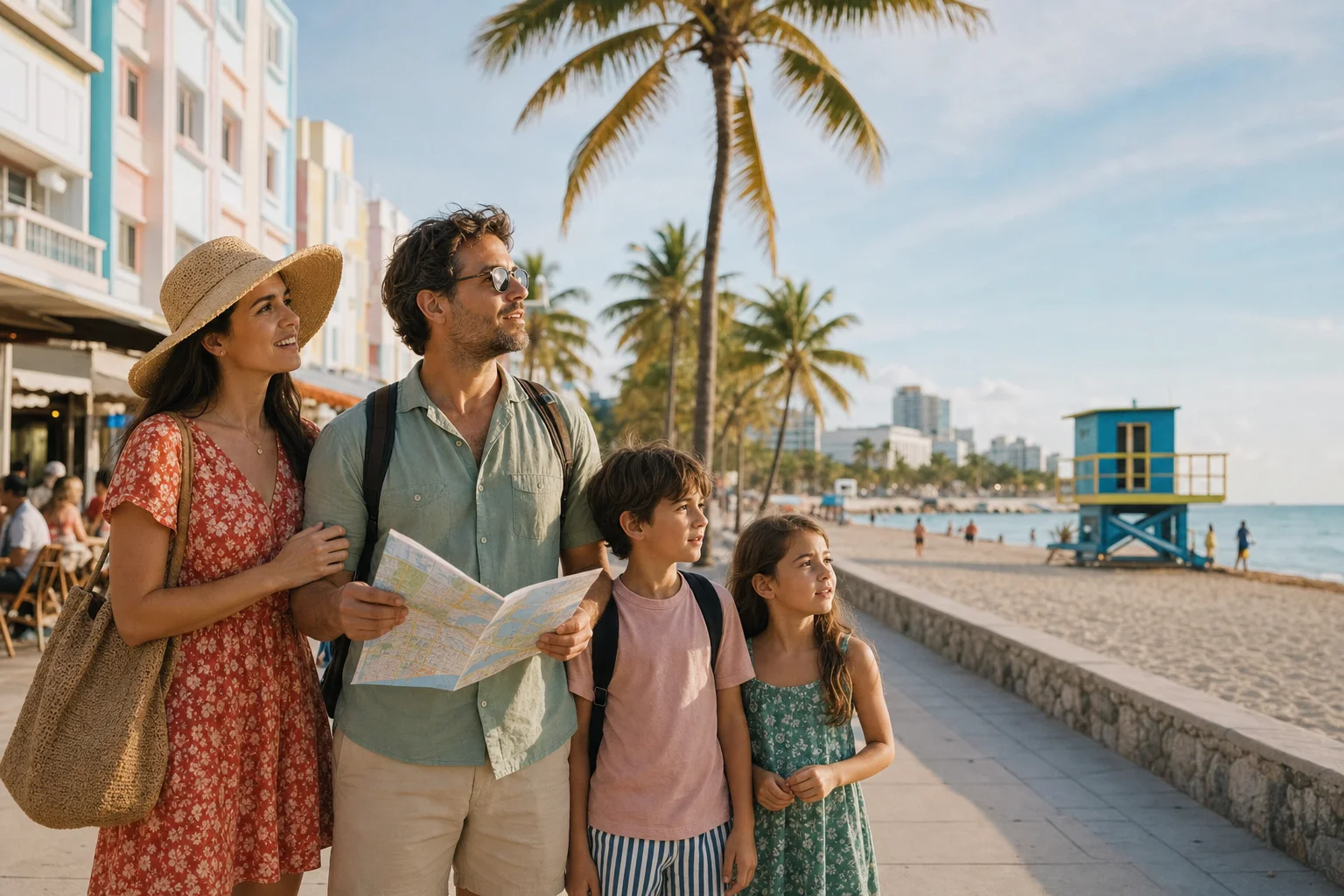
The name most families have in their head - South Beach - is a party destination that happens to have a beautiful beach attached to it. Ocean Drive runs nightlife until 3am. Cocktail menus don’t list prices. Parking costs more than dinner. Worth a couple of hours for Art Deco architecture and beach time. Not where you want to wake up every morning with kids.
The families who come home from Miami genuinely satisfied almost always made the same first decision: they based themselves somewhere else and visited South Beach on their terms.
The neighborhood decision, before anything else
Miami and Miami Beach are different cities, separated by 4 miles and several causeways. Most families picture Miami Beach when they say “Miami.” Getting this straight before you book shapes every other decision downstream.
Coral Gables
Coral Gables earns its reputation as the most-recommended family base for practical reasons: walkable restaurant density, a Metrorail station, and roughly 20 minutes to the beach by car. Loews Coral Gables is the most cited hotel for families in this neighborhood. It suits families with a rental car who want a calm home base and day-trip flexibility.
Coconut Grove
Coconut Grove is Miami’s oldest neighborhood - tree-lined streets, resident peacocks, a farmers market, CocoWalk, and Peacock Park on Biscayne Bay. Quieter than Coral Gables with fewer hotel options, but a Metrorail station and a texture that feels residential rather than purpose-built for tourism. Stroller-friendly and genuinely walkable.
Key Biscayne
Key Biscayne sits on a barrier island via the Rickenbacker Causeway - quieter, lower crime, and Crandon Park Beach with an offshore sandbar, lifeguards, shade, picnic areas, and a carousel. One Miami travel writer’s answer for families was simply “Key Biscayne, hands down.” Premium pricing at the main resort, limited dining variety - but if beach quality for young kids is the priority, this is where it is.
Mid-Beach (Fontainebleau area)
Mid-Beach suits families who want a resort-complete stay with beach access and some distance from South Beach’s intensity - six pools, waterslides, a kids program with evening options, and restaurants on-site. Self-contained enough that many guests don’t leave, which is either the point or the limitation depending on what you came for.
Downtown Miami
Downtown Miami is underused as a family base: walkable to the Frost Science Museum, Bayside Marketplace, and the free Metromover loops. Budget hotel rates here undercut South Beach significantly.

Picking a neighborhood is the decision that determines your whole trip structure - beach proximity, transit options, what you can reach without a car. If you want to talk through which base makes sense for your family’s specific mix of ages, interests, and budget, Mira can help you map it.
AI travel agent
The attractions that hold up
Philip and Patricia Frost Museum of Science
Philip and Patricia Frost Museum of Science is the top-rated indoor family attraction in Miami and it earns it. Six floors, 250,000 square feet, a three-level aquarium with a giant oculus viewing panel where sharks and sea turtles circle overhead, interactive exhibits that work for ages 4 through teens, and a planetarium. Buy tickets online in advance; arrive at opening. The wristband allows same-day re-entry, so you can step out for lunch and come back - useful on a hot day.
Zoo Miami
Zoo Miami is 340 acres of habitat-arranged exhibits covering Africa, Asia, Amazon, and Australia. That scale is real: the zoo is too large to walk comfortably with young children. Rent a Safari cycle cart on arrival, or plan to cover only one or two regions per visit. Giraffe feeding is the consistent highlight. Go on a weekday morning before the heat peaks.
Wynwood Walls
Wynwood Walls has charged admission since 2021 - book tickets online before you go. Children under 6 get in free; ages 6–17 at a modest rate. The outdoor street-art installation is 2–3 hours at a comfortable pace. If you’re bringing a stroller or kids who tire of walking, the golf cart tour is worth booking. Weekday mornings are significantly less crowded than weekends.
The Everglades
The Everglades is only 45–60 minutes from downtown Miami. Many first-timers skip it, treating it like a separate trip - it isn’t. Several operators run half-day airboat tours from the Homestead area, including gator shows and baby-alligator handling. Plan a morning start; afternoon heat on an open-air airboat is genuinely unpleasant. It belongs on any first Miami itinerary.
Little Havana
Little Havana works better with a small-group local guide than as a self-guided walk - Calle Ocho covers Cuban history, coffee, food, and street art in 2–3 hours at a pace that holds kids’ attention. Without a guide, most families find it thinner than expected.
Before you book: closures and renovations
Miami Seaquarium permanently closed October 12, 2025. Every older listicle still includes it - it is gone, and nothing has replaced it yet.
Vizcaya Museum and Gardens is under major renovation as of 2026. Multiple recent visitors report less than half the rooms accessible, boarded-up windows throughout, and full admission charged regardless. Worth revisiting after renovations complete.
The beach that actually works for young kids is not South Beach
Crandon Park Beach (Key Biscayne)
Crandon Park Beach (Key Biscayne) is the best beach for young kids in Miami - an offshore sandbar keeps the water shallow and calm, with lifeguards, shade, picnic areas, and a carousel. The caveat: multiple 2025 reviews flag seasonal seaweed that can make the water murky, and the park closes at 6pm. Check conditions before committing.
South Pointe Park Beach
South Pointe Park Beach is at the southern tip of South Beach - playground, stroller-friendly promenade, and a calmer atmosphere than Ocean Drive. Close enough to the Art Deco buildings to do both in a morning.
Virginia Key Beach Park
Virginia Key Beach Park, across the Rickenbacker Causeway, is quieter still - sheltered water, mangrove surroundings, skyline views, almost no crowds.
The hidden cost stack
A $200/night room in South Beach commonly lands at $350–400 once you add resort fees ($25–60 per room per night), parking ($30–60 valet, $20–25 public garage), taxes at roughly 13% applied to both the room rate and the resort fee, and automatic restaurant gratuities that can run 18–20% with some servers asking you to tip again on top of it. On a five-night stay with a family of four, this stack is substantial.
Resort fees and taxes are fixed at properties that charge them. Parking is avoidable if you’re based somewhere with transit access and not renting a car. Restaurant gratuity is worth knowing about: review the receipt before handing over a card, and don’t feel obligated to add to an automatic charge.
Since May 2025, US rules technically require total-price display at booking, but enforcement is uneven. Run the full nightly number - room rate plus resort fee plus taxes - before committing.
Resort fees are per room per night, which means connecting rooms or a second room for grandparents can push the actual nightly cost well above what the booking site shows. Mira can walk through the real number for the properties on your list.
AI travel agent
Go in November or March, not June
November through late February is the consistent first-timer window: 70–85°F, low rainfall, manageable crowds. December through February has the best weather and peak pricing; mid-April through May (post-Easter) is the softer sweet spot - school crowds gone, weather still pleasant, rates lower.
Avoid mid-March if you can. Spring break, the Miami Open tennis tournament, and Ultra music festival overlap, making South Beach particularly intense. First week of March and post-Easter are both significantly calmer.
Summer is viable with a structure: beach and outdoor activities 7–11am, air-conditioned attractions (Frost Museum, Zoo Miami, Wynwood) noon–5pm, outdoors again in the evening. Hotel rates run 20–40% lower and ocean temperatures hit 83–86°F. The obstacles are real - 88–92°F with high humidity and daily thunderstorms from roughly 3pm to 5pm - but families who plan around them manage fine.
You’ll need a car for anything beyond one neighborhood
The Metrorail connects Coral Gables and Coconut Grove to downtown. Downtown’s free Metromover loops cover the Frost Museum and Bayside Marketplace. South Beach has free trolley routes within the barrier island. These options handle a single-neighborhood itinerary without a car.
For anything broader - Zoo Miami, the Everglades, Key Biscayne, Wynwood, and Little Havana in the same trip - a rental car is the honest answer. Rideshare works, but the cost compounds over a week, and carrying a full family’s gear across multiple neighborhoods adds friction that wears on you by day three.
One thing the map doesn’t show clearly: the free Metromover covers downtown Miami loops but does not cross to Miami Beach. Beach access from downtown requires a car or rideshare over one of the causeways.
Frequently Asked Questions
Is South Beach actually good for families with young kids?
How many days do you need in Miami with kids?
Do you need a car in Miami?
When is the best time to visit Miami with kids?
What happened to Miami Seaquarium?
Is Miami manageable for toddlers?
More articles about Miami

Who's Traveling
-

Miami with Large Families: Suites, Rentals, and Real Costs
The suite-vs-rental math, the resort fee reality, and the neighborhoods South Beach loyalists don't mention.
-

Multi-Generational Miami: What Actually Works
Three generations, two pool areas, one trip where nobody has to apologize for needing a rest.
-

Miami with a Baby: Where You Stay Is the Whole Trip
The neighborhood you book determines more than the hotel you book - here's how to read the map.
-

Miami with Grandparents
The city has real infrastructure for slow travel - free beach wheelchairs, step-free trolleys, a 7-mile coastal path - but it only pays off if you choose the right half of it.
-

Miami with School-Age Kids: What Actually Works
The city has no single family zone. Where you base yourself determines whether this trip works.
-

Miami with Teens
The city that works better than a theme park - if you stop trying to run it like one.
-

Miami with a Toddler: What Actually Works
The party-beach reputation misleads a lot of parents. The city is more workable than that - if you pick the right pocket of it.
Sensory & Accessibility
-

Miami for Families Who Need a Quiet Base
The certified infrastructure here is real, and more extensive than most families realize - but it only works if you start with the right neighborhood.
-

Low-Stimulation Miami: Where the City Actually Gets Quiet
The certification is about staff training. The geography is what actually controls the noise.
-

Quiet Hotels in Miami: Where to Actually Sleep
The noise in Miami is a geography problem. Pick the right neighborhood and the hotel choices follow.
-

Sensory-Friendly Miami: Beaches, Programs & Hotels
Florida's most structured city for low-stimulation travel - if you know which 4 miles of beach to avoid.
-

Wheelchair-Accessible Miami: Beach Access & What to Verify
The beach access infrastructure is genuinely impressive. The sidewalks and the Metromover are not.
Food
-

Miami for Families with Dietary Restrictions
The culinary diversity here is structural, not cosmetic - it changes the math on where your family can actually eat.
-

Miami with Food Allergies
The city's cuisine identity - stone crab, ceviche, shared fryers - makes preparation non-optional.
-

Miami with a Picky Eater
The real challenge isn't finding plain food - it's knowing where not to eat.
Room Setup
-

Miami Connecting Rooms: Who Actually Guarantees It
The difference between a request and a guarantee - and the handful of Miami hotels that have actually solved it.
-

Miami Family Suites With Real Separation (and Real Kitchens)
"Suite" is one of the most abused words in Miami hotel marketing. Here's what to ask for - and where to find it.
-

Miami Hotels with Kitchenettes & Full Kitchens
Miami's dining costs make the kitchenette decision more consequential than almost anywhere else in the country - but "kitchenette" on Miami listings often means a mini-fridge and a microwave.
On-Site Activities
-

Miami Hotels with Kids Clubs: Who Actually Has One
Six hotels in Miami run genuine supervised drop-off programs. Several famous names no longer make the cut.
-

Miami Hotel with Lazy River: The Honest Answer
The aggregator lists are wrong. Here's what the Miami area actually has - and the one property worth booking.
-

Miami Water Parks
The honest answer is different from the one most travel sites give you - and knowing it saves a disappointing afternoon.
Powered by Mira
Tell Mira about your family
Two minutes of conversation. A shortlist of hotels that actually fit — connecting rooms, accessible layouts, calm floors, whatever your family needs.
AI travel agent · free to try
Talk to Mira Let Mira find the right hotels for your family. Find hotels with Mira
AI travel agent · free to try