
Florida
Miami with Food Allergies
The city's cuisine identity - stone crab, ceviche, shared fryers - makes preparation non-optional.
AI travel agent · free to try
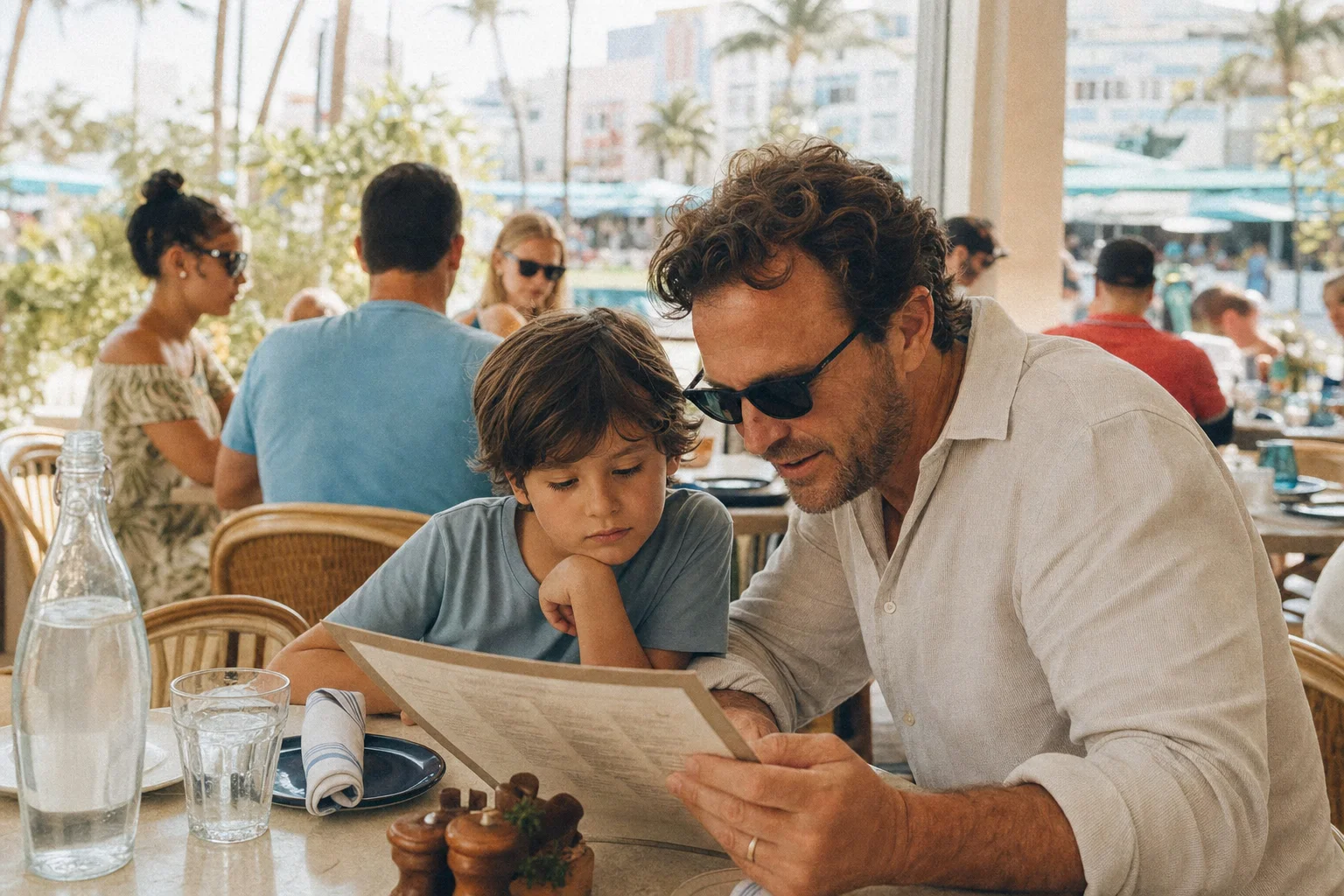
In 2018, Jason Reid emailed The Bazaar by Jose Andres before his visit to flag a severe peanut and nut allergy. He repeated it to his server when seated. He had an anaphylactic reaction on the first bite of the tasting menu and had to use his epinephrine at the table. He filed suit alleging failure to train staff; any recovery he pledged to food allergy awareness charities. The restaurant denied nuts were present. The case didn’t produce a clean resolution - but as a data point about what can happen at a well-regarded Miami restaurant with advance written notice, it’s the most important piece of context on this page.
Miami is a workable food allergy destination. It is not a forgiving one.
Why this city is different from the default US trip
The seafood culture is the variable most families underestimate. Miami’s restaurant identity is built around stone crab, shrimp, ceviche, raw bars, and paella - and that means shared fryers, shared grills, and shellfish protein in places you don’t always see it. Deep fryers do not neutralize shellfish allergen proteins even at 350–375°F. If your family is managing a shellfish allergy, Miami requires a different level of filtering than, say, a city where seafood is one section of the menu rather than the organizing principle.
Cuban and Latin cuisine adds a second layer. Casual spots fry tostones, maduros, and empanadas alongside shrimp and fish in the same oil, and that isn’t always disclosed by default. Ask specifically: “Does this fryer also cook seafood?” - not just “is this fried food safe?” Florida also has a Cajun and Creole presence in some restaurants, and those spice blends sometimes include shellfish-derived ingredients that don’t appear on the dish description.
There’s also an Asian food gap that matters: Thai restaurants in Miami routinely use peanut oil, peanut sauce, and shellfish-derived sauces. The one well-documented allergy-safe Thai option - NaiYaRa Thai & Sushi on Miami Beach, which used tamari throughout and had a confirmed peanut-free kitchen - closed in February 2026. No comparable verified replacement has emerged. If your family’s allergy profile includes peanuts and Thai food is a staple, plan ahead.
Florida’s July 2024 restaurant allergy law requires every public food service establishment to post an allergen notice in 32-point font and mandates manager and employee training on the eight major allergens, anaphylaxis symptoms, and emergency response. Every sit-down restaurant in Miami should have this posted now. That’s a meaningful policy baseline - but it’s a floor, not a ceiling, and it doesn’t guarantee individual kitchen execution.
One more thing to ask explicitly at any restaurant with strong protocols: sesame. As of 2023, sesame is the ninth major allergen under US FDA rules, but many Miami kitchen staff don’t yet treat it separately from “nuts.” Sesame oil appears in Asian, Mediterranean, and some Latin dishes without being called out in the dish description.
Hotels that actually have a system
The difference between a Miami hotel that says it “accommodates dietary needs” and one with a documented allergy protocol is the difference between a well-intentioned verbal promise and a system that survives staff turnover, shift changes, and a busy Saturday night service.
1 Hotel South Beach
1 Hotel South Beach is the best-documented allergy hotel in Miami. Guest allergy information is stored in the property’s system at check-in and applied property-wide - every restaurant on site, room service, and the pool bar. A Spokin user managing celiac, peanut, and tree nut allergies summarized it as “educated staff and the food was delicious.” That kind of system-level integration is meaningful because it doesn’t require you to re-declare your allergy at every point of contact.
Fontainebleau Miami Beach
Fontainebleau Miami Beach prepares food for allergic guests in a separate kitchen. Multiple Spokin users have documented proactive communication from management: one reviewer with an egg allergy described the manager, chef, general manager, and pastry chef all making contact before and during the meal. That’s resource-intensive - it reflects a flagship property with staffing depth. Call the dining team directly before arrival rather than noting the allergy at check-in only.
Setai Ocean Front
Setai Ocean Front has accommodated complex multi-allergen profiles - including one guest managing tree nut, egg, corn, and banana allergies who has visited multiple times - sometimes by sourcing fresh fish from the hotel restaurant kitchen for pool-side preparation. That kind of improvisation doesn’t happen automatically for a first-time visitor; it develops from a relationship with the property over repeat stays. Worth noting as a signal of what the hotel is willing to do, not a guarantee for a first trip.
Soho Beach House
Soho Beach House is a mixed signal. Spokin reviews are positive; a Tripadvisor review documents a guest who explicitly told staff about a friend’s gluten intolerance and was brought flour tortillas anyway, then charged for the dish before pushback at the front desk got it removed. The gap between front-of-house communication and kitchen execution is the standard failure mode - confirm protocols with the dining team directly, not just at reservation time.

If you’re weighing these hotels against each other and want to know which one fits your specific allergy profile and travel dates, Mira can help you compare what’s documented and what to ask before you book.
AI travel agent
Restaurants with verified protocols - organized by what they’re actually good at
For peanut and tree nut allergies
Nobu Miami
Nobu Miami at Eden Roc asks about allergies proactively when guests are seated, uses tamari instead of soy sauce on request, and can substitute across the menu. A Spokin user managing peanut, tree nut, and milk allergies documented a safe experience with multiple staff members coordinating on the meal. Nobu doesn’t use peanuts in its kitchen and can navigate tree nut avoidance - but book in advance and specify allergens at the time of reservation, not just at the table.
Bella Cuba Restaurant
Bella Cuba Restaurant has no nuts in the kitchen, confirmed by multiple Spokin users. Cuban cuisine served without the nut risk that shows up in fusion or Asian spots.
Barton G. The Restaurant
Barton G. The Restaurant in Miami Beach uses a nut-free fryer, discloses dairy cross-contamination risk upfront, and offers multiple safe dessert options for nut-only allergies. Staff are documented as willing to modify dishes.
For gluten and wheat allergies
Yardbird Southern Table and Bar
Yardbird Southern Table and Bar in Miami Beach uses a separate fryer for gluten-free items, verified by multiple celiac and tree nut reviewers. Staff knowledge rated consistently above average across allergy community sources.
For multi-allergen profiles
Hutong Miami
Hutong Miami is an upscale Chinese restaurant where at least one staff member (documented by name on Spokin) has been specifically allergy-aware - proactively listing ingredients and coordinating kitchen preparation. This is staff-dependent, not a system-level protocol. Worth noting, worth asking about, but not reliably reproducible without confirming on the day.
What the research doesn’t cover yet
Dairy- and egg-specific restaurant documentation in Miami is thin. Most Spokin and AllergyEats reviews focus on peanut, tree nut, and gluten profiles. If you’re managing a dairy or egg allergy and need Miami-specific verification, the community data is sparse enough that a direct call to any restaurant you’re considering is the more reliable path.
The dessert window - Miami’s surprising bright spot
Miami’s allergy-aware dessert options are, counterintuitively, stronger than its dinner options.
AUBI & RAMSA
AUBI & RAMSA in the Design District serves alcoholic ice cream in individually sealed packaging. Cross-contamination is architecturally impossible - servings arrive sealed, not scooped from a shared container. Nuts are marked with asterisks and clear warnings. Multiple vegan sorbets available. The catch: it’s a 21+ venue.
Chill-N Nitrogen Ice Cream
Chill-N Nitrogen Ice Cream makes ice cream to order using liquid nitrogen at multiple Miami-area locations (Pinecrest, Coral Springs, Coconut Grove area). Staff label cups with allergy information and prepare in a separate back area for allergy orders. Their FAQ explicitly addresses nut cross-contamination protocols and asks guests to notify in advance.
Azucar Ice Cream Company
Azucar Ice Cream Company on Calle Ocho opens a fresh container and uses a fresh scooper for nut allergy orders, with vegan sorbets and pea milk options available. Worth noting: open nut containers are present in the store, which is a consideration for highly airborne-sensitive individuals.
Bunnie Cakes
Bunnie Cakes in Wynwood is a genuine trap for tree nut allergies. The bakery is award-winning, entirely vegan, free of eggs and dairy, and marketed strongly as allergy-friendly. But they use coconut extensively, and the FDA classifies coconut as a tree nut. Their own allergen page acknowledges the risk: ingredient suppliers are not dedicated nut-free facilities. For peanut-only, egg, or dairy allergies, it’s excellent. For tree nut allergies, the vegan branding does not make it safe.
Where things go wrong - the failure patterns
The Bazaar incident at the top of this page is the most documented Miami allergy failure. But it isn’t the only pattern to understand.
Tasting menus
Tasting menus are structurally risky for any severe allergy. A sequence of small dishes prepared in advance by a kitchen gives you no per-dish control. The diner can notify staff in advance and repeat it at the table - Reid did both - and still be served something that causes a reaction. If you’re managing a severe allergy, ask before booking any tasting menu format whether individual items can be substituted, and get that confirmation in an email to the restaurant manager before arrival, not just verbally at the table.
Cuban casual fryer cross-contamination
Cuban casual fryer cross-contamination is the most common everyday risk. Tostones and maduros fried in the same oil as shrimp and fish is not an edge case in Miami - it’s standard practice at many casual spots. The question “is this gluten-free?” doesn’t surface it. Ask specifically about the fryer.
Coconut in vegan items
Coconut in vegan items follows the Bunnie Cakes model: a restaurant or bakery markets itself as allergen-friendly or vegan, and that positioning attracts tree nut–allergic families who then encounter an ingredient that the FDA classifies as a tree nut. Don’t assume vegan equals nut-safe. Ask specifically about coconut.
Verbal assurances without follow-through. The Soho Beach House review (flour tortillas delivered after the table explicitly noted a gluten intolerance) is a mild version of the same failure that shows up in the Bazaar lawsuit. The Miami allergy community’s practical guidance: use a Spanish allergy card, send an advance email to the restaurant, and re-declare the allergy at the table - not just at reservation time. Layering these doesn’t guarantee safety, but it removes the most common communication gaps.
If you’d rather not do this research solo for every restaurant on your Miami itinerary, Mira can help you build a shortlist matched to your specific allergens and the neighborhoods you’re planning to stay in.
AI travel agent
Practical preparation before you go
Spanish allergy cards. Equal Eats and SelectWisely offer laminated cards covering all nine major allergens in Spanish. Miami’s casual restaurant kitchens are heavily Spanish-speaking; handing a card to your server takes five seconds and removes the biggest communication variable.
Advance emails to restaurants. For anywhere that matters, send an email to the restaurant manager before your visit - not just the reservation platform’s “notes” field, which kitchen staff may not see. Include the specific allergens, not just the category.
Grocery anchoring. Whole Foods South Beach and Trader Joe’s Miami Beach are reachable from South Beach hotels. Families managing multiple allergies often stay in suites with kitchens, dining out only for vetted meals. Fewer restaurant meals means fewer allergy conversations per day.
Know the ER before you need it. Jackson Memorial Hospital - a Level I trauma center with 24/7 emergency services and pediatric care - is the most capable anaphylaxis destination in Miami. Baptist Health Urgent Care on Alton Road in Miami Beach handles mild-to-moderate reactions but explicitly states it cannot treat anaphylaxis and directs life-threatening emergencies to call 911 and go to an ER. Know which facility is closest to where you’re staying, and know the route before you’re in an emergency.
Epinephrine goes in the bag every day. That’s not Miami-specific - but in a city where a shared fryer at a casual Cuban spot is a real exposure vector and the closest ER is fifteen minutes away on a good traffic day, it’s worth saying plainly.
Frequently Asked Questions
Is Miami safe for a child with a severe shellfish allergy?
Should I tell the hotel about our food allergies before we arrive?
Are there Miami restaurants where peanuts and tree nuts are completely absent from the kitchen?
Do I need a Spanish allergy card in Miami?
What do I do if we have an allergic reaction in Miami?
More articles about Miami
Destination Guide
-

Miami Family Vacation (2026): What Actually Works
Most families book the wrong neighborhood, skip the Everglades, and don't find out what Miami actually costs until they check out.
-

First-Timer's Guide to Miami with Kids
The neighborhood you choose will determine almost everything else about your trip.
Who's Traveling
-

Miami with Large Families: Suites, Rentals, and Real Costs
The suite-vs-rental math, the resort fee reality, and the neighborhoods South Beach loyalists don't mention.
-

Multi-Generational Miami: What Actually Works
Three generations, two pool areas, one trip where nobody has to apologize for needing a rest.
-

Miami with a Baby: Where You Stay Is the Whole Trip
The neighborhood you book determines more than the hotel you book - here's how to read the map.
-

Miami with Grandparents
The city has real infrastructure for slow travel - free beach wheelchairs, step-free trolleys, a 7-mile coastal path - but it only pays off if you choose the right half of it.
-

Miami with School-Age Kids: What Actually Works
The city has no single family zone. Where you base yourself determines whether this trip works.
-

Miami with Teens
The city that works better than a theme park - if you stop trying to run it like one.
-

Miami with a Toddler: What Actually Works
The party-beach reputation misleads a lot of parents. The city is more workable than that - if you pick the right pocket of it.
Sensory & Accessibility
-

Miami for Families Who Need a Quiet Base
The certified infrastructure here is real, and more extensive than most families realize - but it only works if you start with the right neighborhood.
-

Low-Stimulation Miami: Where the City Actually Gets Quiet
The certification is about staff training. The geography is what actually controls the noise.
-

Quiet Hotels in Miami: Where to Actually Sleep
The noise in Miami is a geography problem. Pick the right neighborhood and the hotel choices follow.
-

Sensory-Friendly Miami: Beaches, Programs & Hotels
Florida's most structured city for low-stimulation travel - if you know which 4 miles of beach to avoid.
-

Wheelchair-Accessible Miami: Beach Access & What to Verify
The beach access infrastructure is genuinely impressive. The sidewalks and the Metromover are not.
Food


Room Setup
-

Miami Connecting Rooms: Who Actually Guarantees It
The difference between a request and a guarantee - and the handful of Miami hotels that have actually solved it.
-

Miami Family Suites With Real Separation (and Real Kitchens)
"Suite" is one of the most abused words in Miami hotel marketing. Here's what to ask for - and where to find it.
-

Miami Hotels with Kitchenettes & Full Kitchens
Miami's dining costs make the kitchenette decision more consequential than almost anywhere else in the country - but "kitchenette" on Miami listings often means a mini-fridge and a microwave.
On-Site Activities
-

Miami Hotels with Kids Clubs: Who Actually Has One
Six hotels in Miami run genuine supervised drop-off programs. Several famous names no longer make the cut.
-

Miami Hotel with Lazy River: The Honest Answer
The aggregator lists are wrong. Here's what the Miami area actually has - and the one property worth booking.
-

Miami Water Parks
The honest answer is different from the one most travel sites give you - and knowing it saves a disappointing afternoon.
Powered by Mira
Tell Mira about your family
Two minutes of conversation. A shortlist of hotels that actually fit — connecting rooms, accessible layouts, calm floors, whatever your family needs.
AI travel agent · free to try
Talk to Mira Let Mira find the right hotels for your family. Find hotels with Mira
AI travel agent · free to try