
Florida
Planning a Miami Trip Around Low-Sensory Needs
The certified infrastructure here is real, and more extensive than most families realize - but it only works if you start with the right neighborhood.
AI travel agent · free to try
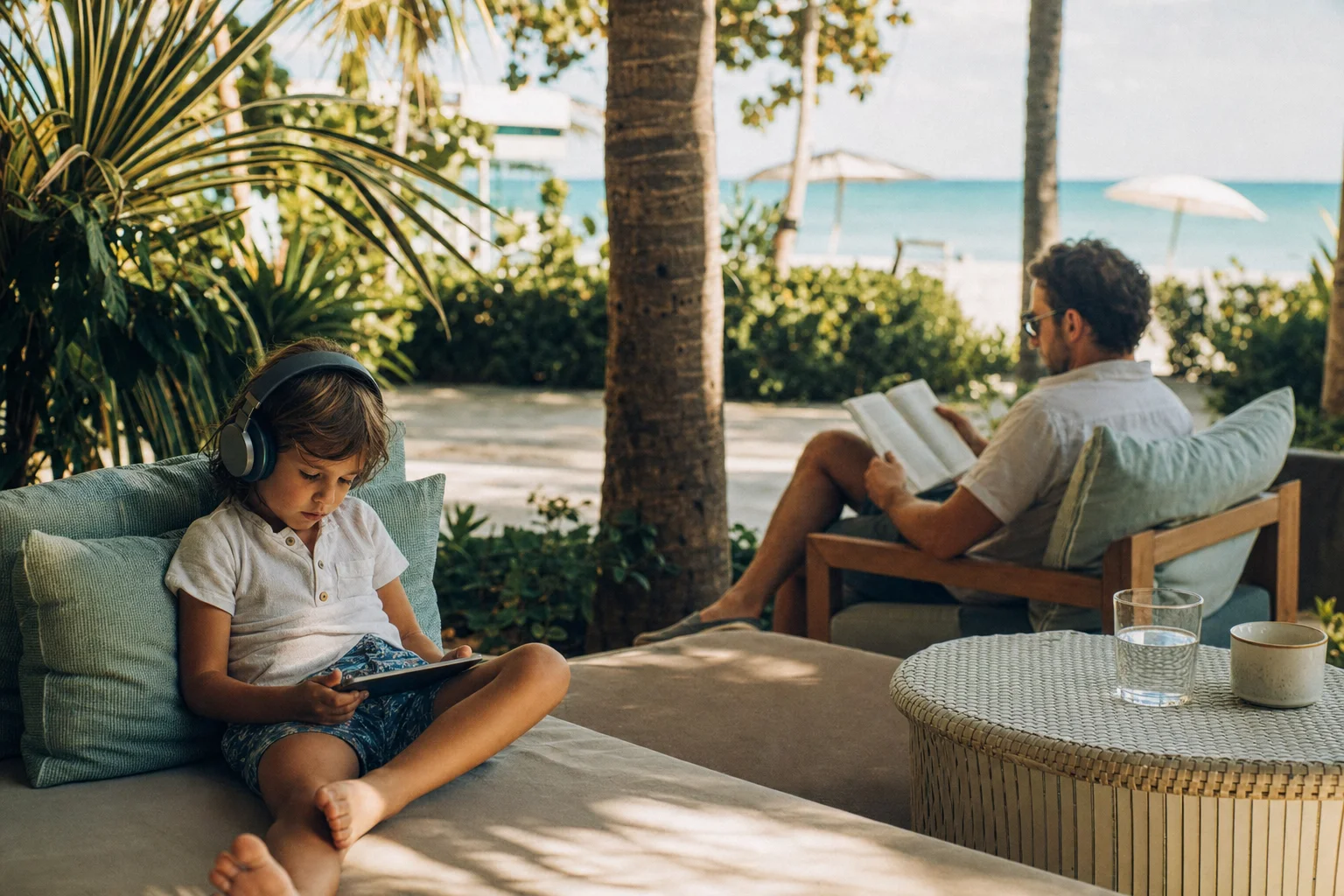
Miami is usually the wrong answer - until you realize you’ve been looking at the wrong half of it.
South Beach, Ocean Drive, Collins Avenue between 5th and 15th streets: clubs running past 2 AM, noise ordinances that exist on paper but not in practice, hotel lobbies that pipe music into the elevator. That Miami is exactly as loud as it looks. But Coral Gables is 20 minutes away, and it operates like a different city.
Miami also has more independently verified sensory-friendly infrastructure than any comparable US beach destination - IBCCES Certified Autism Center designations at ZooMiami, the Frost Museum, the Miami Children’s Museum, and, as of April 2026, the entire Miami-Dade County Parks system. That last one covers the largest parks department in the US. Every park ranger in the system completed the training. Getting to that infrastructure requires choosing the right neighborhood first.
Where you sleep determines everything else
South Beach works as a daytime destination, but Ocean Drive’s 700–1100 block is the nightlife core, and Collins Avenue running parallel shares exactly that problem - hotels a block back still absorb it because the noise ordinance exists only on paper; enforcement does not follow.
Coral Gables is the most consistent quiet option - residential streets, removed from tourist corridors. Key Biscayne is a barrier island with limited through-traffic and essentially no nightlife; multiple families who travel regularly with sensory-sensitive children specifically return there. Both sit near the highest concentration of useful outdoor spaces: Fairchild Tropical Botanic Garden and Pinecrest Gardens are both in or adjacent to Coral Gables; Crandon Park Beach is on Key Biscayne.
Coconut Grove looks right on a map but its two main hotel options have documented noise problems. The Ritz-Carlton Coconut Grove had multiple guests in 2025–2026 reporting late-night music from the adjacent Commodore venue and construction drilling. The Mayfair House Hotel & Garden has documented soundproofing failures between rooms, and frequent weddings are an operational norm. Both are quieter than South Beach overall; neither is quiet in an absolute sense. Request upper floors and confirm the event calendar for your dates.
For families who need full environmental control, private rentals on Key Biscayne or in Coral Gables residential zones are the consistently recommended approach. VillaKey specializes in vacation rentals for this audience and operates in both areas.

Neighborhood choice is the highest-stakes booking decision in Miami. Tell Mira your dates and which venues you’re planning around - she can help match you to a base that’s actually within range of the places you’ll be using.
AI travel agent
The programmed experiences worth building your dates around
Three of Miami’s sensory programs are strong enough to plan travel dates around. They run on specific days, require advance booking, and are worth working backward from the calendar to schedule flights.
Frost Museum of Science - Just for Me
Monthly on Saturdays, 10–11:30 AM, with exclusive early access before the public arrives. Sound is muted in the Aquarium: The Deep, River of Grass, and MeLab areas; the Frost Planetarium runs modified settings. A backpack with noise-reducing headphones and sensory toys is at the front kiosk, first-come - arrive by 10 AM. No registration required. 2026 dates through September: June 20, July 18, August 15, September 19. Standard paid admission applies; families can request free admission through the Albert and Jane Nahmad Foundation form on the museum’s website.
Miami Children’s Museum - Sensory Friendly Saturdays
Second Saturday of every month, 9–11 AM. Free, but RSVP is mandatory and registration closes the Friday before at 5 PM. Space is strictly limited; walking in on the day without a reservation risks being turned away. During the event, the museum dims lights, lowers sound, restricts total admission, and runs a sensory-friendly stage performance.
The Snoezelen Room - designed in partnership with Beit Issie Shapiro - is open outside the Saturday event during regular museum hours. If the RSVP window closes before you get there, the room is still accessible on other days.
Superblue Miami - Sensory Friendly Sessions
Third Thursday of each month at 10 AM. Advance tickets required; admission is low-cost, book direct on their website. Limited admission, sound and lighting adjustments within the installations, a quiet room available, and sensory kits at the door. The program was built in partnership with the Center for Autism and Related Disabilities at UM-NSU.
Superblue is worth treating separately from the other museum programs. Where most sensory-friendly programming focuses on reducing stimulation, the mirror rooms and touch-responsive walls here actively engage children who seek tactile and visual input. Cristina Castañeda, whose son Lucas is seven and nonverbal, described his response in the mirror room: “He just lit up… it was calm and interactive, exactly what he needs.” Regular sessions run at full volume and full visual intensity - the Thursday morning is the one to book. Superblue is in Allapattah, adjacent to Wynwood; the building is controlled, but arrive for the 10 AM session, when the surrounding neighborhood is still quiet.
These three programs run on different weeks of the month. If you want to catch more than one, the scheduling gets specific. Tell Mira your target dates and she can help you figure out which combination actually fits.
AI travel agent
Outdoor spaces where quiet actually holds
Miami’s outdoor options divide cleanly between places that are genuinely low-stimulation and places that appear on family lists without earning it. Little Havana is loud and fragrant; Wynwood on a weekend is crowds and DJ music - both appear in neighborhood guides near Coral Gables and Coconut Grove without warranting the proximity. The places that work:
Fairchild: 83 acres that stay genuinely quiet before noon
83 acres of tropical greenery in Coral Gables - butterflies, gentle water features, open space. A May 2025 reviewer described it as “quiet, even with major events”; a March 2026 visitor called it “wonderfully serene.” Arrive by 9–10 AM; a February 2026 visitor noted heavy traffic by 3 PM on a Thursday. Caveat: weddings and corporate functions periodically affect visitor areas. Check the calendar before building the day around it.
Pinecrest Gardens
35 acres in Pinecrest, south Miami. Has a dedicated Sensory Garden - butterfly garden, raised herb beds, tactile exploration station - plus a petting zoo (timed sessions at 10 AM, noon, 2 PM, and 4 PM), splash pad, and playground. General admission is $5. Monday mornings are historically the quietest; multiple visitors across multiple years describe arriving to nearly empty grounds.
Crandon Park: the beach with calm water and a county-certified plan
Key Biscayne, north section. Bay-facing water that’s shallow and wave-free - calmer than Miami Beach proper. Arrive in the morning; weekends fill fast. Part of the now-CAC-certified Miami-Dade County Parks system.
Oleta River State Park
Florida’s largest urban park, in North Miami, with flat estuary water ideal for kayaking without ocean waves. Fills to capacity on weekends - call the ranger station before arriving on a Saturday. Shake-A-Leg Miami at 2620 S Bayshore Drive in Coconut Grove runs adaptive sailing and paddleboarding on Biscayne Bay for families who want structure alongside the water.
Arrival: what MIA actually offers
Miami International Airport has two purpose-built sensory rooms post-security - one in Concourse D near TSA Checkpoint 4, one in the South Terminal near Concourse J - open 7 AM to 10 PM daily, no registration needed. Press the intercom for access. Both have aquatic bubble tubes, interactive wall puzzles, cushioned seating, and a light projector in a dim setting. Hidden Disabilities Sunflower lanyards are available by emailing ADAcoordinator@miami-airport.com at least 7–14 days out. MIAair offers practice flights for families who want a rehearsal before the actual trip.
Pre-booking a car from MIA removes the taxi queue from the first 45 minutes - that queue is genuinely chaotic.
Quiet dining in a loud city
The acoustic exceptions in Miami’s restaurant scene are concentrated in Coral Gables. Zucca at 162 Alcazar Avenue has velvet curtains and built-in soundproofing - measurably quieter than most dining rooms in the city, white-tablecloth Italian with no children’s menu. Caffe Abbracci at 318 Aragon Avenue has chest-high dividers and wall and ceiling soundproofing; classic Italian, similar register. The Infatuation named both as Miami’s quietest dining rooms.
For families who find enclosed restaurant acoustics difficult, the Coconut Grove waterfront has casual outdoor seating that diffuses sound naturally - the tradeoff being Miami heat and direct sun from late morning. A vacation-rental kitchen removes the restaurant question entirely on evenings when the day has already asked enough.
Frequently Asked Questions
Which Miami neighborhood should we stay in if my child is easily overwhelmed by noise?
Does the Frost Science 'Just for Me' program require registration, and is there a separate ticket?
Miami Children's Museum Sensory Friendly Saturdays - do we need to RSVP, or can we just show up?
Are there any beaches near Miami that are actually calm rather than crowded?
Does Miami International Airport have anything useful for arrival?
ZooMiami has Certified Autism Center status - does that mean sensory bags are reliably available?
More articles about Miami
Destination Guide
-

Miami Family Vacation (2026): What Actually Works
Most families book the wrong neighborhood, skip the Everglades, and don't find out what Miami actually costs until they check out.
-

First-Timer's Guide to Miami with Kids
The neighborhood you choose will determine almost everything else about your trip.
Who's Traveling
-

Miami with Large Families: Suites, Rentals, and Real Costs
The suite-vs-rental math, the resort fee reality, and the neighborhoods South Beach loyalists don't mention.
-

Multi-Generational Miami: What Actually Works
Three generations, two pool areas, one trip where nobody has to apologize for needing a rest.
-

Miami with a Baby: Where You Stay Is the Whole Trip
The neighborhood you book determines more than the hotel you book - here's how to read the map.
-

Miami with Grandparents
The city has real infrastructure for slow travel - free beach wheelchairs, step-free trolleys, a 7-mile coastal path - but it only pays off if you choose the right half of it.
-

Miami with School-Age Kids: What Actually Works
The city has no single family zone. Where you base yourself determines whether this trip works.
-

Miami with Teens
The city that works better than a theme park - if you stop trying to run it like one.
-

Miami with a Toddler: What Actually Works
The party-beach reputation misleads a lot of parents. The city is more workable than that - if you pick the right pocket of it.
Sensory & Accessibility
-

Low-Stimulation Miami: Where the City Actually Gets Quiet
The certification is about staff training. The geography is what actually controls the noise.
-

Quiet Hotels in Miami: Where to Actually Sleep
The noise in Miami is a geography problem. Pick the right neighborhood and the hotel choices follow.
-

Sensory-Friendly Miami: Beaches, Programs & Hotels
Florida's most structured city for low-stimulation travel - if you know which 4 miles of beach to avoid.
-

Wheelchair-Accessible Miami: Beach Access & What to Verify
The beach access infrastructure is genuinely impressive. The sidewalks and the Metromover are not.
Food
-

Miami for Families with Dietary Restrictions
The culinary diversity here is structural, not cosmetic - it changes the math on where your family can actually eat.
-

Miami with Food Allergies
The city's cuisine identity - stone crab, ceviche, shared fryers - makes preparation non-optional.
-

Miami with a Picky Eater
The real challenge isn't finding plain food - it's knowing where not to eat.
Room Setup
-

Miami Connecting Rooms: Who Actually Guarantees It
The difference between a request and a guarantee - and the handful of Miami hotels that have actually solved it.
-

Miami Family Suites With Real Separation (and Real Kitchens)
"Suite" is one of the most abused words in Miami hotel marketing. Here's what to ask for - and where to find it.
-

Miami Hotels with Kitchenettes & Full Kitchens
Miami's dining costs make the kitchenette decision more consequential than almost anywhere else in the country - but "kitchenette" on Miami listings often means a mini-fridge and a microwave.
On-Site Activities
-

Miami Hotels with Kids Clubs: Who Actually Has One
Six hotels in Miami run genuine supervised drop-off programs. Several famous names no longer make the cut.
-

Miami Hotel with Lazy River: The Honest Answer
The aggregator lists are wrong. Here's what the Miami area actually has - and the one property worth booking.
-

Miami Water Parks
The honest answer is different from the one most travel sites give you - and knowing it saves a disappointing afternoon.
Powered by Mira
Tell Mira about your family
Two minutes of conversation. A shortlist of hotels that actually fit — connecting rooms, accessible layouts, calm floors, whatever your family needs.
AI travel agent · free to try
Talk to Mira Let Mira find the right hotels for your family. Find hotels with Mira
AI travel agent · free to try