
Hawaii
Maui with School-Age Kids
The right base, the right activities booked before you land, and permission to spend a full day at the pool - that's the Maui trip kids remember.
AI travel agent · free to try
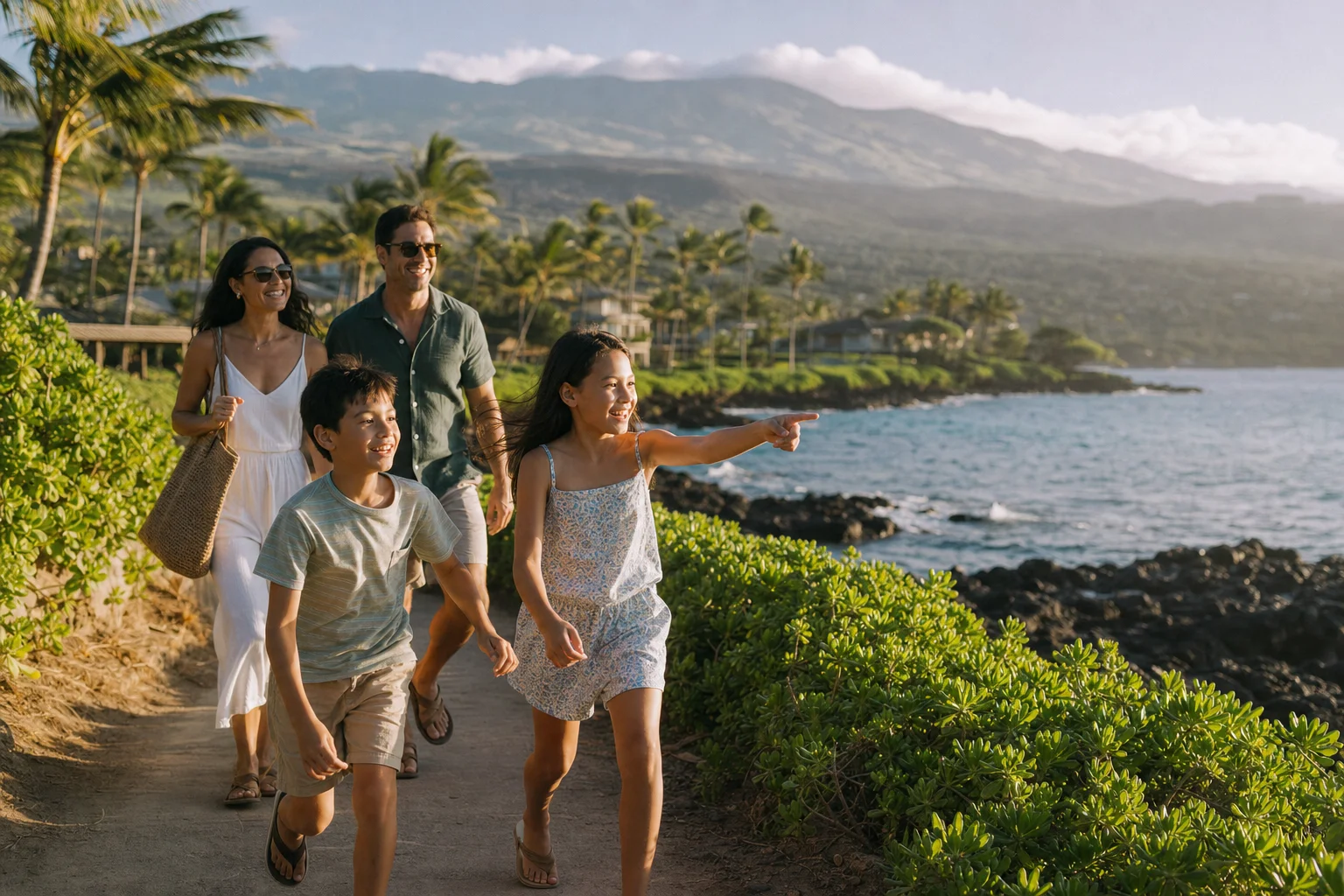
The honest version of a Maui trip with school-age kids: you will spend more than you expect, the kids will rank the pool days as high as the big-ticket excursions, and at least one parent will suggest doing Road to Hana as a full-day drive while the other quietly suspects it’s a terrible idea. That parent is usually right.
Maui is genuinely exceptional for kids in the 6–12 range - Molokini snorkel, a whale surfacing 50 feet from the boat, surfing a real wave for the first time. The trips that land well share a few things: a deliberate base choice, activities booked before departure rather than at the hotel activity desk, and no more than one serious outing per day. The jet lag - two to three hours from the West Coast, five to six from the East - argues for building in rest even if your kids swear they don’t need it.
Ka’anapali or Wailea: the base decision actually matters
Most generic Maui guides default to Wailea and the Four Seasons. For school-age kids, Ka’anapali is the better call - and the research is fairly clear on why.
Ka’anapali gives you a walkable beachfront strip with casual dining options, shave ice carts, and whale watching boats departing close by. You can structure car-free beach days during the middle of the week without feeling trapped in the resort restaurant. Wailea’s resort corridor is more isolated; families who base there report driving to Kihei regularly just to find affordable meals, which adds up in time and money.
The exception is if you’re booking Grand Wailea specifically for the pool complex - which is a legitimate reason. Nine interconnected pools, seven waterslides (five with no height restriction; the two bigger ones require 48 inches), a lazy river, rope swing, and a water elevator back to the top. Kids who visit come home talking about it months later. If the pool is the headline experience you’re building the trip around, Wailea makes sense. If you want a base that functions well across a week of varied days, Ka’anapali is more forgiving.
Hotels worth naming
Hyatt Regency Ka’anapali is the strongest pick for activity-seeking kids around 8 and up. A 150-foot enclosed waterslide, penguin feedings, mermaid swim lessons, and a pool grotto remodeled in 2025. No kids’ club, but family programming fills the gap - and from the shoreline in December through April, you can watch humpbacks breach without booking a boat.
Outrigger Honua Kai (North Ka’anapali) runs as condo-style suites with full kitchens - five pools, a waterslide, five hot tubs, kids 17 and under stay free. Cooking breakfast and packing beach lunches saves real money across a week. Good for multi-generational trips. Cleaning fees vary by unit size; no daily housekeeping.
Four Seasons Wailea has the only year-round complimentary kids’ club on the island - “Kids for All Seasons,” ages 5–12, daily 9am–5pm, no extra charge. Three pools and a smaller waterslide. This is the right pick for families where parents also want a quieter vacation, not just maximum kid entertainment.
Montage Kapalua Bay runs a children’s program called Paintbox with themed days, Wildlife Wednesday hikes along the Kapalua Coastal Trail, and a Children’s Night Out dinner. Smaller waterslide, premium pricing, but structured programming that serious-minded kids (and parents who want real downtime) tend to appreciate.
The ocean activities you book before you land
Every activity that’s actually worth doing in Maui books out. The hotel activity desk is not the place to plan this - by the time you land, the good spots are gone.
Molokini Crater snorkel on Four Winds II is the most family-friendly operator for this excursion. Their 55-foot catamaran has a glass-bottom viewing room for kids who want to watch fish without getting in the water, an on-board waterslide, a lifeguard in the water, and continental breakfast plus a BBQ lunch included. Departures are from Maalaea Harbor; the captain may redirect to an alternate site if visibility at Molokini is poor, which happens occasionally with weather.
Pacific Whale Foundation whale watching (December through April) has a Junior Naturalist program that keeps kids occupied between sightings with activity books and hydrophone listening. Book for days one or two of the trip, not the last; weather cancellations are real, and January through March is both peak whale activity and peak booking pressure.
Maui Surfer Girls at Ukumehame Beach Park runs a 4:1 instructor ratio on 2-hour lessons, Monday through Saturday at 8am. Books months ahead in peak season; May through September has the calmest beginner conditions. If they’re full, Waves Hawaii in Kihei is specifically noted for anxious learners.

AI travel agent
The pool day isn’t a consolation prize
Parent trip reports are consistent on this: kids rank pool time at Grand Wailea or Hyatt Regency alongside Molokini snorkel in their trip highlights - sometimes above it. “Our son’s perfect day includes floating in the lazy river,” one parent wrote, in a trip report otherwise full of bigger-ticket excursions. The Grand Wailea lazy river, the Hyatt waterslide, the interconnected cave pool at Honua Kai - these are the experiences 9-year-olds still mention three years later.
Build one or two full pool days into the week. An over-scheduled itinerary where you’re driving somewhere every morning at 7am is the pattern that produces the grumpy second half of the trip.
Haleakala: catch the sunset, not the sunrise
Haleakala at sunrise requires a 3am wake-up, predawn driving on a winding mountain road, and an advance reservation that sells out weeks ahead. For school-age kids, this is not a recipe for a good memory. One parent on the Fodor’s forum described kids who complained bitterly during the trip but remembered it fondly years later - which is a long payoff timeline.
Sunset solves most of the logistical friction. No advance reservation required. You can check the weather forecast beforehand. The drive is easier, the scenery is visible, and everyone starts the day rested. The visual payoff at the 10,023-foot summit - the horizon going orange while clouds sit below you - is the same.
The one thing the sunrise and sunset versions share: the summit is 30–40°F colder than sea level. Families who show up in shorts and t-shirts - which is most families, the first time - spend about four minutes at the summit before retreating to the car. Pack a puffer coat, beanie, gloves, and hand warmers regardless of what the beach thermometer says in the morning.
A natural pairing: Surfing Goat Dairy in Kula on the drive up - hand milking, cheese tasting, goats being goats - then the summit for sunset.
Beaches, sunscreen law, and the freshwater warning
For non-strong swimmers, Kapalua Bay is the calmest west-side option - a natural crescent reef provides protection and the current is gentle. Kamaole III (Kam III) in Kihei has lifeguards, which is worth knowing. Avoid Ka’anapali Black Rock with younger kids: documented strong currents, and a cliff-jumping culture that clashes with a family beach afternoon.
Maui County bans oxybenzone and octinoxate - the active ingredients in most conventional sunscreen - with fines up to $1,000. You need mineral sunscreen: zinc oxide or titanium dioxide. Pack it from home; resort shops stock it at premium prices. For water-intensive days, rash guards are more practical anyway - the UV index runs 8–13 and reapplying every 40 minutes in the surf is close to impossible.
One hazard most travel content ignores: leptospirosis in freshwater. The bacteria spreads through animal urine into Hawaii’s streams, and documented cases cluster at exactly the spots tourists want to swim - Iao Valley waterfall pools, Seven Sacred Pools. Hawaii DOH advises against freshwater submersion through eyes, nose, or mouth, or with open cuts. Check current advisories before letting kids wade any stream pool they find on a hike.
One thing to know about Lahaina
Historic Front Street and the downtown waterfront remain a closed construction zone as of 2026. The 2023 fire destroyed the area and rebuilding is years from complete - roughly 2% of homes were rebuilt as of April 2025. Families arriving expecting to walk the historic waterfront will be turned away.
What is operating normally: Ka’anapali beach and the full resort corridor, whale watching and snorkel boats, the Old Lahaina Luau (which reopened March 2024 and books out 2–3 months ahead - floor seating sometimes requires a year’s advance booking). The luau runs one hour, which is specifically noted for holding kids’ attention, and the pre-show ulu maika lawn bowling keeps them occupied while adults settle in.
The reconstruction is visible from the road. The context is worth a brief explanation to older kids before the trip.
AI travel agent
Frequently Asked Questions
Do I need a rental car in Maui with kids?
Is the Road to Hana worth it with school-age kids?
What sunscreen do I need to pack for Maui?
Is the Haleakala sunrise worth it with kids?
When is the best time to visit Maui with kids?
More articles about Maui
Destination Guide
-

Maui with Kids (2026): The Family Travel Guide
Maui rewards preparation more than almost any other destination. The families who struggle are almost always the ones who planned it like a spontaneous trip.
-

First Time in Maui: What to Book Before You Land
The island rewards preparation and punishes everyone who treats it like a spontaneous trip.
Who's Traveling
-
Maui for Large Families: What to Book and When
Eight people, one island - the accommodation decision you make first determines the trip you actually have.
-

Multi-Generational Maui: How to Make It Work for Everyone
Maui rewards families who plan for two speeds - and punishes those who pretend everyone moves the same way.
-

Maui with a Baby: What Actually Works
The trip works if you get two decisions right - where to sleep and which beaches to skip.
-

Maui with Grandparents: Pick the Right Base, Then It Works
The island is genuinely well-suited for this - but the resort you pick determines whether grandparents spend the week enjoying it or managing it.
-

Maui with Teens: What Actually Works (and What Falls Apart)
The island can do the heavy lifting. The mistake is not letting teenagers into the plan.
-

Maui with a Toddler: What Actually Matters
The island rewards careful planning more than most - here's where to put that effort.
Sensory & Accessibility
-

Maui for Calm Trips: Quiet Beaches, Predictable Stays
The island does the heavy lifting - if you pick the right side, the right time, and the right room.
-
Maui Without the Crowd
Most of the island's peace depends less on which resort you pick and more on whether you arrive before the sun does.
-
Quiet Hotels in Maui: Where to Actually Find Stillness
Maui's quietest properties aren't the ones ranked highest on travel sites - they're the ones geography and policy have kept that way.
-

Sensory-Friendly Maui: Stay South, Go Early, Go Calm
The island splits in half. One side works. Here's how to find it.
-
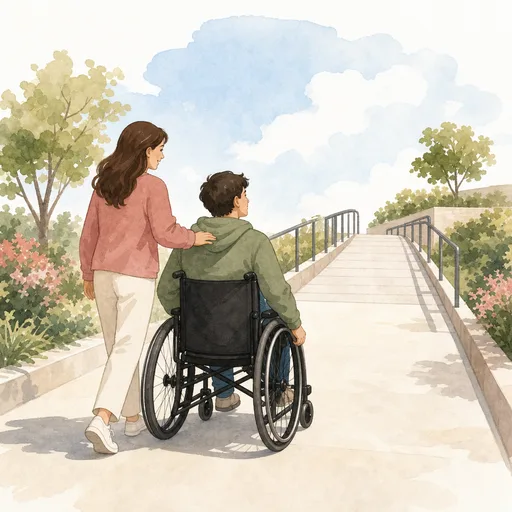
Wheelchair-Accessible Maui: What Actually Works
The island rewards careful planning and punishes assumptions.
Food
-

Eating Well on Maui with Dietary Restrictions
The island has the infrastructure. The work is knowing where "gluten-friendly" stops and "gluten-free" starts.
-

Eating with Food Allergies in Maui
The island-specific risks, the kitchens that take it seriously, and why a condo changes everything.
-

Maui with Picky Eaters: A Practical Eating Guide
The island has more fallbacks than it advertises - you just need to know where to look.
Room Setup
-

Maui Connecting Rooms: How to Actually Get What You Booked
The difference between "we'll try" and a confirmed interior door - and which three properties actually deliver.
-
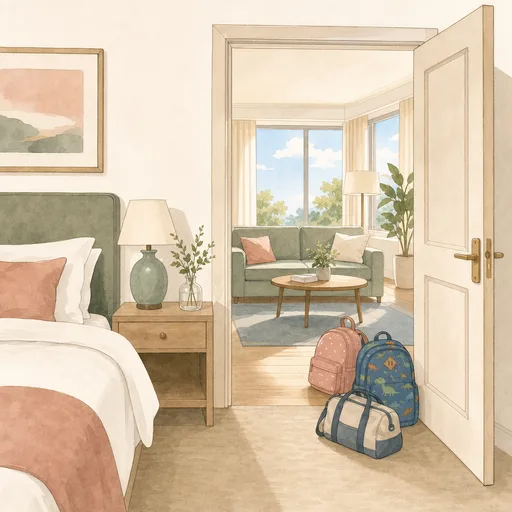
Maui Family Suites: Separate Bedroom or Sofa Trap?
The word "suite" covers two completely different products. Which one you get determines whether your kids' bedtime is yours too.
-
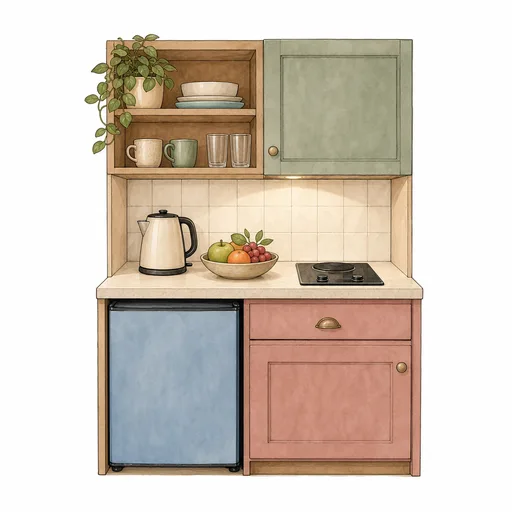
Maui Condos with Full Kitchens: What Listings Miss
The word "kitchenette" has no standard definition in Maui lodging - and booking the wrong one costs you a week of restaurant meals.
On-Site Activities
-

Maui Kids Clubs: Which Ones Are Actually Still Open
Four closed and didn't come back. The ones that survived are worth understanding before you commit to a resort.
-

Maui Resorts with a Lazy River: The Honest Guide
The booking filter says six properties qualify. One actually has a current.
-

Maui Water Parks: The Real Story (Resort Pools That Deliver)
There is no standalone water park on Maui. What there is might be better.
Powered by Mira
Tell Mira about your family
Two minutes of conversation. A shortlist of hotels that actually fit — connecting rooms, accessible layouts, calm floors, whatever your family needs.
AI travel agent · free to try
Talk to Mira Let Mira find the right hotels for your family. Find hotels with Mira
AI travel agent · free to try