
Hawaii
Maui Without the Sensory Overload
The island does the heavy lifting - if you pick the right side, the right time, and the right room.
AI travel agent · free to try
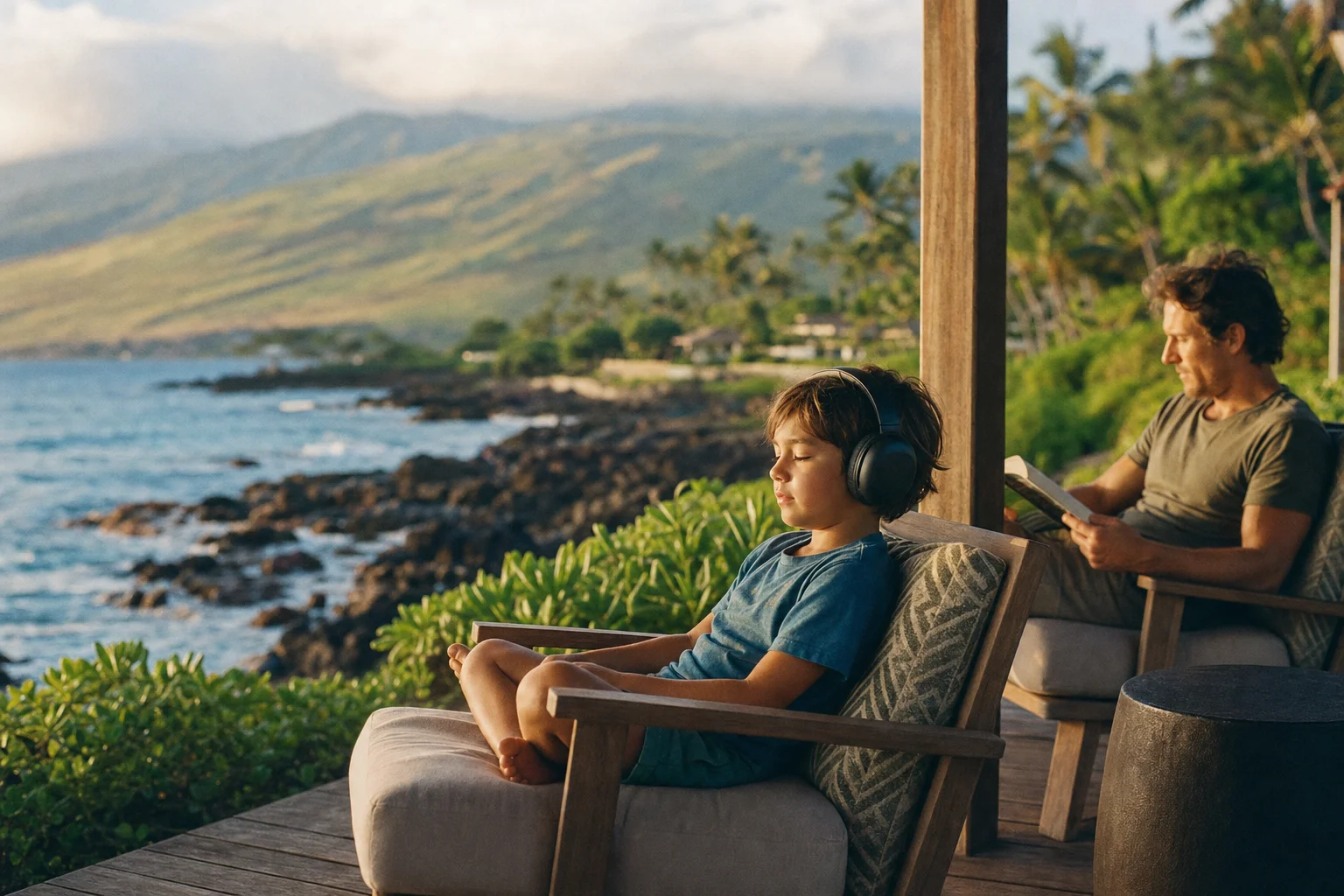
Maui is not a loud island. The mistake most families make is booking into a loud part of it.
Kihei’s south-shore condos, Napili Bay’s crescent cove, the Upcountry farms at 4,000 feet - these are genuinely quiet places. What breaks Maui trips isn’t the island’s character. It’s proximity to a luau, a pool DJ, or a resort that doesn’t tell you about the 4:30am silverware rattling for the dinner prep next door.
The argument here: condo over hotel, south over west, morning over afternoon.
The room decision shapes the whole week
A hotel room next to a luau on the Kaanapali strip is a documented trap. One TripAdvisor reviewer of the Hyatt Regency Maui described drums audible past 8pm every night and staff rattling silverware beginning at 4:30am for luau prep - the south-tower even-numbered rooms are specifically worst. The hotel doesn’t proactively disclose this.
The structural fix is a condo in Kihei. South shore condos - Kihei Akahi, Maui Kamaole, and Wailea-adjacent properties - give you a full kitchen, in-unit laundry, a private lanai, no lobby noise. Kihei gets roughly 10 inches of rain per year, the driest microclimate on the island, which makes morning beach plans predictable instead of conditional. Weekly rates often compete with resort nightly rates. There’s no mandatory anything: no luau adjacency, no pool-deck entertainment schedule.
The kitchen matters most. Families following restricted diets - gluten-free, GFCF, dairy-free - stock from Costco or Foodland on day one and run three meals from a controlled environment for the rest of the week.
Napili Kai Beach Resort (Lahaina / Napili Bay)
If a hotel is the preference over a condo, Napili Kai is the one that comes closest to condo-quiet. Four separate pools instead of one central pool with a DJ - a reviewer described it: “It made it easy to keep track of kids at the pool and meant we never had to raise our voices to be heard.” Hula on Tuesdays and slack key guitar on Wednesdays are optional and easy to skip; nothing like a luau in volume. No on-site luau. A phone policy in common areas helps. Sits directly on Napili Bay.
Hana-Maui Resort (east Maui)
The genuinely quietest hotel on the island. Seventy acres, remote east Maui - reviewers describe fewer than a dozen people at the pool and no entertainment noise at night. “Falling asleep to rain and waves” is the recurring description. The tradeoff is the access road: 81 miles, 617 curves, 56 one-lane bridges, 2–3 hours of driving. If a child handles car travel poorly, the road may be the hardest sensory event of the trip. The resort’s quiet is real, but so is the road.

If you’re trying to decide between a Kihei condo and a hotel like Napili Kai - or figuring out whether Hana-Maui’s quiet is worth the road to get there - tell Mira the specific constraints and she’ll help you map it out.
AI travel agent
Beaches work because of when you arrive
Maui’s best beaches for calm, flat water and minimal crowd noise are Keawakapu and Napili Bay. But the time of day matters more than the location on the map.
Keawakapu Beach sits between Wailea and Kihei, with limited street parking that naturally limits attendance. The water is calm in the mornings, the sandy slope is gentle, and there are no beach vendors or jet ski rentals operating. Before 9am, it’s routinely quiet. The south end of the beach is consistently less crowded than the snorkel-heavy north end. One failure mode: high tide eliminates the sand strip - check tidal timing before you commit to the morning.
Napili Bay is a crescent cove fronting a residential neighborhood. No hotel shuttle drops groups here - access is foot traffic from nearby condos and limited street parking. Reviewers describe maybe 20 other people on the beach on summer mornings; that’s not an estimate, that’s a structural feature of the access. Snorkeling starts 15 feet from shore (turtles, tangs, parrotfish). Wind picks up in the afternoon and turns it choppy. The window is 7–10:30am.
The broader rule: trade winds build through the afternoon. Morning conditions at south and west Maui beaches are flat; afternoon conditions are variable. The family that arrives at 7am gets a different beach than the one that arrives at noon.
Activities with a known format
The Upcountry is underused in most Maui itineraries. At 4,000 feet, the air is cooler, the pace is different, and the activities have structured arcs - you know how long they take and what happens in them.
Iao Valley State Monument has a fully paved trail, canyon walls, and a stream. Non-residents need advance reservations ($5/person, $10 parking) - which also means you know the crowd volume before you go. Tour buses don’t typically run before 9am. Go at 8am and you’ll likely have it nearly to yourself. Adjacent Kepaniwai Park is free, no reservation needed.
Ali’i Kula Lavender Farm: 13 acres, self-guided, $5 per adult (children 12 and under free). No large guided groups moving through. You go at your own pace. Reviewers describe it as “charming and peaceful.” The lavender scent is strong throughout - some find it calming, others don’t. Worth knowing before you go.
Surfing Goat Dairy in Kula runs a 30-minute Casual Tour: kids feed goats, watch milking, done. Short fixed duration, clean exit. Pair with Ali’i Kula Lavender as a half-day upcountry loop.
Maui Ocean Center has dim lighting throughout, including the jellyfish gallery, and a reservation system that manages crowd flow. The caveat is the glass underwater tunnel: sound travels and amplifies in enclosed water-adjacent spaces, and children’s voices compound fast. One reviewer wrote: “Sound travels much louder in water than air. Many children are very loud.” Visit on a sunny weekday before 10am - when the weather is good, beach-goers stay at the beach - and the tunnel is quiet enough. On a rainy weekend, it’s not.
Haleakala Summit at sunrise is the calmest high-novelty experience on the island. Recreation.gov caps vehicle entries per time window, and reviewers consistently describe the summit as nearly empty; the pre-dawn cold (~40°F) does its part. Book 60 days out. The failure mode is the 3–4am departure from sea level - it requires an intact sleep schedule for everyone.
What to route around
Luaus, across the board. Drums, fire, MC amplification. Ninety to 120 minutes of mandatory seating. Even family-positive luau sources recommend noise-reducing headphones. It’s a high-volume experience by design, not by accident.
The Grand Wailea pool complex is intentional sensory-on architecture. Multiple reviewers call it the archetype of a loud resort pool. The adults-only quiet area exists; the overall property does not.
Kaanapali resort row runs hotter than south Maui as a default - bigger pool scenes, heavier entertainment infrastructure, more ambient noise between properties. OUTRIGGER Ka’anapali Beach Resort stands out within the strip (reviewers specifically describe “quiet without the techno pounding music found elsewhere in Ka’anapali”), but it’s still a different baseline than a Kihei condo.
Maui Tropical Plantation’s tram tour has an onboard PA system flagged specifically by a sensory-aware parent blog as unexpectedly loud. Bring noise-reducing headphones if you go - or spend the time at the duck pond and the coffee shop garden instead.
August. One parent described Maui beaches in August as “NO parking anywhere” and “towel to towel.” That’s a structural ceiling, not reviewer preference. April, May, September, and October are meaningfully lower. December through March adds humpbacks.
If you want to talk through which month makes sense given your child’s specific needs - or build a realistic day structure around the morning window before beaches fill - Mira can help you shape the actual schedule.
AI travel agent
Whale watching and the water
From December through March, humpbacks are in Maui waters in significant numbers. The small-group operators are structurally different from party-boat versions. Amore Whale Watch caps tours at six passengers on a 42-foot vessel - no DJ, no bar crowd, quiet observation from the water. Morning departures from Ma’alaea catch calmer conditions before the trade winds build.
Molokini snorkeling follows the same logic. Operators with first-entry permits arrive at the crater before other boats. Reviewers quote crew saying “We’re beating the crowds today” and arriving to an empty Turtle Town. Underwater: fish, coral, open water.
Frequently Asked Questions
What's the quietest beach in Maui for a child who needs calm water and minimal crowd noise?
Can we keep a restricted diet - gluten-free, dairy-free - without fighting every restaurant?
Is Haleakala sunrise manageable for a child who needs calm and predictability?
Are luaus ever manageable for noise-sensitive children?
More articles about Maui
Destination Guide
-

Maui with Kids (2026): The Family Travel Guide
Maui rewards preparation more than almost any other destination. The families who struggle are almost always the ones who planned it like a spontaneous trip.
-

First Time in Maui: What to Book Before You Land
The island rewards preparation and punishes everyone who treats it like a spontaneous trip.
Who's Traveling
-
Maui for Large Families: What to Book and When
Eight people, one island - the accommodation decision you make first determines the trip you actually have.
-

Multi-Generational Maui: How to Make It Work for Everyone
Maui rewards families who plan for two speeds - and punishes those who pretend everyone moves the same way.
-
Maui with a Baby: What Actually Works
The trip works if you get two decisions right - where to sleep and which beaches to skip.
-

Maui with Grandparents: Pick the Right Base, Then It Works
The island is genuinely well-suited for this - but the resort you pick determines whether grandparents spend the week enjoying it or managing it.
-

Maui with School-Age Kids: What Actually Works
The right base, the right activities booked before you land, and permission to spend a full day at the pool - that's the Maui trip kids remember.
-

Maui with Teens: What Actually Works (and What Falls Apart)
The island can do the heavy lifting. The mistake is not letting teenagers into the plan.
-

Maui with a Toddler: What Actually Matters
The island rewards careful planning more than most - here's where to put that effort.
Sensory & Accessibility
-
Maui Without the Crowd
Most of the island's peace depends less on which resort you pick and more on whether you arrive before the sun does.
-
Quiet Hotels in Maui: Where to Actually Find Stillness
Maui's quietest properties aren't the ones ranked highest on travel sites - they're the ones geography and policy have kept that way.
-

Sensory-Friendly Maui: Stay South, Go Early, Go Calm
The island splits in half. One side works. Here's how to find it.
-

Wheelchair-Accessible Maui: What Actually Works
The island rewards careful planning and punishes assumptions.
Food
-

Eating Well on Maui with Dietary Restrictions
The island has the infrastructure. The work is knowing where "gluten-friendly" stops and "gluten-free" starts.
-

Eating with Food Allergies in Maui
The island-specific risks, the kitchens that take it seriously, and why a condo changes everything.
-

Maui with Picky Eaters: A Practical Eating Guide
The island has more fallbacks than it advertises - you just need to know where to look.
Room Setup
-

Maui Connecting Rooms: How to Actually Get What You Booked
The difference between "we'll try" and a confirmed interior door - and which three properties actually deliver.
-
Maui Family Suites: Separate Bedroom or Sofa Trap?
The word "suite" covers two completely different products. Which one you get determines whether your kids' bedtime is yours too.
-

Maui Condos with Full Kitchens: What Listings Miss
The word "kitchenette" has no standard definition in Maui lodging - and booking the wrong one costs you a week of restaurant meals.
On-Site Activities
-

Maui Kids Clubs: Which Ones Are Actually Still Open
Four closed and didn't come back. The ones that survived are worth understanding before you commit to a resort.
-

Maui Resorts with a Lazy River: The Honest Guide
The booking filter says six properties qualify. One actually has a current.
-

Maui Water Parks: The Real Story (Resort Pools That Deliver)
There is no standalone water park on Maui. What there is might be better.
Powered by Mira
Tell Mira about your family
Two minutes of conversation. A shortlist of hotels that actually fit — connecting rooms, accessible layouts, calm floors, whatever your family needs.
AI travel agent · free to try
Talk to Mira Let Mira find the right hotels for your family. Find hotels with Mira
AI travel agent · free to try