
Hawaii
The Maui That Doesn't Peak by 10am
Most of the island's peace depends less on which resort you pick and more on whether you arrive before the sun does.
AI travel agent · free to try
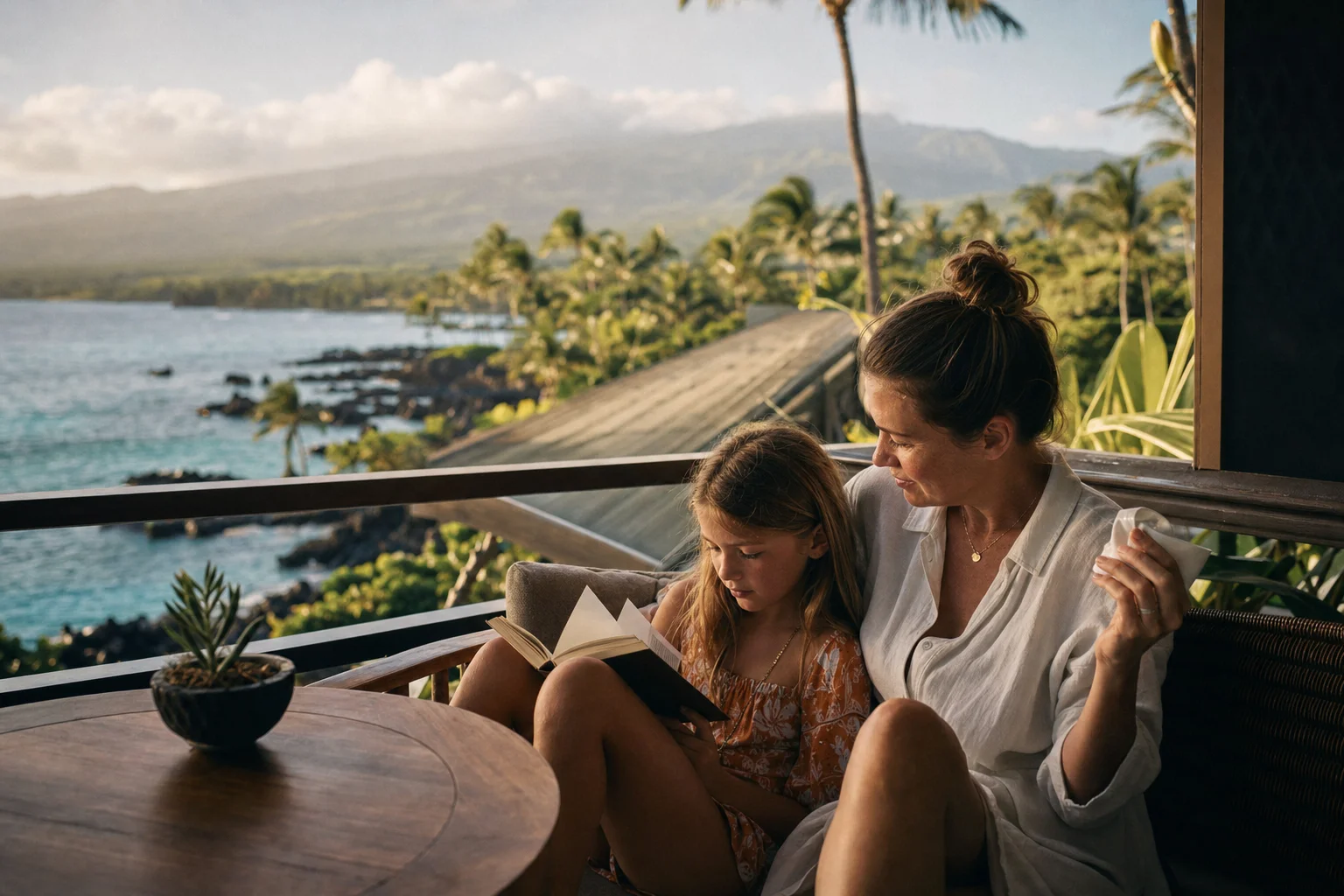
Maui markets itself as paradise to everyone. The problem is that paradise to some families - the waterslide resort, the DJ at the pool bar, the packed Kaanapali beach at 11am - is the exact condition another family is trying to escape. Both are using the same island. The difference is where on it they’ve anchored.
The structural fact about Maui is this: the busy arc runs from Kaanapali south through Kihei to Wailea. Kihei in particular draws consistent descriptions of “urban sprawl” from travel writers who expected otherwise. The quieter geography sits at the edges - Napili and Kapalua on the northwest tip, Upcountry on Haleakala’s slopes, and Hana all the way east, two to five hours down a famously narrow road. Choosing your base before you book anything else is the decision that determines what the rest of the trip can be.
Where the pools are actually quiet
Napili Kai Beach Resort
The Napili Kai enforces calm as explicit policy: no phone calls outside rooms. Not a request - a guest conduct rule. The pools are small, bay-facing, positioned so each building feels like it has its own, with no entertainment stage or amplification. Reviews contrast this directly with Kaanapali’s larger properties: “no hordes of people fighting for chaise lounges,” “old Hawaii experience,” “relaxing and slow vibe.”
The resort is two stories throughout, sitting on a crescent cove whose outer reef buffers most swell directions. Multiple independent reviewers reach for the word “calm” for the water even in winter - structural geography, not marketing.
Some rooms could use renovation. Check current photos before you book.
Hana-Maui Resort, a Destination by Hyatt
Seventy-four units on 66 acres. The pool that “never felt crowded, even when the sun was shining in the afternoon.” No in-room televisions. Morning yoga at 7am, cultural workshops, complimentary bikes, tennis - nothing amplified. One blogger put it directly: “You won’t find a lively hotel bar at night. You won’t find a multi-level pool or hordes of people at check-in.”
The tradeoff is genuine. The Road to Hana is 2–5 hours from the airport. Hana town closes in the afternoon - food trucks, a market, one gallery, then nothing. “Everything closed in Hana later afternoon so we were stuck with the hotel restaurant” is a real guest note, not a hypothetical. Families where isolation is the point report it as the best part. Families who want options nearby should anchor elsewhere.
Check road conditions before the drive. The Road to Hana can close after heavy rain.

If the Hana-Maui is the right call - the 66 acres, no TV, yoga-at-7am energy - or if you need help weighing that commitment against a Napili Kai stay for your specific travel dates, Mira can walk through both with you.
AI travel agent
Beaches by crowd level
Napili Bay
The outer reef is the reason this works. It blocks most swell directions and produces calm, gently lapping water throughout the year - a condition that holds regardless of what the ocean is doing offshore. The cove shape keeps the beach from feeling exposed. Reviewers on TripAdvisor have noted it separately from any resort marketing: “a great beach that isn’t overly crowded,” “small beach but does not have a crowded feel.” Accessible directly from the Napili Kai property, also reachable without a resort stay.
Kapalua Bay
The water is genuinely calm - protected bay, sandy floor, consistent conditions. The catch is the beach itself is small and well-known. “Arrive early to get a good spot” is the recurring reviewer note, with “every inch of sand” as the description of a midday Saturday. A 7am arrival gives you the beach mostly to yourself. By 10am you’re negotiating for space. The water quality makes it worth the early morning.
Chang’s Beach and Makena Landing
South Maui’s answer to the Big Beach crowds. Chang’s (also called Ulupikanui) is small, rarely crowded, with snorkeling along the rocky point that extends toward Five Graves. Makena Landing has gently sloping sand, usually calm conditions, and sand entry that works well for children. Tour boats operate in deeper water off the point, which keeps the snorkeling zone calm. Both beaches run consistently lower-traffic than the main south-Maui strip.
Polo Beach is the third option here - low crowds, best in the morning.
The Upcountry day
This is the most underused angle for Maui families who need a day with a different texture - no beach pressure, no sun stress, predictable schedules, no amplified sound. The Upcountry corridor sits at 2,000–4,000 feet on Haleakala’s slopes. The air is meaningfully cooler than the coast. The foot traffic across every site below is low.
Ali’i Kula Lavender Farm is 13 acres and 55,000 lavender plants at 4,000 feet, with tucked-away seating throughout the grounds. “Despite having around 30 cars in the parking lot, it felt like there were just a handful of people on site” - a first-time visitor, surprised by how dispersed the space is. Open Friday–Monday, 10am–4pm. Admission is modest; children 12 and under are free. The Tuesday–Thursday closure is easy to miss when planning - check the schedule before you build around it.
Kula Botanical Garden is eight acres, nearly 2,000 plant varieties, a koi pond, an aviary. Self-guided, 40 minutes to two and a half hours depending on pace. Some paths are steep and uneven - worth knowing before you arrive. Low foot traffic on any weekday. Reviewers mention sitting on benches and feeling genuinely still.
Surfing Goat Dairy in Kula runs small-group tours with hands-on time with the goats - including, seasonally, two-week-old kids - ending in a cheese tasting. The Upcountry setting and the small-group format mean no PA systems, no crowd energy. A full loop through all three takes most of a day.
If you’re trying to build a Maui itinerary that balances beach days with lower-input days like the Upcountry loop - sequenced so the trip holds rather than peaks and crashes - Mira can help map that to your actual dates and base location.
AI travel agent
Timing and day-of-week
Almost every site on Maui behaves differently depending on when you arrive. This isn’t marginal - it’s the difference between the experience described in a good review and the experience described in a disappointed one.
Molokini Crater is the sharpest example. By 10am on a busy Saturday the crater can hold 200 people across a dozen boats. An 8am Wednesday departure means glassy water, 100–150 feet of visibility, and whole reef sections to yourself. If Molokini is on the list, the only version worth booking is an early weekday.
Iao Valley State Monument uses timed 90-minute reservations, first slot at 7am. The 0.6-mile paved path is stroller- and wheelchair-accessible, and the 7am window gets you the Iao Needle before afternoon clouds roll in. Kepaniwai Heritage Gardens sits immediately adjacent - free, no reservation, picnic tables, Iao Stream alongside.
Maui Ocean Center works best after 1pm on a clear beach day, or right at opening (9am). Midday on an overcast day is when the indoor galleries pack out.
April–May and September–early October are the shoulder windows. Trail parking doesn’t fill before 7am, beaches clear, and the pattern holds across every source consulted. July–August and December–March are the conditions to avoid.
What the busy corridor actually delivers
The Wailea marketing is “serene luxury.” The pool decks tell a different story. The Wailea Beach Marriott’s main pool has virtually every lounge chair occupied by 10am. The Four Seasons Maui received a TripAdvisor review titled “Nice, but too crowded.” The Grand Wailea is a waterpark-scale resort by design - the adults-only pool is the escape valve, which doesn’t help most families. Hotel Wailea is the genuine outlier, but it’s adults-only.
The Westin Ka’anapali has received direct reviews saying it’s not the right choice if quiet matters - cannonballing pools, lots of young kids, by design. That’s what it’s built for. The mismatch is when families book it expecting something different.
Kihei is Maui’s most congested zone by multiple independent accounts - not just budget-tier, but structurally crowded, with a bar strip at night. It’s not a low-stimulation base.
Anchor in Napili or Kapalua. Treat Upcountry as a mid-trip reset day. Plan southern excursions - Makena Landing, Chang’s Beach, Molokini - as morning departures.
Frequently Asked Questions
Which part of Maui stays quietest throughout the day?
What activities in Maui avoid crowds and amplified sound?
When is the least crowded time to visit Maui?
Is Hana-Maui Resort worth the commitment for a family?
More articles about Maui
Destination Guide
-

Maui with Kids (2026): The Family Travel Guide
Maui rewards preparation more than almost any other destination. The families who struggle are almost always the ones who planned it like a spontaneous trip.
-

First Time in Maui: What to Book Before You Land
The island rewards preparation and punishes everyone who treats it like a spontaneous trip.
Who's Traveling
-
Maui for Large Families: What to Book and When
Eight people, one island - the accommodation decision you make first determines the trip you actually have.
-

Multi-Generational Maui: How to Make It Work for Everyone
Maui rewards families who plan for two speeds - and punishes those who pretend everyone moves the same way.
-
Maui with a Baby: What Actually Works
The trip works if you get two decisions right - where to sleep and which beaches to skip.
-

Maui with Grandparents: Pick the Right Base, Then It Works
The island is genuinely well-suited for this - but the resort you pick determines whether grandparents spend the week enjoying it or managing it.
-

Maui with School-Age Kids: What Actually Works
The right base, the right activities booked before you land, and permission to spend a full day at the pool - that's the Maui trip kids remember.
-

Maui with Teens: What Actually Works (and What Falls Apart)
The island can do the heavy lifting. The mistake is not letting teenagers into the plan.
-

Maui with a Toddler: What Actually Matters
The island rewards careful planning more than most - here's where to put that effort.
Sensory & Accessibility
-
Maui for Calm Trips: Quiet Beaches, Predictable Stays
The island does the heavy lifting - if you pick the right side, the right time, and the right room.
-
Quiet Hotels in Maui: Where to Actually Find Stillness
Maui's quietest properties aren't the ones ranked highest on travel sites - they're the ones geography and policy have kept that way.
-

Sensory-Friendly Maui: Stay South, Go Early, Go Calm
The island splits in half. One side works. Here's how to find it.
-

Wheelchair-Accessible Maui: What Actually Works
The island rewards careful planning and punishes assumptions.
Food
-

Eating Well on Maui with Dietary Restrictions
The island has the infrastructure. The work is knowing where "gluten-friendly" stops and "gluten-free" starts.
-

Eating with Food Allergies in Maui
The island-specific risks, the kitchens that take it seriously, and why a condo changes everything.
-

Maui with Picky Eaters: A Practical Eating Guide
The island has more fallbacks than it advertises - you just need to know where to look.
Room Setup
-

Maui Connecting Rooms: How to Actually Get What You Booked
The difference between "we'll try" and a confirmed interior door - and which three properties actually deliver.
-
Maui Family Suites: Separate Bedroom or Sofa Trap?
The word "suite" covers two completely different products. Which one you get determines whether your kids' bedtime is yours too.
-
Maui Condos with Full Kitchens: What Listings Miss
The word "kitchenette" has no standard definition in Maui lodging - and booking the wrong one costs you a week of restaurant meals.
On-Site Activities
-

Maui Kids Clubs: Which Ones Are Actually Still Open
Four closed and didn't come back. The ones that survived are worth understanding before you commit to a resort.
-

Maui Resorts with a Lazy River: The Honest Guide
The booking filter says six properties qualify. One actually has a current.
-

Maui Water Parks: The Real Story (Resort Pools That Deliver)
There is no standalone water park on Maui. What there is might be better.
Powered by Mira
Tell Mira about your family
Two minutes of conversation. A shortlist of hotels that actually fit — connecting rooms, accessible layouts, calm floors, whatever your family needs.
AI travel agent · free to try
Talk to Mira Let Mira find the right hotels for your family. Find hotels with Mira
AI travel agent · free to try