
Florida
Quiet Stays in Fort Lauderdale
The quietest hotels in the metro sit on a private peninsula or three miles north of the strip, where the geography does the work no window can.
AI travel agent · free to try
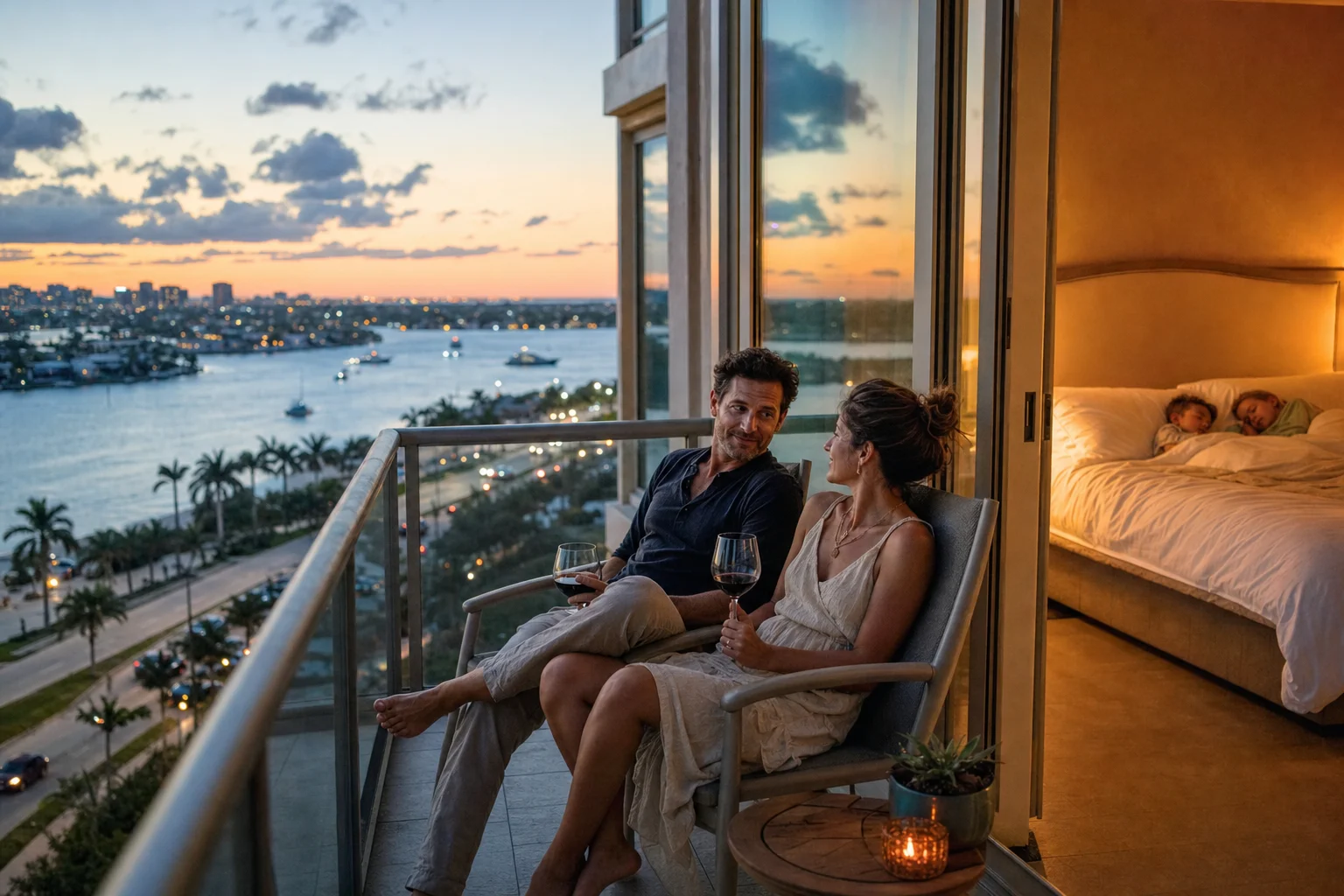
Quiet in Fort Lauderdale is a geography problem first and a hotel problem second. Most of the beach inventory sits along A1A, a four-to-six lane road opposite a strip of bars, clubs, and event venues that runs from Las Olas north past Beach Place - book a room there in March and no triple-pane window will save you from the kid in flip-flops yelling at 2 a.m. Book in Harbor Beach, on the other hand - five minutes south on a peninsula where the road dead-ends - and you can hear the surf with the balcony door open. Same metro, same week, two different trips.
The quiet stays in this metro are a small list of neighborhoods, a handful of hotels within them, and a room-selection playbook that converts borderline properties into livable ones. Treating “beachfront” and “quiet” as a single category is where the trip goes wrong.
The geography of quiet, mapped
Fort Lauderdale’s noise concentrates in three corridors. The central beach Strip - A1A from roughly Las Olas Boulevard north to Beach Place - is the loudest, with rooftop DJ programming, late-set beach bars, and a spring break demographic that compresses into March. Downtown around the Wharf and the Brightline tracks is the second; the 2024 noise ordinance update specifically called out bass-music carry from downtown clubs after an eighth-floor condo resident testified that sleep had become impossible. The 17th Street Causeway near the cruise port is the third, engineered for one-night cruise-eve transit where the road noise is someone else’s problem the next morning.
The quiet corridors are equally specific. Harbor Beach is a gated peninsula tucked behind the Bahia Mar marina south of Las Olas, with about 500 feet of private beach and no through traffic on A1A because the road dead-ends. Pelican Grand’s stretch of A1A, about a mile north of Sunrise Boulevard, sits past the bar cluster. Lauderdale-by-the-Sea, three miles north of the central strip, is a one-square-mile low-rise village with a height cap and functionally zero loud-bar inventory. Deerfield Beach, twenty minutes further north, is the quietest in-county beach with a mile-long boardwalk and the trade-off that it’s no longer really Fort Lauderdale.
Put any hotel on this map before you book. The map matters more than the brand.
Hotels we’d actually pick
Lago Mar Beach Resort & Club
Lago Mar is the structural-quiet pick - ten acres on the Harbor Beach peninsula with a 500-foot private beach and two pools, one of which is adult-coded and tucked into the gardens. The resort’s own line is “decidedly and purposefully different - understated, not loud,” which lines up with the geography: no through-traffic on the peninsula, no neighboring nightclub, no rooftop DJ. It runs kids’ programming and is still one of the quieter properties in the metro, which is the counter-example to the assumption that family resorts can’t deliver sleep.
Fort Lauderdale Marriott Harbor Beach Resort & Spa
Same peninsula as Lago Mar, scaled up. Quarter-mile of private beach with food and bar service that public-strip hotels can’t legally offer because their beach is open to the public. A recent reviewer wrote “I love the peace and quiet also the pool and the rooms were nice,” which is unromantic but the right kind of evidence. The trade-off is the cost of being big - convention groups, large weddings, resort fees that have to be priced in. If you want the geography without the scale, Lago Mar is the lighter version.
Pelican Grand Beach Resort
A Noble House property about a mile north of the Strip, past the bar cluster on A1A. Oceanfront rooms get the wave-on-the-balcony soundscape; the property’s own room mix includes street-side rooms that catch A1A traffic and rooms near the elevators and laundry alcove that catch interior bleed. The room you book matters more here than at the peninsula properties. Reviewers describe the hotel as having “quietly removed itself from the cruise ship hubbub” - true of the geography, but only if you request oceanfront on a higher floor and ignore the saving on the street-side rate.
Birch House (formerly The Pillars Hotel)
The boutique option, sitting on the Intracoastal Waterway one block back from the beach at 66 S Birch Road. The brand repositioned around 2025 from 18 suites under The Pillars name to a five-suite Birch House configuration. Reviews repeatedly land on the same word: “oasis.” Small Luxury Hotels of the World, bookable through Hyatt SLH. The pool is small, the late-night programming is nonexistent, and the surroundings are residential. Confirm the child policy before you book if you’re traveling with kids.
Windjammer Resort and Tropic Seas Resort (Lauderdale-by-the-Sea)
The LBTS small-property pair worth naming. Windjammer’s own line is “located away from the crowds and set on a wide palm-lined beach,” with the fishing pier steps away. Tropic Seas is the lower-key sibling, repeatedly described as a “peaceful and quiet retreat” suited to an over-fifty crowd - which is shorthand for direct beachfront with no kids’ club and no bar programming. Both are old-Florida motel inventory rather than luxury; both deliver quiet by sitting in a village where quiet is the baseline.
The Westin Fort Lauderdale Beach Resort - the if-you-must-be-on-the-Strip pick
If a cruise check-in or a fixed conference puts you on the central strip, the Westin has the best-reviewed soundproofing on the noisy stretch. Multiple recent guests repeat the same phrase: “Soundproof is good, it was quiet.” The building is doing all the work the location refuses to. Still: request ocean-facing on a high floor. The Strip outside your window is the same Strip.

Lago Mar versus Marriott Harbor Beach is the call most families regret one way or the other - both the same peninsula, very different scale. Tell Mira your group size and travel dates and she’ll match you to the one that actually fits the trip - including the resort fee math and whether the convention calendar lands on your week.
AI travel agent
When Fort Lauderdale is quiet and when it isn’t
Two windows turn the city loud through external noise that no hotel controls. Spring break in 2026 runs February 28 through April 3, peaking mid-March - the city has actively managed the crowd down from the 1990s, but the noise concentration on the Strip is real and the demographic doesn’t sleep on a normal schedule. The Fort Lauderdale Air Show is May 9-10, 2026, with the Thunderbirds and other military jet teams performing roughly 11:45 a.m. to 3 p.m. directly over the beach. The official guidance includes “bring ear protection for little ones,” which is the right cue for whether your stay overlaps. Either lean into the air show as the trip’s anchor event or move your beach corridor week off those two days.
Inside the calendar, weekend afternoons and Friday and Saturday evenings into midnight are the predictable loud windows in the beach corridor - rooftop DJ programming at places like Kimpton Shorebreak’s Escape Rooftop and The Easton Rooftop runs Friday and Saturday late, midweek is markedly quieter. The genuinely peaceful windows in the metro are late April through early May (after spring break, before the air show), late September (post-summer, pre-snowbird), and November through early December (the value-to-quiet sweet spot of the year).
One operational filter worth using at booking: many beach-strip hotels move to a 25-and-up check-in policy in March. It’s worth asking the property directly - if they enforce it, the building gets quieter automatically; if they don’t, you’ve learned what you needed to know.
The room-placement playbook
The single most actionable tip in a quiet-stay piece isn’t a hotel name. It’s the room request, and it’s the same playbook everywhere on the beach:
Request ocean-facing on a high floor, away from the elevator bank and away from the pool deck. The west-facing side of A1A catches the road, the motorcycle exhaust, and the cumulative bar noise on the central strip; the east-facing ocean side catches surf instead. Avoid the floor directly over the pool deck - the Atlantic Hotel’s sixth-floor center rooms have been called out for exactly this. Avoid connecting-door rooms even when you don’t need the connection: the door itself is the bleed point. One Atlantic reviewer needed security at 2:30 a.m. because a neighbor’s TV came through the connecting door, not the wall.
At the Hilton Fort Lauderdale Marina on 17th Street Causeway, ask for a marina view. The reviewer warning is consistent enough to be a rule: “Ask for a room with a marina view to avoid noise from the 17th Street Causeway.” Some interior-corridor rooms there also have hallway-conversation bleed - corner rooms cut both problems.
If you’re crossing the Sunrise Bridge to reach the property, ask which side of the building faces the bridge. The metal mesh deck rattles under traffic and it carries.
The “beachfront isn’t quiet” trap
Beachfront on the central Fort Lauderdale strip means beachfront on A1A, opposite Beach Place and a chain of bars and clubs. The Atlantic, Westin, B Ocean, and Sonesta are all beachfront and on the loud stretch - they survive only on the right room and the right month, because the location itself is doing none of the work.
The Snooze Hotel at 205 N Fort Lauderdale Beach Boulevard, directly across from Beach Place, is the property the genre named after the thing it cannot deliver. Oyster’s review summary is unusually blunt: “It is near impossible to sleep in this place.” Sonesta Fort Lauderdale Beach runs a different version - one reviewer reported a penthouse wedding band audible four floors down through the building, with reception staff acknowledging “this happens often.” B Ocean markets as “downtown but still feel quiet” while hosting the Wreck Bar with its underwater mermaid show and late DJ sets.
The downtown version of this trap is Flow Fort Lauderdale. Recent guests cite “constant rattling and noise from the train, the tracks are right beside the hotel” - downtown near the Brightline and the Wharf is not automatically quieter than the beach. The noise just changes character: tracks and bass in place of motorcycles and bar crowds.
If you’re stuck on the central Strip for a cruise check-in or a fixed work trip, Mira can run the actual room availability - ocean-facing, high floor, non-connecting - and tell you whether the room you want exists for your dates or whether you should rebook somewhere else.
AI travel agent
The escape valve if you’re already booked on the Strip
If the hotel is locked in and noise is the trip’s biggest risk, Hugh Taylor Birch State Park is the daily release valve. It sits directly behind the central beach at 3109 E Sunrise Boulevard and has the only pedestrian tunnel under A1A in the central strip - 80 feet long, recently re-muraled with a mosaic seascape, so you can reach the beach side without crossing the highway. Trails, maritime hammock, ranger walks, a freshwater lagoon along the property’s length, $6 vehicle entry. For a family based on the Strip in March, an hour in the hammock after lunch is the difference between a salvageable trip and a loud one.
Frequently Asked Questions
Where in Fort Lauderdale should I stay to avoid noise?
Is Lauderdale-by-the-Sea actually quieter than Fort Lauderdale Beach?
What months is Fort Lauderdale loud, and when is it actually quiet?
Is downtown Fort Lauderdale quieter than the beach?
What room should I request for a quiet stay?
More articles about Fort Lauderdale
Destination Guide
-

Fort Lauderdale Family Vacation Guide (2026)
Most families pick the hotel before the neighborhood, and the neighborhood is the trip - the strip, Harbor Beach, Lauderdale-by-the-Sea, and Hollywood are four different vacations sharing one airport.
-

Fort Lauderdale for First-Time Visitors: A Real Plan
The four decisions - which beach, which base, which season, which way to get around - that quietly make or break your first trip.
Who's Traveling
-

Fort Lauderdale with Large Families: Suites and Rentals
Calmer beaches, canal-neighborhood rentals, and the suite math that decides whether the trip works.
-

Multi-Generational Fort Lauderdale: What Actually Works
Three generations, one beach, and no requirement that anyone keep up with anyone else.
-

Fort Lauderdale with a Baby: The Gear Question Comes First
The hotel either gives you the gear or you rent it from a service that meets you at the airport - those are the two real choices.
-

Fort Lauderdale with Grandparents
Calmer than Miami, compact enough that nobody gets exhausted, and quietly equipped for mixed-mobility groups - if you know which water taxi to skip.
-

Fort Lauderdale with School-Age Kids: What to Book
A beach-first trip with an unusually deep bench for 6- to 14-year-olds - if you book around the weather and skip the wrong week in March.
-

Fort Lauderdale with Teens
A beach base with a credible activity menu - if you plan it before you land.
-

Fort Lauderdale with a Toddler
The A1A question, the right beach base, and the indoor backups that save the midday meltdown.
Sensory & Accessibility
-

Sensory-Friendly Fort Lauderdale: A Planning Guide
The destination doesn't carry a single certification - it carries a deep bench of individual programs, and the trip works when you stitch them together yourself.
-
Low-Stimulation Fort Lauderdale: Calm Beaches and Stays
A parallel, calmer geography sits a few blocks from the A1A strip - state-park beach access, a walled-garden estate, and mangrove boardwalks do most of the work.
-

Sensory-Friendly Fort Lauderdale, Without the Strip
Stay off the Strip, plan around the scheduled sensory calendar, and the metro turns into a different city.
-

Wheelchair-Accessible Fort Lauderdale: Beach & Beyond
A beach trip whose accessibility is real, seasonal, and dependent on a few calls most planning guides never mention.
Food
-

Fort Lauderdale with Food Allergies: What Actually Holds
Two dedicated kitchens, one chain-grade top-9 protocol, and a 17th Street corridor that quietly solves the pre-cruise problem.
-

Fort Lauderdale Dietary Accommodations: 2026 Reset
Four anchor restaurants closed in 2025. The honest map is shorter, and the working playbook is different.
-

Fort Lauderdale with Picky Eaters: Where Kids Actually Eat
The chicken-tender map of Broward - hotel restaurants, 24-hour diners, and the chain backup that's always ten minutes from the beach.
Room Setup
-

Fort Lauderdale Connecting Rooms: What Actually Books
Which Fort Lauderdale-area hotels actually pre-confirm connecting pairs, and why a two-room suite often beats the chase.
-

Fort Lauderdale Suites for Families: What Actually Fits
The hotels where parents close a door, kids take the sofa bed, and four to six people sleep without a cot.
-

Fort Lauderdale Hotels With Kitchenettes (That Cook)
Three tiers of kitchen, two reliable cook-a-meal options on the sand, and the grocery delivery that finally makes the math work.
On-Site Activities
-

Fort Lauderdale Kids' Clubs: What You're Actually Booking
An ocean day camp, a poolside craft hour, and a true drop-off room all share the name. They are not the same thing.
-

Fort Lauderdale Hotels With a Lazy River
One hotel in town has a lazy river, and it's the size of a hot tub - the rest of the answer lives a short drive south.
-

Fort Lauderdale with a Water Park
The city doesn't have one. Three tiers of substitutes do - if you book the right month.
Powered by Mira
Tell Mira about your family
Two minutes of conversation. A shortlist of hotels that actually fit — connecting rooms, accessible layouts, calm floors, whatever your family needs.
AI travel agent · free to try
Talk to Mira Let Mira find the right hotels for your family. Find hotels with Mira
AI travel agent · free to try