
California
Sensory-Friendly San Diego
Two CAC parks, a KultureCity zoo, and a city that made sensory access a policy.
AI travel agent · free to try
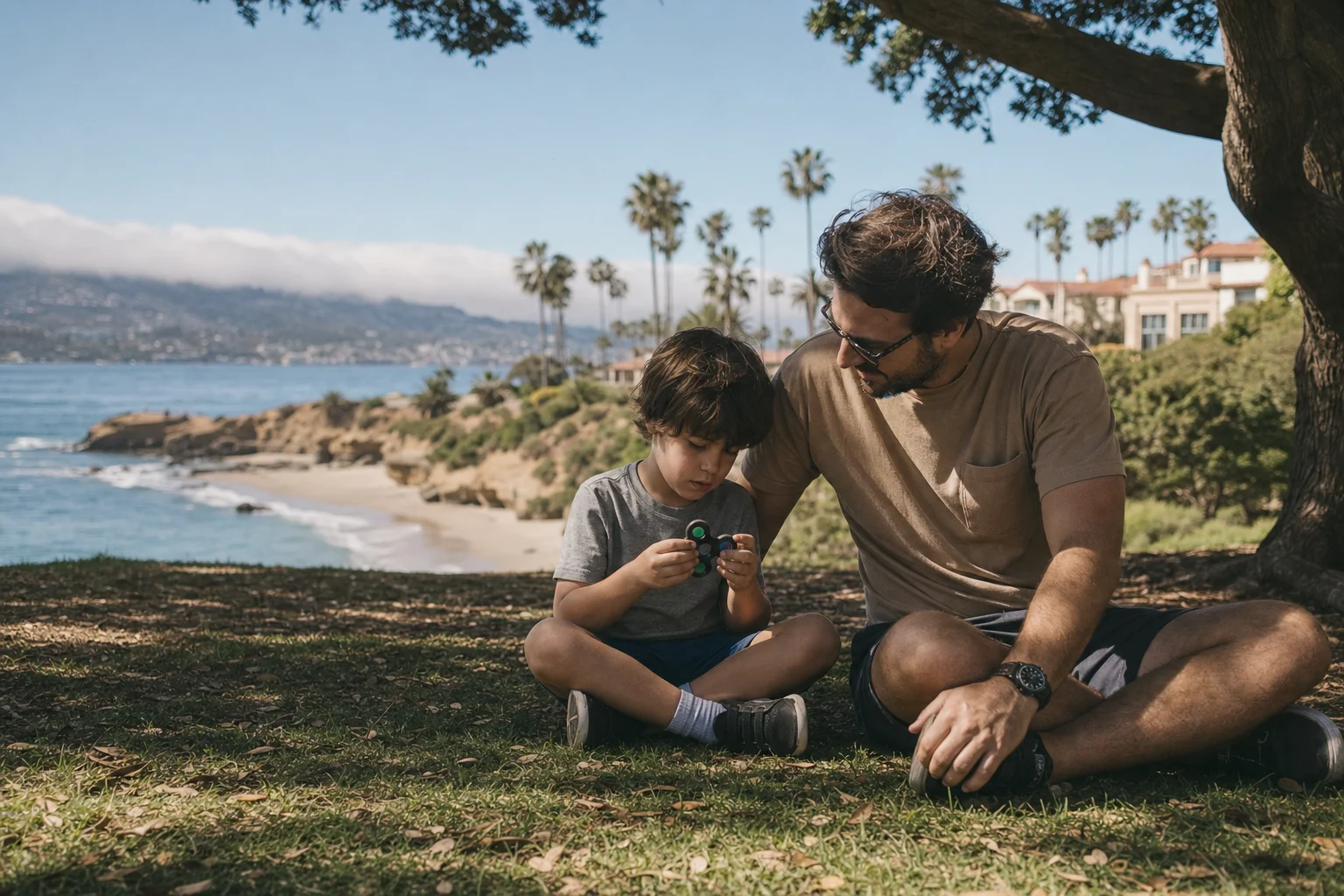
Most US cities have a venue or two that made an effort. San Diego built a system. In December 2025 the San Diego Tourism Authority became a Certified Autism Center itself, launching a city-wide program to extend that certification across lodging, attractions, and services - a signal that this is city policy baked into the tourism authority itself. The trip still requires some geographic problem-solving: your best options are spread across three different areas, and the planning decisions compound on each other in ways that aren’t obvious from a search page.
What San Diego has actually built
The infrastructure layers are worth understanding before you pick an anchor attraction.
Both major theme parks in the area carry IBCCES Certified Autism Center status. Sesame Place San Diego in Chula Vista opened in 2022 as the first theme park in the world to launch with that certification; LEGOLAND California in Carlsbad earned it across both the park and all three on-site hotel properties. The San Diego Zoo, a KultureCity Sensory Inclusive site, has sensory bags at the entrance, multiple Quiet Areas, and social stories available for download before your visit. Petco Park has a Sensory Activation Vehicle - a soundproof mobile unit in the Park Blvd Plaza where your family can decompress completely outside the stadium noise rather than staying exposed to it from a bench inside. The airport added SAN Assist in February 2026. The Fleet Science Center runs Accessibility Mornings on the third Saturday of every month, opening an hour early with reduced-volume IMAX screenings and near-empty exhibits.
That combination - a city-endorsed program, two CAC parks, a KultureCity zoo, a purpose-built venue quiet space, an airport program, and a recurring early-entry museum morning - is harder to find anywhere outside Orlando. The geography complicates using it all on one trip, but the infrastructure is genuinely there.
Picking your anchor: Sesame Place vs. LEGOLAND
The question most families work through first is which park to anchor a trip around, and the answer depends less on the parks themselves and more on your child’s age and whether the hotel stay is its own source of stress.
Sesame Place San Diego
Sesame Place is the more obvious choice for families with children under eight. The park footprint is smaller than any Disney or Universal property, which matters for families managing pacing; per-ride sensory guides rate every attraction across all five senses; and the two quiet rooms near the First Aid Station are the best-documented retreat spaces in the area. Get the door code from Guest Services when you first arrive - the rooms are not self-serve, and retrieving the code mid-crisis is a worse version of the problem you’re trying to solve.
Two things to know before you book a hotel downtown. First, Sesame Place is in Chula Vista, roughly 25 minutes south of downtown San Diego. Families staying in the Gaslamp Quarter or near Balboa Park are committing to a round-trip drive each day. Second, the North Island Credit Union Amphitheatre sits immediately adjacent - check the show calendar before you choose a visit date, because concert nights back up traffic in and out significantly.
One environmental factor no official park content acknowledges but parent travel blogs flag consistently: Navy fighter jets from regional bases fly over the Chula Vista area without warning and can produce sudden, loud noise. For children with manageable noise sensitivity, the in-park tools handle most of it. For children with severe noise triggers, this is a real variable worth thinking through before you book.
LEGOLAND California
LEGOLAND’s strongest argument for sensory-aware families is the one almost no travel content mentions: the CAC certification extends to all three on-site hotel properties, so trained staff greet your family at check-in, at breakfast, and in the hallways. Most other certifications stop at the park gate. For families where the hotel stay itself is a vulnerability, staying at LEGOLAND Hotel or Castle Hotel changes the equation in a way that simply booking a “nice downtown hotel” cannot. The Sensory Room is in Fun Town inside the DUPLO Family Care Center; per-ride sensory guides are available throughout the park.
The practical limitation is distance: LEGOLAND is 35 miles north of downtown San Diego in Carlsbad. Treating it as a day trip from a downtown hotel means 45 or more minutes each way with a sensory-sensitive child in the car. Staying on-site eliminates that entirely, but it means committing Carlsbad as your base, with downtown and the zoo as secondary destinations.

The Sesame Place vs. LEGOLAND decision hinges on your child’s age, your hotel strategy, and whether the hotel certification matters as much as the park’s. Tell Mira your dates and priorities and she’ll map out which base makes the trip work.
AI travel agent
The San Diego Zoo
For families who want a full day of self-paced exploration without a defined ride sequence, the San Diego Zoo is the right choice. The KultureCity sensory bag at the entrance gives you noise-canceling headphones, fidget tools, a KCVIP badge that signals to staff, and a map of quiet zones and headphone zones throughout the park - bring ID and you’ll sign a consent form. The Easy Access Pass reduces line friction at Skyfari and the Guided Bus Tour.
The zoo is large and hilly, and the first hour after opening is meaningfully quieter than midday. The quiet zones are designated, not staffed - a reviewer at Autism Adventures Abroad noted that clearer signage could help prevent other visitors from treating them as general rest spots, which happens. Pre-visit social stories are available on the zoo website in English and Spanish.
If Sesame Place is your anchor and you’re basing in Chula Vista, the Living Coast Discovery Center is a natural second-day option. It sits adjacent to Sesame Place on San Diego Bay, inside the Sweetwater Marsh National Wildlife Refuge - sea turtles, stingrays, shorebirds, and nature trails in a genuinely small, quiet setting that is nothing like the main zoo’s scale. Afternoons tend to be the quietest. It’s one of the most practical low-stimulus alternatives in the area and appears in almost no travel content aimed at sensory-aware families.
Days that don’t need a theme park
The Fleet Science Center’s Accessibility Mornings (third Saturday of every month, opening an hour early) put interactive science exhibits in a near-empty space with a reduced-volume IMAX documentary at 10am, house lights on. Families who have a child who cannot tolerate standard IMAX consistently report this screening as a breakthrough experience.
Torrey Pines State Beach, on the northern stretch, offers substantial space without the crowd density of San Diego’s more central beaches. La Jolla Shores has a paved boardwalk, picnic area, and free beach wheelchairs - adaptive surf lessons through Surf Diva use specially designed boards with instructors trained in adaptive techniques. Coronado Island also offers free beach wheelchairs and flat terrain across most of the island.
If you’re building a multi-day itinerary that mixes the Fleet Accessibility Morning, the zoo, and a park day, the day-ordering matters more than it looks. Tell Mira your trip length and she’ll sequence it so the high-stimulation days have recovery built in.
AI travel agent
When to go
Go in mid-September through October. San Diego weather is still beach-ready, the crowds drop substantially from summer peak, and every attraction in this guide is meaningfully more navigable. Summer brings the largest crowds citywide - all the sensory infrastructure in the world does not fully compensate for a packed zoo on a Saturday in July.
The Balboa Park museum programs (Fleet on the third Saturday, the Natural History Museum’s ASD Mornings on the second Sunday) don’t land on the same weekend, so a trip that uses both needs either two separate visits or an itinerary spanning both target weekends. Check the Natural History Museum’s current schedule before including it - the ASD Mornings program has been paused at times.
Frequently Asked Questions
Is Sesame Place San Diego actually good for kids who struggle with sensory overload, or is it still overwhelming?
Where are the quiet rooms at Sesame Place San Diego?
Does the San Diego Zoo have accommodations for kids with sensory sensitivities?
Is LEGOLAND or Sesame Place better for a sensory-sensitive child?
What time of year is best for a San Diego trip with a sensory-sensitive child?
What is the SAN Assist program at San Diego airport?
More articles about San Diego
Destination Guide
-
San Diego Family Vacation (2026): The Planning Guide
Most families treat San Diego like a single destination - it's actually four different trips, and picking the wrong base for your itinerary is how you spend two days in traffic.
-

First-Timer's Guide to San Diego
Bigger than it looks. Better than you expect. Here's how to stop overplanning it.
Who's Traveling
-
San Diego for Large Families: Sleep 5+ Without the Surprise
The sleeping situation in San Diego is a structural puzzle - here's how to solve it before you book anything else.
-

Multi-Generational San Diego: What Actually Works
Three generations, three energy clocks - here's how San Diego actually handles all of them.
-

San Diego with a Baby
Mild weather and flat terrain make this the most forgiving first trip - if you avoid the three booking traps before you arrive.
-

San Diego with Grandparents: How to Make It Work
The city's best experiences overlap across generations, but only if the logistics are sorted before anyone boards a plane.
-

San Diego with School-Age Kids (Ages 6–12)
The parks are optional. The city does a lot of the work.
-

San Diego with Teens
The water activities they'll actually love, the hotel trap to avoid, and why fall beats summer for this age group.
-

San Diego with a Toddler
The toddler infrastructure is genuinely good here. The nap logistics determine the rest.
Sensory & Accessibility
-

San Diego for Sensory-Sensitive Families: The Planning Guide
The only US city with a Certified Autism Destination designation and the venue infrastructure to back it up.
-

Low-Stimulation San Diego: Where to Stay and When
The city's quiet pockets are buffered by water and canyons - you just have to pick the right one.
-

Quiet Hotels in San Diego: Where to Actually Sleep
La Jolla quiets down every night. The hard part is knowing which hotels ride that out and which ones throw a wedding on the roof.
-
Wheelchair Accessible San Diego: What's Actually There
Free beach chairs at seven beaches, flat terrain, and a trolley with an elevator problem worth knowing about before you go.
Food
-

Dietary Accommodations in San Diego for Families
The infrastructure here is real. The gap between "gluten-friendly" and actually safe is where families get caught.
-

Food Allergy Friendly San Diego: What Actually Works
A city with dedicated allergen-free restaurants at almost every meal slot - if you know where they are.
-

San Diego Restaurants for Picky Eaters
The food culture here skews comfort. You just need to know where it lives.
Room Setup
-

San Diego Connecting Rooms: Who Guarantees It
The gap between "we'll note that" and an actual guarantee - and which hotels in San Diego have closed it.
-

San Diego Family Suites: Rooms That Actually Separate
The word "suite" covers a lot of ground in San Diego - here's how to find the ones where kids actually sleep in a different room.
-

San Diego Hotels with Kitchenettes
The filter says kitchenette - but you could be getting a fridge or a full stove, and the listing usually won't tell you which.
On-Site Activities
-

San Diego Hotels with Kids Clubs
The list is shorter than you think - and most hotels won't tell you that until check-in.
-

San Diego Hotels With a Lazy River
Until May 2025 the honest answer was "you're in the wrong part of the country for that" - that just changed, but most of the listicles haven't caught up.
-

San Diego with a Water Park
For a beach town, San Diego has a thin water-park bench - and most of what gets listed online is either closed, renamed, or just a hotel pool with one slide.
Powered by Mira
Tell Mira about your family
Two minutes of conversation. A shortlist of hotels that actually fit — connecting rooms, accessible layouts, calm floors, whatever your family needs.
AI travel agent · free to try
Talk to Mira Let Mira find the right hotels for your family. Find hotels with Mira
AI travel agent · free to try