
Quintana Roo
Cancun With a Food Allergy - What the Research Actually Shows
The protocols exist. The buffet is still the problem.
AI travel agent · free to try
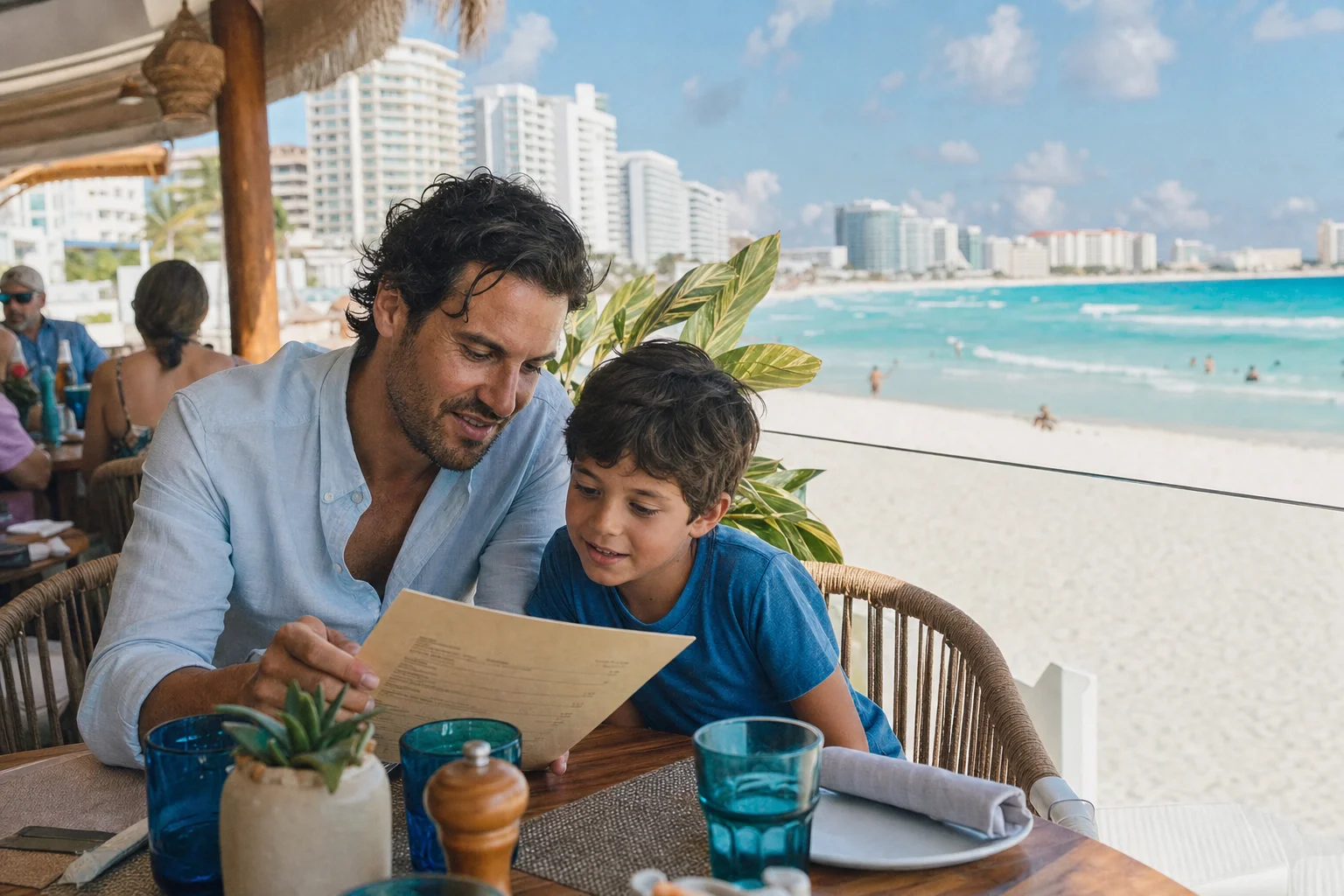
You can manage a severe food allergy in Cancun. The Hotel Zone’s major all-inclusives have more systematic allergy infrastructure than most international beach destinations - printed bilingual cards, dedicated kitchen protocols, chefs who check in at tables. But the infrastructure only works if you know which resorts have documented it and you arrive with a printed Spanish allergy card, not just a verbal request in English. Either one alone regularly fails.
How the system works - and where it breaks
Every documented allergy program runs the same process: declare allergies at check-in, receive a card or colored slip, and that slip travels with every table order. The chef or a senior kitchen staff member comes to the table before food is prepared. At à la carte restaurants, where a cook can separate your dish start to finish, this works. Guests with multiple anaphylactic-level allergies have eaten across entire weeks at these properties without a reaction.
Buffets are a different environment. The issue isn’t the food - it’s what other guests do with the serving utensils. A guest with shellfish on their fork reaches into the salad bar. A child’s peanut satay sauce contaminates a shared tong. This happens at every property regardless of price tier, and every serious allergy travel source - Spokin, AllergyFluent, Celiac.com forums - flags it consistently. At Moon Palace, even with their purple allergy slip system, the recommendation for celiac guests is to skip the buffet entirely and request a plate prepared fresh from the kitchen. The same principle applies everywhere.
The resorts with documented, specific protocols
Grand Fiesta Americana Coral Beach
The most documented property for multi-allergen families. The kids’ club uses neon-colored bracelets identifying each child’s allergens, shared across all activity staff - which is unusual and genuinely useful for supervised programming. One family managing more than 10 simultaneous allergens including coconut, sunflower, pea, and avocado reported proactive accommodation and no reactions across an entire stay. The F&B team reportedly uses gluten-free products for 90% of menu ingredients across all restaurants. Email the F&B team before arrival.
Hyatt Ziva Cancun
The standout is the Culinary Concierge desk in the lobby, available throughout your stay. You can email before arrival to receive all restaurant menus, arrange a pre-arrival meeting with the executive chef, and have allergens flagged property-wide before check-in. The chef comes to the table at every specialty restaurant. One guest with peanut, tree nut, shellfish, sesame, cherry, and carrot allergies simultaneously reported chef check-ins at every meal across every restaurant. Separate gluten-free baked goods section available.
Note: Hyatt Ziva and Hyatt Zilara are different properties. Ziva is family-oriented and has been operating continuously with this program. Zilara (adults-only) just reopened after a full renovation - covered below.
Le Blanc Spa Resort Cancun
Adults-only, at the luxury end of the Hotel Zone. Printed Spanish gluten-free card system; guests hand it to servers and multiple reviews describe an immediate shift - kitchen staff come out, verify with the chef, and adjust preparation. Separate prep areas within the main kitchen. The Asian restaurant repeatedly accommodated off-menu dishes for guests with celiac and corn allergies. One guest with celiac described nightly personal specials and GF brownies and banana bread that were, in their words, “genuinely good, not sad substitutes.” Buffet cross-contamination remains a risk; stick to à la carte.
Moon Palace Cancun (The Grand)
Spanish and English allergy card at check-in; purple slips accompany every table order. At the Bugambilias buffet, the protocol is to prepare a fresh plate from the kitchen rather than scooping from the line. One August 2024 family ate across nearly all dining venues - Momo hibachi, Mayan restaurant, poolside Asadero, room service - without a reaction.
The scale creates variability. A pre-2024 incident: a room service salad arrived with peanuts despite a nut-free request; a Lebanese restaurant dessert came with pistachios. Verify each restaurant separately rather than assuming the system propagates across the entire resort.

If you’re weighing Moon Palace’s variety against the tighter footprint of Grand Fiesta Americana or Le Blanc, Mira can walk through what each property’s dining format actually looks like for your specific allergens.
AI travel agent
The Royal Cancun
All à la carte restaurants route allergy orders through a dedicated secondary kitchen. The protocol starts at the host stand before you’re seated - staff ask about allergies when you arrive. The Asian restaurant cooks allergy orders in that secondary kitchen with separate fryers. One Spokin reviewer with tree nut, wheat, sesame, fruit, and carrot allergies reported the resort exceeded expectations and they needed no outside food across the stay. The buffet has no allergen signage; dessert options are limited (sorbet and macaroons).
What Mexican cuisine does with allergens that menus don’t mention
Mole looks like a sauce. It’s actually a structural ingredient built from peanuts, sesame, dried chilies, and sometimes almonds - depending on the style. You can’t remove it from a finished batch. Any dish with mole, pipián, or salsa negra is a risk if you have nut allergies. Ask the chef before ordering: “¿Este mole lleva cacahuates o nueces?”
Manteca de cerdo (lard) goes into refried beans, arroz rojo, and tamale masa as a base fat. Kitchen staff at casual and resort restaurants alike rarely consider it “an ingredient” to disclose. It needs to be on your allergy card by name.
Three more: Salsa Inglesa (Worcestershire), Maggi sauce, and Knorr bouillon are in virtually every Mexican kitchen - taco meat, soups, marinades, rice. All three contain gluten but are treated as seasoning, not an ingredient. Your Spanish card needs to list them by name if you’re celiac or managing wheat allergy.
On corn tortillas: don’t assume they’re wheat-free. In kitchens serving both varieties, the same surfaces and tongs often handle both. The question: “¿Son 100% masa/maíz, sin mezcla de harina de trigo?”
The Spanish allergy card - and why verbal requests often don’t travel
Multiple travelers independently reported a qualitatively different kitchen response to a printed Spanish card versus a verbal English-only request. With a card, the chef came to the table. Without one, the message sometimes didn’t leave the dining room. Most Hotel Zone managers speak good English; the cooks preparing your food may not.
Use local vocabulary: cacahuate (not maní), ajonjolí (not sésamo), manteca de cerdo, harina de trigo. Equal Eats produces translation cards in 58 languages with local Spanish variants. Allergy Free Passport sells Mexico-specific bundles.
Before you leave: EpiPens and emergency care
Auto-injectors are not sold at Mexican pharmacies. Epinephrine in vial form is available for roughly $7 per dose at Farmacias del Ahorro, but requires syringe injection. Bring multiple auto-injectors from home and carry one on your person.
If you need emergency care: Galenia Hospital is the most-cited tourist-oriented private hospital in Cancun, with English-speaking staff. Amerimed is the alternative. Call the hospital directly rather than 911 if language is a concern. US insurance is not accepted at private Mexican hospitals; travel insurance with emergency medical coverage is essential.
If you want to cross-check that a specific property’s documented protocols match what you actually need - allergens, dining format, resort size - tell Mira what you’re managing and she can help narrow it down.
AI travel agent
The Hyatt Zilara situation
Before its April 2025 closure, Hyatt Zilara Cancun was the most consistently cited adults-only celiac-safe resort in the Hotel Zone: labeled GF items on every menu, proactive server-to-chef communication, GF treats at Casa del Cafe from 6am to 11pm, separate preparation pans for room service.
It reopened May 5, 2026 with 12 entirely new dining concepts - Yucatecan Casa Adelita, Italian Olio D’Olivia, speakeasy Bokeh - and no allergy protocol announcements for the new program. Every existing positive review describes the pre-renovation property. Contact the property directly and confirm before booking it for celiac or severe allergy travel.
Outside the resort
Chedraui Selecto, in the Hotel Zone, is the best-stocked grocery option - products labeled Libre de Gluten distributed throughout regular aisles. Good for safe breakfast supplies and backup snacks.
For independent restaurant dining, Lola Valentina on Isla Mujeres (ferry, roughly 30 minutes away) has a dedicated GF cooking area, a separate fryer, and staff documented as celiac-aware. It requires a day trip, but it’s the best-documented celiac-conscious independent restaurant near Cancun. Almost no restaurants within the city itself have documented allergy protocols - that gap is real, not an oversight.
Frequently Asked Questions
Are all-inclusive resorts in Cancun actually safe for celiac disease?
Can I bring my EpiPen to Cancun?
What should I put on my Spanish allergy card for Cancun?
Is mole safe if I have a peanut allergy?
Does Hyatt Zilara Cancun still have its strong gluten-free program after the renovation?
What grocery stores in the Hotel Zone carry allergy-friendly food?
More articles about Cancun
Destination Guide
-

Cancun Family Vacation (2026): The Planning Guide
Most Cancun disappointment is a geography problem — families book the wrong part of a 22-kilometer strip and blame the destination.
-

Cancun for First-Time Visitors: What to Book
The Hotel Zone is shaped like a 7, and the arm you book on determines whether you get the turquoise water in the photos.
Who's Traveling
-

Cancun for Large Families: Get the Suite, Skip the Request
The gap between a great group trip and a logistics disaster comes down to one word - bookable.
-

Cancun for Three Generations: What Actually Works
The all-inclusive format solves more problems than most families realize - if you pick the right property.
-

Cancun with a Baby
The trip that fails in Cancun almost always fails at the booking stage, not at the destination.
-

Cancun with Grandparents: Resort Scale Changes Everything
The destination is well-suited for this kind of trip - the resort choice is where most families get it wrong.
-

Cancun with School-Age Kids
Three decisions before you book make or break the trip.
-

Cancun with a Toddler: Resort, Beach & Logistics
The resort you pick determines whether the beach is safe, whether you get any adult time, and whether the day falls apart at noon.
-

Cancun with Teens
The resorts with genuine teen programming, the off-resort days worth leaving the pool for, and the booking traps nobody puts in the brochure.
Sensory & Accessibility
-

Cancun Resorts for Predictable, Low-Stimulation Stays
The certification is the starting point. The structure is what actually matters.
-

Low-Stimulation Cancun: Stay Outside the Noise Zone
The noise is real. It's also confined to about four kilometers of a 26-kilometer strip.
-

Quiet Stays in Cancun That Actually Deliver
The Hotel Zone's party cluster fits inside four kilometers. Everything else is a different trip.
-

Sensory-Friendly Cancun: Resorts Built for Quiet
The ones that work aren't the ones with a program - they're the ones built quiet by design.
-

Wheelchair-Accessible Cancun: What the Resort Brochures Miss
The Hotel Zone works. The gap between "beach access" and the water is the thing to plan around.
Food


Room Setup
-

Connecting Rooms in Cancun: Guaranteed vs. Requested
The difference between a guaranteed connection and a polite request is the difference between two rooms or two buildings.
-

Family Suites in Cancun: What You're Actually Getting
The label is meaningless. What matters is whether there's a door that locks between you and the kids.
-

Cancun Kitchenette Hotels: What You're Actually Getting
The label is unregulated. The difference between reheating and actually cooking a meal is which hotel you choose.
On-Site Activities
-

Cancun Resorts with Kids Clubs That Actually Work
Every resort sells the kids club. Not every club is worth building a week around.
-

Cancun Resorts With a Real Lazy River
The photos on Booking.com don't show you the current. Or the lack of one.
-

Cancun Resorts with a Real Water Park
Since the only standalone water park in Cancun closed in early 2025, the resort you book has become the whole water park decision.
Powered by Mira
Tell Mira about your family
Two minutes of conversation. A shortlist of hotels that actually fit — connecting rooms, accessible layouts, calm floors, whatever your family needs.
AI travel agent · free to try
Talk to Mira Let Mira find the right hotels for your family. Find hotels with Mira
AI travel agent · free to try